

Glass pipes, formerly thought of as belonging to subterranean or countercultural contexts, have changed how people see them. These items' craftsmanship, materials, and design have drawn more attention in recent years. Glass pipes are being reexamined as instances of applied glasswork, personal items of curiosity, and equipment for cannabis use as cannabis usage gains acceptance in different parts of the world.
From the ceremonial pipes of ancient civilizations to the psychedelic experimentation of the 1960s, the story of glass pipes is layered with artistic legacy and innovation. The rise of modern glass bongs and pipes marks a cultural pivot where craftsmanship, sustainability, and style intersect, highlighting their impact on modern smoking culture with personal wellness and technology. This shift is exemplified by Fat Buddha Glass, a brand known for its high-quality bongs and water pipes that embody both artistic craftsmanship and modern functionality, reflecting the broader cultural appreciation for thoughtfully designed smoking accessories.The rise of modern glass bongs and pipes marks a cultural pivot where craftsmanship, sustainability, and style intersect, highlighting their impact on modern smoking culture with personal wellness and technology.
A Historical Overview
Smoking pipes have been used for ages and in many civilizations. Early versions frequently served in social, religious, or ceremonial contexts and were made of clay, stone, and wood. Although these early shapes had a practical purpose based on design fundamentals, many were embellished or molded to showcase artistic talent and cultural values.
Modern glass pipes have recently become popular, especially since the mid-1900s, when borosilicate glass was developed. Because of its reputation for strength and resilience to heat, this material can withstand repeated heating and cooling cycles. Artists' exploration of design and function using this type of glass has made a wider range of smoking accessories accessible.
The Artisan Glass Approach
Glass pipes are made using a wide range of techniques. Artisan-made pipes are typically created by hand using glassblowing or lampworking, requiring specialized skills. Glassworkers work with molten glass by hand in various methods, frequently adding unique design features, textures, and color patterns to each item, helping to blend functionality with artistic expression.
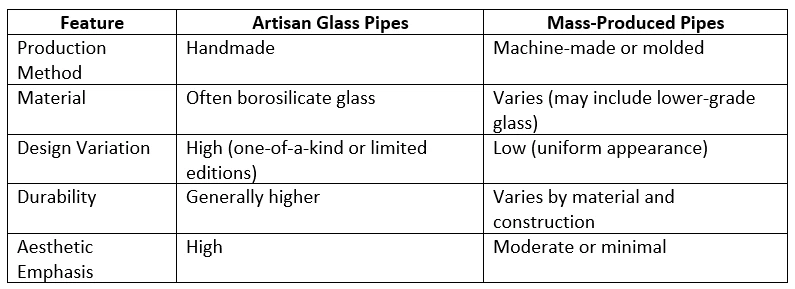
Artisan glass pipes are often made in smaller quantities than mass-produced goods, which could place more emphasis on cost-effectiveness and uniformity. The designs could result from geometric exploration, natural themes, or personal creative influences. This production method prioritizes aesthetic uniqueness and material quality.
Properties of Borosilicate Glass
Because borosilicate glass is resistant to heat stress, it is frequently used in artisan and premium commercial pipes. When subjected to abrupt temperature fluctuations, borosilicate glass is less prone to break than soda-lime glass, which is sometimes found in less expensive or mass-produced items. This enhances the pipe's overall durability and performance for a long time.
In addition to durability, the material's transparency can facilitate maintenance and give it a neater appearance. In general, pipes composed of this glass are less likely to show visible stains and are easier to clean, regardless of size.
Functional Design Elements
Certain characteristics are added to many glass pipes, whether part of a collection or not, to maximize user satisfaction by offering plenty of customizable features. These might consist of:
- Carb holes to regulate airflow
- Diffused downstems to filter or cool the smoke
- Percolators for additional water filtration in larger pieces
These structural changes affect the warmth and smoothness of inhalation, requiring several design steps. The intended usage (dry herbs vs. concentrates), user preference, and aesthetic objectives influence design decisions.
Artisan vs. Mass-Produced: A Comparison
Market and Consumer Interest
Nowadays, many glass pipes at various price ranges may be found in specialist shops and online stores. Independent glassblowers can provide consumers with creative or personalized pieces, while mass-market solutions are available for those looking for more straightforward, practical products that fit their budget.
Although comprehensive consumer research data is lacking, anecdotal trends indicate consumers are becoming more interested in products combining practicality and aesthetic appeal. Affordability or simplicity of use may be more important to certain consumers than the distinctiveness of artisanal goods.
Broader Context
The growing demand for small-batch or handcrafted products results from a larger trend in several consumer marketplaces. This trend encompasses a desire for sustainable practices, transparent products, and craft-based production. In this context, some customers consider artisan glass pipe items that reflect these ideals in their business brand practices.
Nonetheless, there are many other reasons why people choose glass pipes, including aesthetic appeal and practical things like functionality. While some purchasers are attracted to aesthetic or cultural components, others concentrate on price and performance. Product choice may be attributed to various factors, and the glass pipe market's diversity reflects these different objectives.
FAQs
1: What makes a pipe "artisan"?
An artisan pipe is usually manufactured by a glass artist using age-old methods like glassblowing or lampworking. These pipes frequently include design features that express the unique style or approach of the creator, making them desirable to buy.
2: What makes borosilicate glass so popular?
Borosilicate glass is valuable because of its strength, thick structure, thermal stability, and crack resistance. These characteristics allow it to withstand the many heating and cooling cycles of smoking, which can be difficult with inferior materials.
3: What are the primary distinctions between pipes and bongs?
Larger and often made for a smoother, cooler inhalation, bongs typically incorporate water filtration. Generally used for dry herbs without water, pipes are more portable and smaller.
4: What makes glass pipes much more expensive than others?
The materials used, the degree of workmanship, the originality of the design, and the amount of time spent on manufacturing are some elements that affect pricing for a potential purchase, particularly when different aspects of craftsmanship are combined.
Conclusion
Glass pipes, especially those created by craftspeople, combine functionality and style, showcasing the versatile design many users love. Despite their cultural and ritualistic origins, their contemporary forms cover a variety of styles, pricing points, and production techniques. The production, use, and perception of glass pipes are constantly changing, regardless of whether they are seen from an artistic or utilitarian standpoint.



















Sign in to leave a comment.