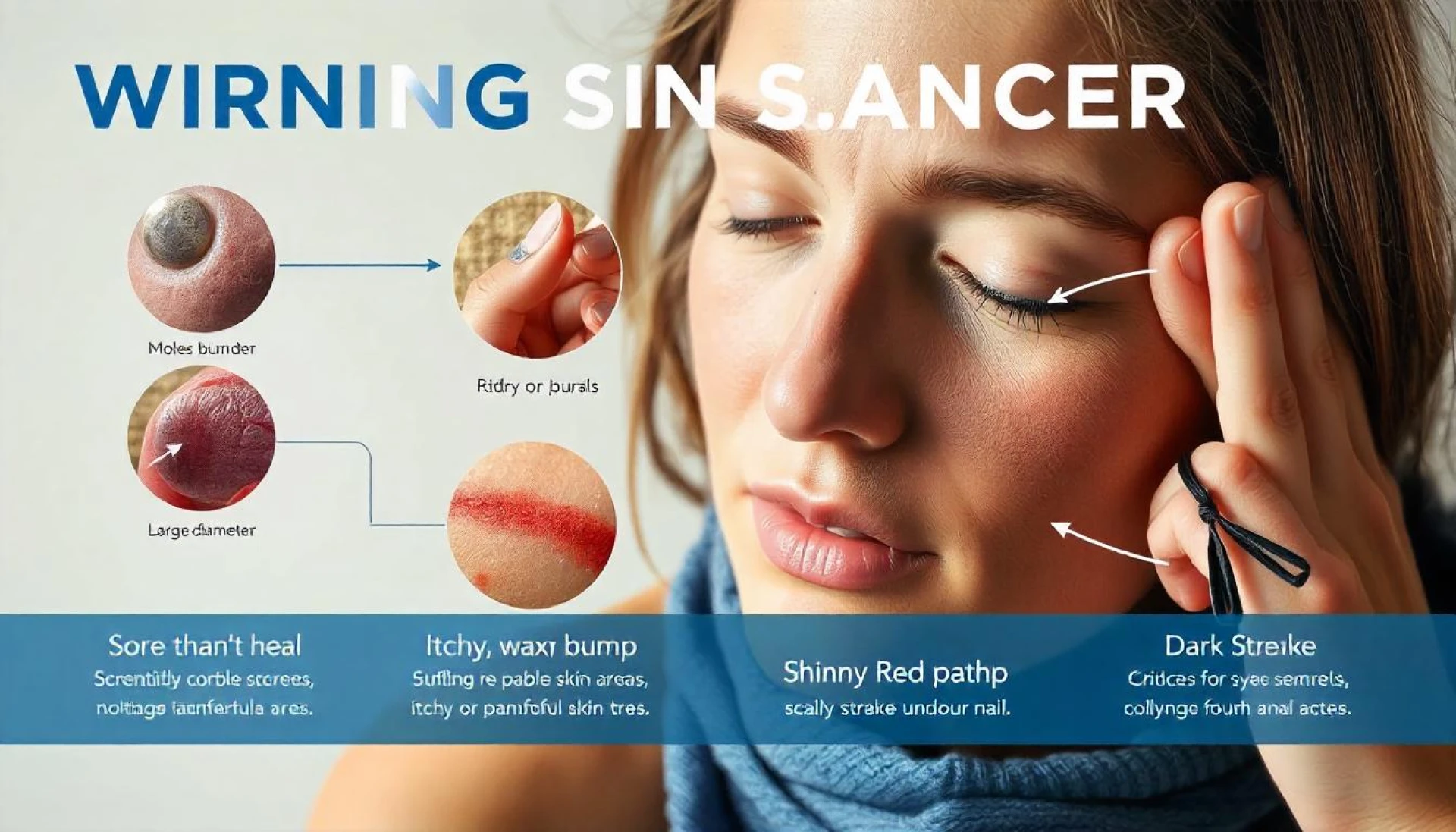
Skin cancer is the most common type of cancer worldwide, and early detection is key to successful treatment. While it can develop anywhere on the body, it often appears in sun-exposed areas such as the face, neck, arms, and legs. Knowing what to look for can make all the difference in catching skin cancer early. Here are the warning signs you should never ignore.
1. A Changing Mole
All moles are not cancerous, but changes in a current mole should be noticed. The ABCDE rule is a useful reminder:
A – Asymmetry: Half of the mole appears different from the other.
B – Border: The edges are irregular, notched, or smudged.
C – Color: The mole is of more than one color or of an uneven shade.
D – Diameter: A mole bigger than 6mm (roughly the diameter of a pencil eraser) may be problematic.
E – Evolving: Any change in size, shape, or color that is visible over time should be checked by a physician.
2. A Sore That Won't Heal
A sore or wound that doesn't heal after a few weeks, continues to bleed, or crusts over and comes back could be a sign of basal or squamous cell carcinoma. Both are the most prevalent forms of skin cancer and tend to occur in sun-damaged areas. If you have a persistent sore, see a dermatologist immediately.
3. Itchy, Painful, or Tender Spots
Skin cancer does not always look like a mole. At other times, it may produce a sore, itching, or tenderness without a clear reason. If you notice a patch on your skin that is always red and sore with no apparent reason, have it examined?
4. A Pearly or Waxy Bump
A small, shiny bump that appears pearly, waxy, or translucent might be a basal cell carcinoma. The bumps can be pink, red, white, or even darker in individuals with deeper skin. Basal cell carcinoma is slow-growing and infrequently spreading, but it does need to be treated by a doctor.
5. A Scaly Patch or a Rough, Red Area
Precancerous actinic keratosis tends to be a rough, scaly, or red patch on the face, ears, scalp, or hands exposed to the sun. These patches are not yet cancerous, but they have the potential to become squamous cell carcinoma, which is a more malignant carcinoma than basal cell carcinoma.
6. A Dark Streak Under a Nail
Melanoma, the most dangerous type of skin cancer, occasionally manifests as a dark line under a fingernail or toenail. It can also resemble a bruise that will not clear up. Although it is unusual, it should be checked out, particularly if the coloration changes or spreads.
When to See a Doctor
If you experience any of these warning signs, see a dermatologist right away. Skin cancer can be treated successfully if it is detected early. Self-exams and regular professional checks can identify suspicious changes while they are still minor.
Prevention Is The Best
Taking care of your skin can reduce your chances of getting skin cancer. Here's how:
- Apply broad-spectrum sunscreen (SPF 30 or higher) every day.
- Stay away from tanning beds.
- Use protective clothing, hats, and sunglasses.
- Find shade when the sun is strongest (10 AM – 4 PM).
- Get regular skin checks to look for changes.
Skin cancer can be prevented and cured, but only if you pay attention to the warning signs. If something appears suspicious, don't delay—get it checked out!



























Sign in to leave a comment.