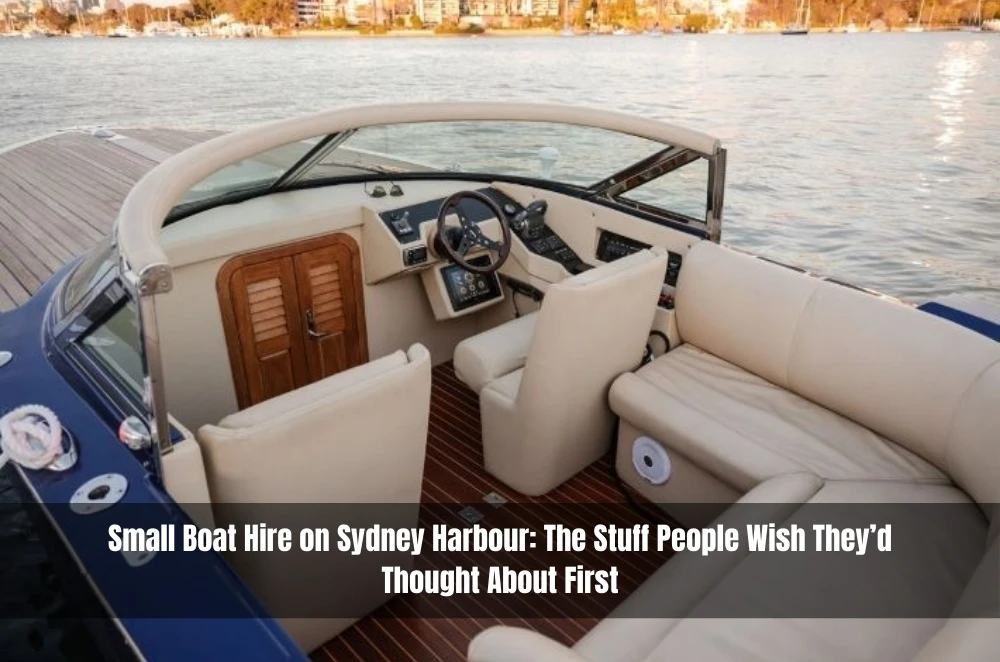

Hiring a small boat on Sydney Harbour sounds effortless when you say it out loud.
“Let’s get a boat.”
“Let’s do something special.”
“It’ll be amazing.”
And it usually is. But in between the idea and the actual day, there’s a stretch of quiet decision-making that determines whether it feels seamless… or slightly stressful.
If you’re organising for friends, family, a couple’s moment, a corporate group, or visiting guests, this is the version that speaks to the real experience — not the glossy brochure version.
Because on Sydney Harbour, the difference between “nice” and “unforgettable” often comes down to details no one mentions upfront.
First: What are you actually trying to create?
Before you look at boats, times, or menus, pause for a second.
Are you trying to:
- Impress a client?
- Give your team a proper thank you.
- Celebrate something meaningful?
- Propose?
- Show visitors Sydney in a way they’ll never forget?
- Or just breathe for a few hours without phones and noise?
When people skip this step, they end up overloading the plan. They add catering, a tight schedule, multiple photo stops, maybe a swim, maybe speeches — and suddenly the day feels like an event, not an experience.
Clarity at the start saves you from overcomplicating something that’s meant to feel easy.
“Small” doesn’t mean what you think it means
On Sydney Harbour, “small boat hire” usually means an intimate, skippered experience — not a DIY situation.
And small isn’t just about capacity. It’s about how it feels once real humans get on board.
Six adults on paper can feel roomy.
Six adults plus food, drinks, bags, jackets, a pram, and someone pacing because they’re nervous? Different story.
The harbour isn’t a private lake either. There’s movement. Wind. Other vessels. Changing light. The boat is your floating space within all of that — and the layout matters more than the maximum number printed online.
The decisions that quietly shape the day
1. Who’s actually coming (and how they behave)
This matters more than people expect.
Are they sit-and-chat people?
Do they wander?
Are there kids who won’t stay seated?
Is someone anxious about water?
Is there one person who will take charge — or one who will freeze?
Capacity is mathematical. Comfort is behavioural.
2. What’s included — and what you’re assuming
This is where most small frustrations start.
People assume:
- There’ll be ice.
- There’ll be shade.
- There’ll be easy storage.
- Music will “just work.”
- Food setup will be simple.
Sometimes that’s true. Sometimes it’s not.
Clarify the small things. Because on a boat, small things feel big.
3. Timing isn’t just about the clock
A 3 pm start time looks tidy in a group chat.
But 3 pm might mean:
- Half your group is rushing from work.
- The sun is at its harshest.
- The harbour is busier.
- You’re trying to squeeze too much in before dinner.
If there’s a proposal, speech, cake moment, or client welcome — build space around it. The most memorable moments usually happen when nobody feels hurried.
4. Weather is about comfort, not rain
Sydney can be clear and bright on land and breezy and choppy on the water.
Wind changes everything.
Evenings cool quickly.
Outfits matter more than people admit.
You don’t need perfect weather — you need a plan that still feels good if conditions shift slightly.
The common mistakes (that nobody talks about)
People plan the boat like a venue. It’s not a venue.
People over-cater and underestimate how awkward serving food can be in motion.
People invite “maybes” and end up paying for space they don’t use — or squeezing extra people in.
People forget to tell guests what to wear, then spend half the trip hearing “I didn’t realise it would be this windy.”
People overschedule because they think more equals better.
It doesn’t.
Different groups need different thinking
Couples
If this is romantic — keep it simple.
One meaningful moment.
One relaxed stretch.
One skyline view.
You don’t need a production. You need atmosphere.
And yes — bring a layer, even in summer.
Families
Shade. Stability. Snacks. Simplicity.
One highlight is better than three rushed ones.
Agree in advance who is watching the kids when the boat is moving. It avoids silent tension later.
Friends celebrating
Layout is everything.
You want people together, not split into awkward clusters.
You want easy access to food and drinks.
You want flow, not traffic jams.
Simple catering usually works better than elaborate setups.
Corporate groups
Smooth beats flashy.
Clear meeting instructions.
Easy boarding.
A relaxed run sheet.
Enough structure so no one feels awkward.
Once you’ve narrowed it down to a couple of suitable options, it helps to keep something like the Eastcoast Sailing booking guide open while you compare — especially to double-check inclusions, boarding details, and what “skippered” actually covers before you commit.
Visitors to Sydney
If this is someone’s “Sydney moment,” protect it.
Don’t wedge it between exhaustion and a tight dinner booking.
Let the harbour be the feature, not the filler.
If anyone is prone to seasickness, choose calm over speed. The skyline looks just as good at a steady pace.
Operator Experience Moment
You can usually tell in the first ten minutes how the day will feel. The relaxed groups arrive early enough to settle, they’ve agreed (even silently) on the vibe, and they’re open to the harbour doing its thing. The tense groups are still negotiating logistics at the dock. The truth is, the harbour doesn’t reward control — it rewards flexibility. When the organiser lets go a little, everyone relaxes.
Local SMB Mini-Walkthrough (Sydney / NSW)
A Sydney business owner wants to celebrate a company milestone.
They choose a late-afternoon cruise so staff don’t feel rushed.
They confirm a boarding location close to public transport.
They opt for simple share-style catering to avoid fuss.
They schedule a short speech early, before people spread out.
They message the team to bring light jackets and wear comfortable shoes.
They leave buffer time afterwards, so no one is scrambling for rides.
Practical Opinions
If connection is the goal, choose comfort over maximum capacity.
If there’s a big moment planned, protect it with buffer time.
If unsure, simplify food and prioritise easy boarding logistics.
First actions plan (next 7–14 days)
Days 1–2
Write down your purpose in one clear sentence.
Lock your real headcount and note any comfort considerations.
Days 3–5
Shortlist two or three suitable options based on layout and inclusions.
Choose a time window that suits the mood you want.
Days 6–10
Decide on food and drinks and assign responsibility for essentials.
Send guests one clear message with boarding details and what to wear.
Days 11–14
Create a light run sheet: arrival, key moment, relaxed cruising, disembark.
Have a flexible mindset in case conditions nudge the route slightly.
Key Takeaways
- Decide on the feeling you want before you choose the boat.
- Comfort and layout matter more than headline capacity.
- Clarify small inclusions — they shape the whole experience.
- Leave breathing room in the schedule; the harbour rewards flexibility.
Common questions we hear from Australian businesses
How far in advance should we book?
Usually, booking a few weeks ahead gives you better availability, especially for popular days and larger groups. A practical next step is to shortlist two potential dates before enquiring. In most cases, Sydney weekends and peak seasons fill faster than people expect.
How do we avoid costs creeping up?
It depends on whether additional time, catering complexity, or optional extras are driving the increase. A practical next step is to define three non-negotiables and compare options strictly against them. In most cases, a smoother plan feels more premium than a heavily upgraded one.
What should guests wear?
In most cases, layers are the safest advice because harbour conditions can feel cooler than the city streets. A practical next step is to tell guests to bring a light jacket and wear comfortable shoes. Usually, even mild Sydney afternoons can turn breezy on open water.
Can we request an exact route and timeline?
Usually, you can request preferred highlights, but exact timings depend on wind, traffic, and safe navigation. A practical next step is to choose one key moment and allow a flexible window for it. It depends on the day, and adaptable plans tend to create the most relaxed experiences on Sydney Harbour.























Sign in to leave a comment.