
In today's rapidly evolving agricultural environment, farmers are turning to advanced solutions to stay ahead. With rising input costs, erratic weather, and increasing food demand, the importance of efficient and sustainable practices has become crucial. Farming equipment is now central to this transformation, enabling precise control over every stage of production. From planting to irrigation, smart farming equipment helps farmers make the most of every resource. By adopting innovative farming equipment tailored to modern challenges, farmers can significantly boost productivity and ensure long-term success. Investing in the right farming equipment is no longer optional it’s essential for thriving in today’s competitive agricultural landscape..
Precision agriculture also known as site-specific crop management is the practice of using data and technology to ensure that crops and soil receive exactly what they need for optimal health and productivity. And at the heart of precision agriculture lies smart farming equipment, revolutionizing how farmers monitor, plan, and execute farm operations.
This article dives deep into how smart farming equipment is transforming agriculture, the essential tools every modern farmer should consider, and how this technology is making farming more profitable, sustainable, and precise.
What Is Smart Farming Equipment?
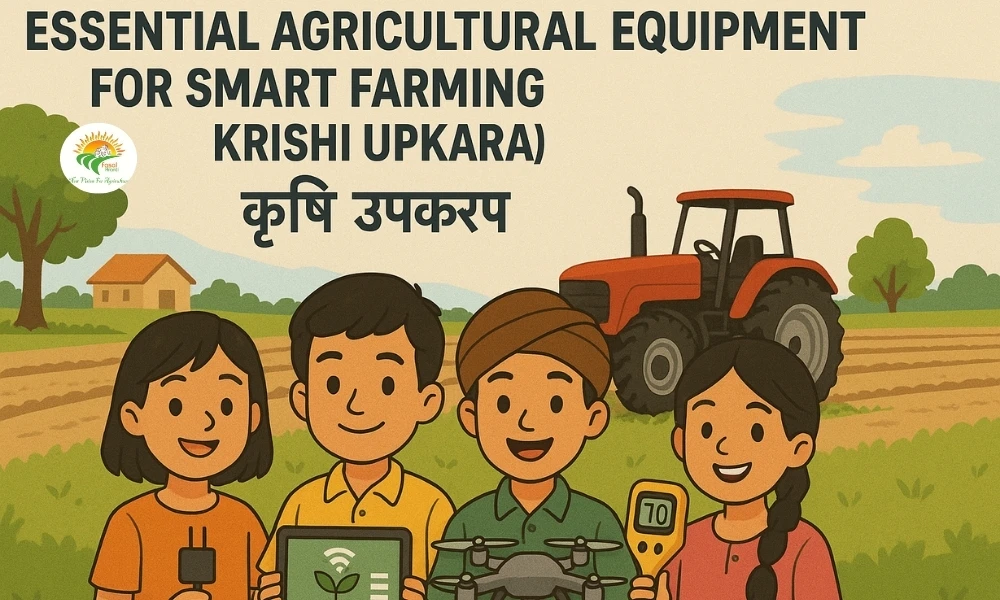
Smart farming equipment refers to modern agricultural tools and machinery integrated with sensors, GPS, artificial intelligence (AI), data analytics, and IoT (Internet of Things) technologies. These tools collect and analyze data in real time, enabling farmers to make smarter decisions about planting, irrigation, fertilization, pest control, and harvesting.
Unlike traditional machines, smart farming equipment is designed not just for labor-saving but for data-driven precision. They provide insights that help farmers apply the right treatment at the right place and the right time minimizing waste, maximizing yield, and protecting the environment.
Why Smart Farming Equipment Matters
Smart farming equipment is not a luxury it's a necessity for farmers aiming to stay competitive and sustainable. Here’s why:
1. Higher Efficiency: These tools reduce manual work, save time, and increase overall productivity.
2. Cost Savings: By using inputs like water, fertilizers, and pesticides more accurately, farmers cut down unnecessary expenses.
3. Better Yields: Targeted treatment and monitoring result in healthier crops and higher production.
4. Sustainability: Precision reduces environmental impact, promotes soil health, and conserves natural resources.
5. Informed Decision-Making: Data insights help farmers plan better and respond quickly to problems.
Types of Smart Farming Equipment for Precision Agriculture
1. GPS-Guided Tractors
Tractors fitted with GPS systems can operate with centimeter-level accuracy. Whether it’s planting seeds in perfect rows or spraying fertilizers uniformly, these tractors minimize overlaps and skips saving both fuel and input materials.
2. Smart Seeders and Planters
These machines adjust seeding rates based on soil type, moisture, and nutrient levels. Smart planters ensure uniform plant spacing and depth, which leads to better germination rates and higher yields.
3. Drones and Aerial Imaging Systems
Drones are revolutionizing how farmers monitor crop health. Equipped with multispectral cameras, they can detect early signs of disease, pests, or water stress. Farmers can take corrective action long before problems become visible to the naked eye.
4. Soil Sensors and Moisture Meters
These devices monitor soil temperature, pH levels, and moisture content in real time. Farmers can optimize irrigation schedules, ensuring crops get the right amount of water no more, no less.
5. Automated Irrigation Systems
Linked with weather forecasts and soil sensors, smart irrigation systems automatically turn on and off based on real-time conditions. This reduces water usage and prevents overwatering.
6. Variable Rate Technology (VRT) Sprayers
VRT-enabled sprayers apply fertilizers, pesticides, and herbicides only where they’re needed. This targeted application reduces chemical use and limits environmental impact.
7. Yield Monitors and Harvesters
During harvesting, yield monitors collect data on productivity per field zone. This helps farmers identify high- and low-yield areas and adapt strategies accordingly for future seasons.
8. Livestock Monitoring Devices
Wearable tech for livestock tracks movement, temperature, and behavior. It helps detect health issues early and improves breeding efficiency.
9. Farm Management Software Platforms
These platforms bring together data from different equipment into a central dashboard. Farmers can view reports, set alerts, and even control equipment remotely.
Benefits of Smart Farming Equipment
1. Reduced Labor Dependency
With fewer rural workers available, automation fills the gap. Smart tractors, robotic sprayers, and automatic harvesters reduce the need for manual labor.
2. Optimized Resource Usage
Smart equipment applies just the right amount of water, fertilizer, and chemicals reducing input waste and increasing ROI.
3. Real-Time Monitoring
Farmers can monitor crops and equipment from their Smartphone, tablet, or computer whether they’re in the field or at home.
4. Data-Driven Decisions
Historical and real-time data allows farmers to make informed decisions that lead to higher productivity and long-term profitability.
5. Environmental Protection
Precision applications reduce runoff, prevent soil erosion, and promote sustainable farming practices that protect biodiversity.
Challenges in Adopting Smart Farming Equipment
While the benefits are substantial, some farmers face challenges in adopting this technology:
- High Initial Costs: Smart equipment is expensive, though long-term savings often offset the investment.
- Training Needs: Farmers need to learn how to use and interpret data from new tools.
- Connectivity Issues: In rural areas, poor internet connectivity can limit the functionality of some equipment.
- Maintenance and Support: Advanced tools require regular servicing and technical support, which may not be readily available in remote areas.
How Small Farmers Can Get Started
You don’t need to buy all the latest gadgets at once. Start small:
1. Adopt soil moisture sensors to better control irrigation.
2. Use GPS-based apps for field mapping.
3. Invest in a drone for crop scouting and aerial monitoring.
4. Try a smart planter or sprayer on a trial basis for one crop season.
Government programs, agricultural extension services, and cooperatives often provide support and subsidies for smart farming equipment take advantage of these resources.
The Future of Farming with Smart Equipment
Smart farming equipment is just the beginning. As artificial intelligence, robotics, and machine learning evolve, we’re heading toward fully automated farms where machines handle most tasks and farmers act as tech-driven decision-makers.
Future trends include:
- Autonomous tractors and robots that work 24/7.
- AI-based pest and disease prediction models.
- Block chain for transparent supply chains.
- Integration with climate-smart practices for resilience and sustainability.
Final Thoughts
Smart farming equipment is no longer a distant dream it’s a present-day solution empowering farmers to grow more with less. Whether you're managing a small plot or a vast estate, embracing precision agriculture tools can unlock higher yields, lower costs, and a greener planet.
By investing in the right smart farming equipment, you're not just adopting technology you’re future-proofing your farm.




























Sign in to leave a comment.