
Introduction
A few years ago, in many flood-prone areas, warnings followed a familiar pattern: a message would go out, maybe a siren would sound, and people were expected to “prepare.” What that actually meant, though, was often unclear.
Some ignored the alerts because they’d seen too many false alarms. Others didn’t have enough time to react. And in many cases, by the time the situation felt real, it was already too late.
That gap—between being warned and actually being ready—is where things have historically fallen apart.
Now, things are starting to shift. With the rise of smarter systems, a Flood Warning System isn’t just about notifying people anymore. It’s about guiding decisions in real time, when those decisions matter most.
Why Traditional Flood Warnings Often Fall Short
Older systems weren’t exactly built for speed or flexibility.
They depended heavily on:
- Manual observations
- Limited monitoring points
- Static alert methods
So the warnings themselves? Often broad, sometimes delayed, and not always helpful on a practical level.
Imagine getting a message that says flooding is “likely.”
That leaves a lot of questions:
- How bad will it be?
- How soon?
- Should I leave now or wait?
Without clarity, people hesitate—and hesitation is costly during a flood.
What “Smart” Actually Changes
The term “smart technology” gets thrown around a lot, but in this case, the difference is pretty concrete.
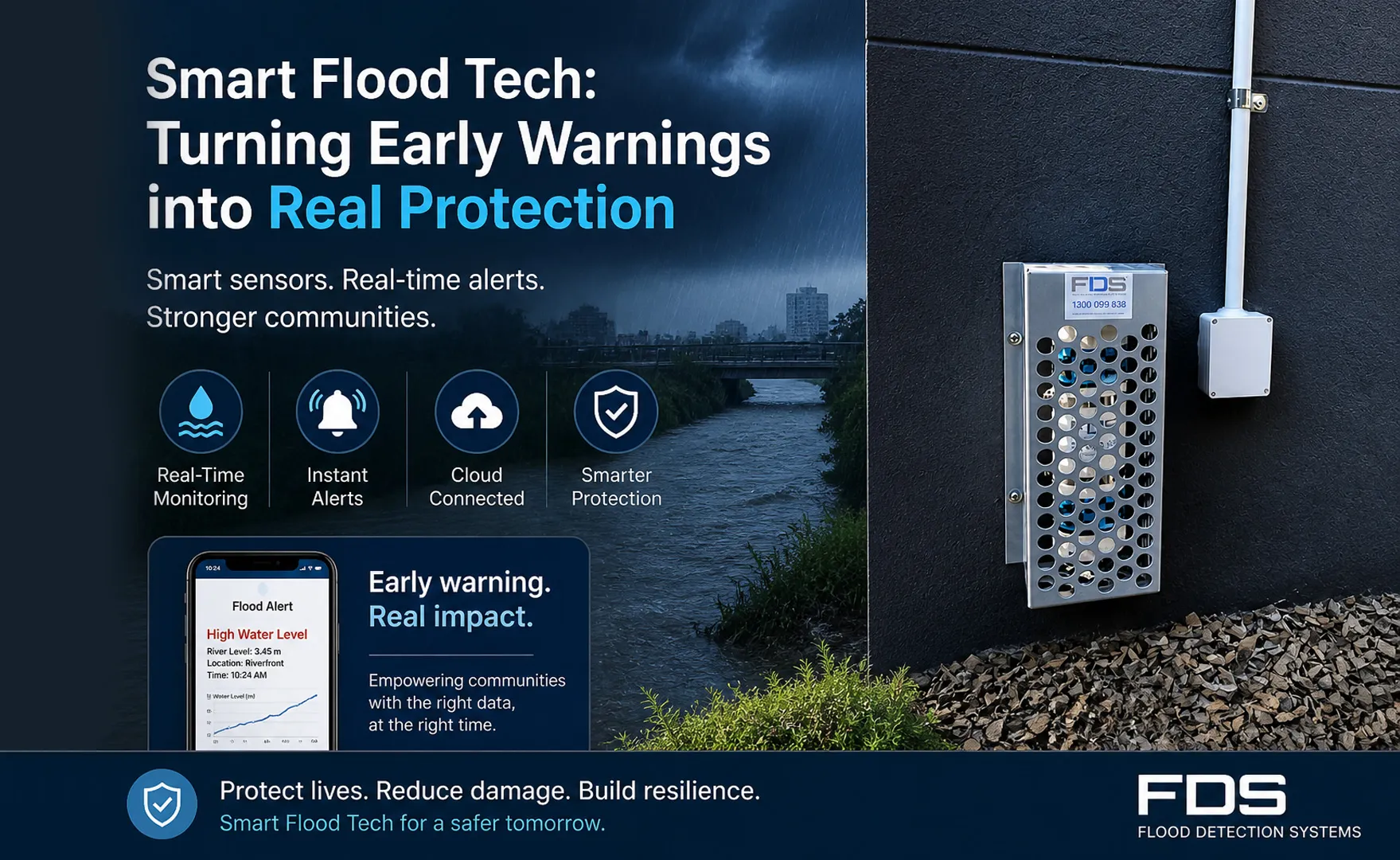
Instead of reacting after water levels rise, these systems are constantly watching conditions as they evolve. They combine multiple data streams and translate them into something usable.
A modern Flood Warning System can:
- Pick up early signals that humans might miss
- Estimate how a situation could unfold
- Send alerts that are more specific, not just general warnings
And importantly, it keeps updating. Flood situations don’t stay still, and neither should the information people rely on.
What’s Happing Behind the Scenes
Sensors in the Field
Small devices placed in key locations—rivers, drainage systems, low-lying areas—track changes continuously.
They don’t take breaks, and they don’t rely on someone being present to notice something’s wrong.
AI Making Sense of the Noise
Raw data on its own doesn’t help much. What matters is interpretation.
This is where AI comes in. It looks at patterns—both historical and current—and tries to answer a simple question:
“What’s likely to happen next?”
Sometimes that means predicting flooding hours in advance, sometimes just minutes—but even that small window can be critical.
Alerts That Actually Reach People
One of the biggest improvements isn’t just accuracy—it’s delivery.
Instead of relying on a single communication channel, smart systems push alerts through multiple paths:
- Mobile phones
- Messaging systems
- Local alert infrastructure
Because a warning only works if someone actually sees it—and understands it.
From Information to Action
This is where the real difference shows up.
Traditional systems mostly provided information.
Smart systems are starting to influence action.
For example:
- Emergency teams can prioritize areas based on real-time risk
- Residents can make quicker decisions about evacuation
- Authorities can respond with more precision instead of broad assumptions
It doesn’t remove the danger, but it reduces uncertainty—and that matters more than people think.
Where This Is Already Being Used
You’ll find these systems quietly working in the background in places like:
- Cities that deal with sudden heavy rainfall and drainage overload
- Agricultural regions where flooding can wipe out entire harvests
- River monitoring networks tracking overflow risks
- Disaster response units coordinating across multiple locations
In many of these cases, the biggest advantage isn’t perfection—it’s time gained.
Even a short lead can change outcomes significantly.
Why It Matters More Than It Seems
It’s easy to think of this as just another layer of technology, but the impact is more human than technical.
When people get clearer, earlier, and more specific warnings:
- They’re more likely to take action
- They make better decisions under pressure
- They avoid last-minute panic
And over time, that builds trust in the system itself.
The Reality Check
Of course, it’s not all solved.
There are still challenges:
- Costs can be high, especially at scale
- Systems need regular maintenance
- Some regions still lack the infrastructure to support them
And then there’s the human side—people need to understand and trust the alerts, or even the best system won’t be effective.
What’s Likely Ahead
This space is moving quickly, but not always in obvious ways.
Instead of dramatic changes, we’re seeing steady improvements:
- More accurate predictions
- Better integration with satellite data
- Faster communication loops
Over time, these small upgrades add up to something more reliable—and more usable.
Conclusion
Floods aren’t something we can eliminate. That part hasn’t changed.
What is changing is how we respond.
A Flood Detection System used to be about giving people a heads-up. Now, it’s slowly becoming something more practical—a tool that helps people decide what to do next, not just what might happen.
And in situations where timing is everything, that shift is a big deal.
FAQs
What is a Flood Warning System?
It’s a setup that monitors conditions and alerts people when there’s a risk of flooding.
Is smart flood technology always accurate?
Not always, but it’s generally more precise than older systems because it uses real-time and historical data together.
Does it completely prevent flood damage?
No—but it can reduce the impact by giving people more time to respond.
Why do people sometimes ignore warnings?
Past false alarms, unclear messaging, or lack of trust can all play a role.

























Sign in to leave a comment.