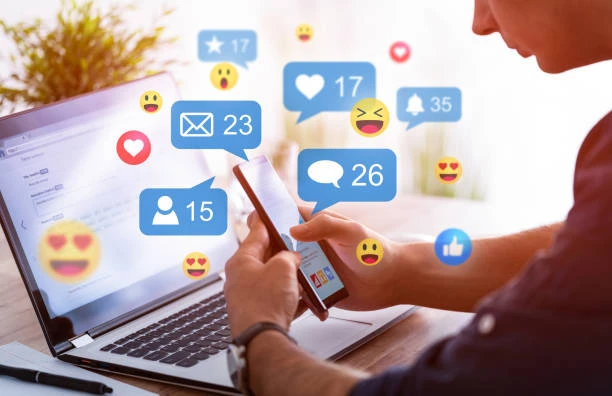

Social media and advertising have become intertwined in recent years, with many businesses turning to platforms like Facebook and Instagram to reach their target audience. The question of whether or not this form of advertising is permissible under Islamic law is a complex one, as there are differing opinions within the Muslim community.
On one hand, social media advertising allows businesses to reach a wider audience than traditional forms of advertising, such as television and print. This can be especially beneficial for small businesses that may not have the resources to compete with larger companies in more traditional advertising channels. Additionally, the use of social media platforms allows businesses to more accurately target their audience, which can lead to higher conversion rates and increased sales.
On the other hand, some argue that social media advertising is not permissible under Islamic law because it can be seen as a form of deception or dishonesty. This is because businesses may use social media to present a false image of their products or services in order to entice consumers to purchase them. Additionally, some argue that social media advertising can be harmful to individuals and society as a whole, as it can contribute to consumerism and materialism.
Despite these concerns, many Islamic scholars have argued that social media advertising can be permissible under certain conditions. For example, they argue that businesses should be truthful and transparent in their advertising efforts, and should not use deceptive or manipulative tactics. Additionally, businesses should be mindful of the impact their advertising may have on individuals and society, and should strive to promote positive values and behaviors.
In conclusion, the permissibility of social media advertising under Islamic law is a complex issue that is open to interpretation. While there are concerns about the potential negative effects of social media advertising, many Islamic scholars argue that it can be permissible under certain conditions. Businesses should be mindful of these conditions and strive to promote positive values and behaviors in their advertising efforts.
In one line, whether social media advertising is halal or haram is a complex issue open to interpretation, with some scholars arguing it can be permissible under certain conditions.
The Effects of Social Media on Children and Adolescents
Social media has become an integral part of daily life for many children and adolescents. While it can be a source of entertainment and connection with friends and family, it also has potentially negative effects on the mental and emotional well-being of young people.
One of the main concerns is the impact of social media on self-esteem and body image. Research has shown that children and adolescents who spend more time on social media are more likely to experience body dissatisfaction and negative self-esteem. This is largely due to the constant exposure to idealized images of beauty and perfection, which can make young people feel inadequate and inferior.
Another concern is the impact of social media on mental health. Research has shown that children and adolescents who spend more time on social media are more likely to experience symptoms of depression, anxiety, and stress. This is largely due to the constant pressure to present a perfect image online, as well as the negative impact of online bullying and cyberbullying.
Additionally, social media can be a distraction for children and adolescents. It can affect their attention span and concentration, which can make it more difficult for them to focus on schoolwork and other important tasks. Furthermore, it can also interfere with their sleep patterns and contribute to sleep deprivation.
Despite these negative effects, parents and caregivers can take steps to minimize the risks associated with social media use. This includes setting limits on the amount of time spent on social media, monitoring content, and teaching children and adolescents about the importance of self-esteem, privacy, and responsible online behavior.
In conclusion, social media has become an integral part of daily life for many children and adolescents, but it also has potentially negative effects on the mental and emotional well-being of young people. Parents and caregivers need to take steps to minimize the risks associated with social media use and to teach children and adolescents about the importance of self-esteem, privacy, and responsible online behavior.
0
Sign in to leave a comment.