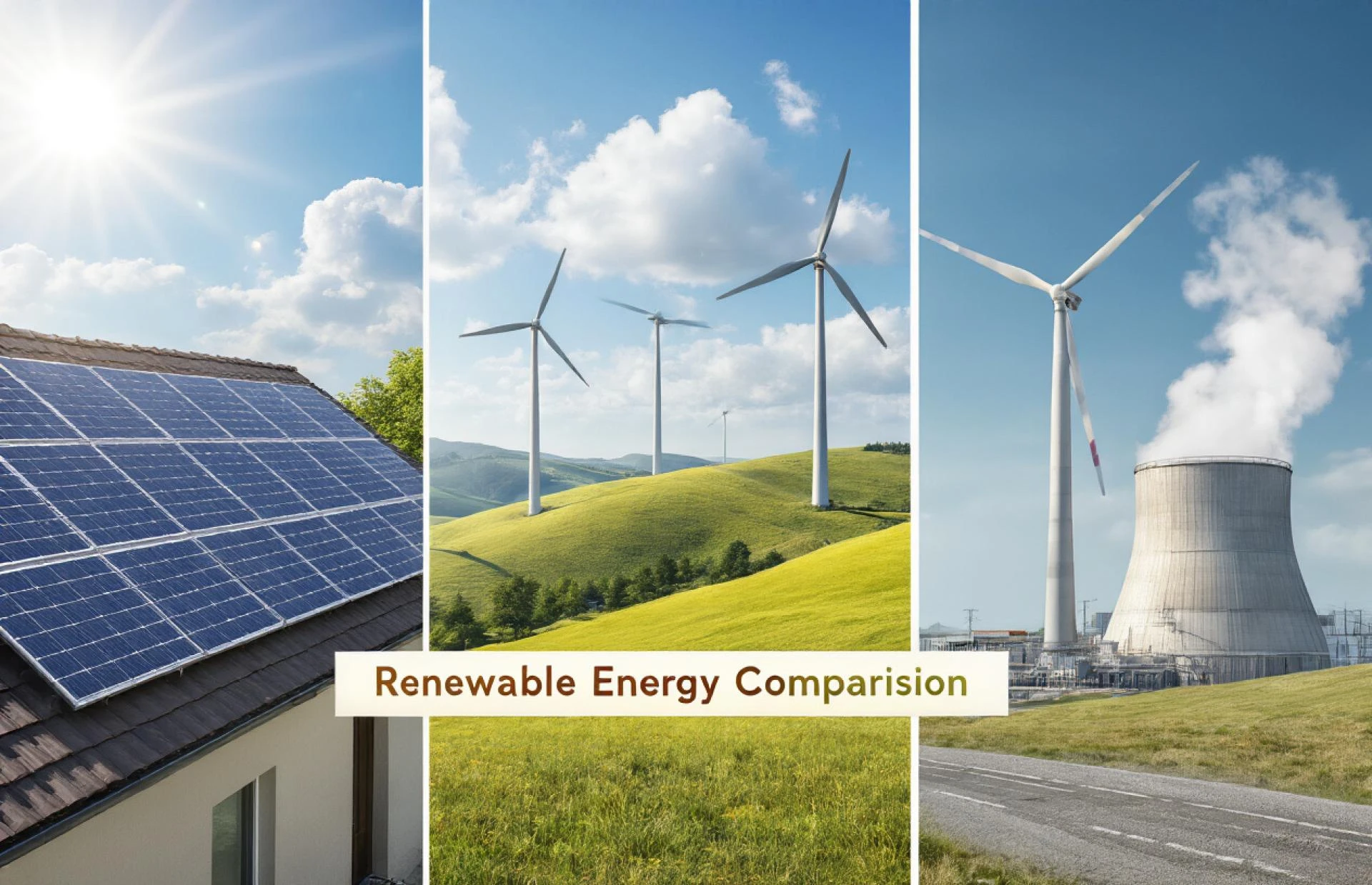

Comparing Solar, Wind, and Thermal Energy: Which Renewable Source Is Right for You?
Looking for the best renewable energy option for your home? This guide breaks down solar energy, wind energy, and thermal energy for homeowners wanting to reduce their carbon footprint and energy bills. We'll compare installation costs and energy output across different climate conditions, and explore how each technology works in real-world residential settings.
Comparing Solar and Wind Energy: Which is Better for Residential Use?
Solar's advantage for homes (5x more electricity production)
Solar panels crush wind turbines for home use. A typical rooftop solar setup generates about five times more electricity than a residential wind turbine in most areas. Why? Simple - your roof gets consistent sunlight, while wind speeds vary wildly at lower heights where homes sit.
Installation requirements and practicality comparison
Wind turbines need space and height - at least 30 feet clearance from obstacles. Solar? Just a roof with decent sun exposure. Most neighborhoods have zoning laws that make wind turbines a non-starter, while solar panels slide through permitting with minimal fuss. Plus, solar works silently while wind turbines create noise that drives neighbors crazy.
Current Usage Patterns of Renewable Energy Sources
Wind energy's popularity at utility-scale (24% vs 9% for solar)
Wind farms dominate the utility landscape right now. A whopping 24% of renewable energy comes from those giant turbines, while solar panels chip in just 9%. Why such a gap? Cost efficiency at scale plays a big role - wind simply delivers more bang for your buck when you're powering thousands of homes.
24-hour generation capability of wind vs. daylight limitations of solar
The 24/7 potential of wind gives it a serious edge. Solar panels rest when the sun goes down, but wind turbines continue to spin through the night. This round-the-clock production means wind farms can maintain steady output without expensive battery storage systems that solar often requires.
Understanding Solar Energy Technology
How solar photovoltaic (PV) devices convert sunlight to electricity?
Solar panels are magic in action. They capture sunlight using silicon cells that get electrons all excited when photons hit them. This creates an electric current that flows through the panel's wiring system. Pretty cool, right?
Applications in residential, commercial, and industrial settings
From rooftop panels powering homes to massive solar farms feeding the grid, solar's everywhere now. Businesses cut costs with solar carports while factories run production lines on sunshine. The tech's so versatile it works almost anywhere the sun shines.
Exploring Wind Power Systems
A. Different types: utility-scale, distributed, and offshore wind
Wind power isn't one-size-fits-all. Utility-scale systems power thousands of homes with massive turbines, while distributed wind brings smaller turbines to homes and businesses. Offshore wind farms? They're the powerhouses sitting in coastal waters, capturing stronger, more consistent breezes than their land-based cousins.
B. How wind turbines capture and convert kinetic energy
Wind hits the blades, making them spin like a pinwheel on steroids. This spinning motion drives a generator that turns all that whooshing air into electricity. Pretty simple concept with complex engineering behind it – those massive blades can convert up to 45% of wind energy into power for your home.
Thermal Energy Options for Sustainable Living
Geothermal energy basics and applications
Ever wondered how to heat your home without burning through cash? Geothermal systems tap into Earth's steady underground temperature to warm homes in winter and cool them in summer. They're pricey upfront, but slash energy bills by up to 70%.
Solar thermal technology for heating and hot water
Solar thermal is the underrated cousin in the renewable family. Unlike flashy solar panels that make electricity, these systems use sunlight to heat water directly. Install a few collectors on your roof, and you've got free hot showers for decades. Combine it with geothermal, and you're practically off-grid.
Each renewable energy option offers unique advantages for residential use. Solar energy provides reliable power with minimal maintenance in sunny locations, while wind energy excels in open areas with consistent airflow. Thermal energy solutions offer effective heating and cooling alternatives that reduce traditional energy consumption.
The best choice ultimately depends on your specific circumstances—geographic location, available space, local climate, and budget. Consider consulting with renewable energy specialists to determine the optimal solution for your home. Whichever path you choose, transitioning to renewable energy not only reduces your carbon footprint but also provides long-term financial benefits through reduced utility costs and potential incentives.








Sign in to leave a comment.