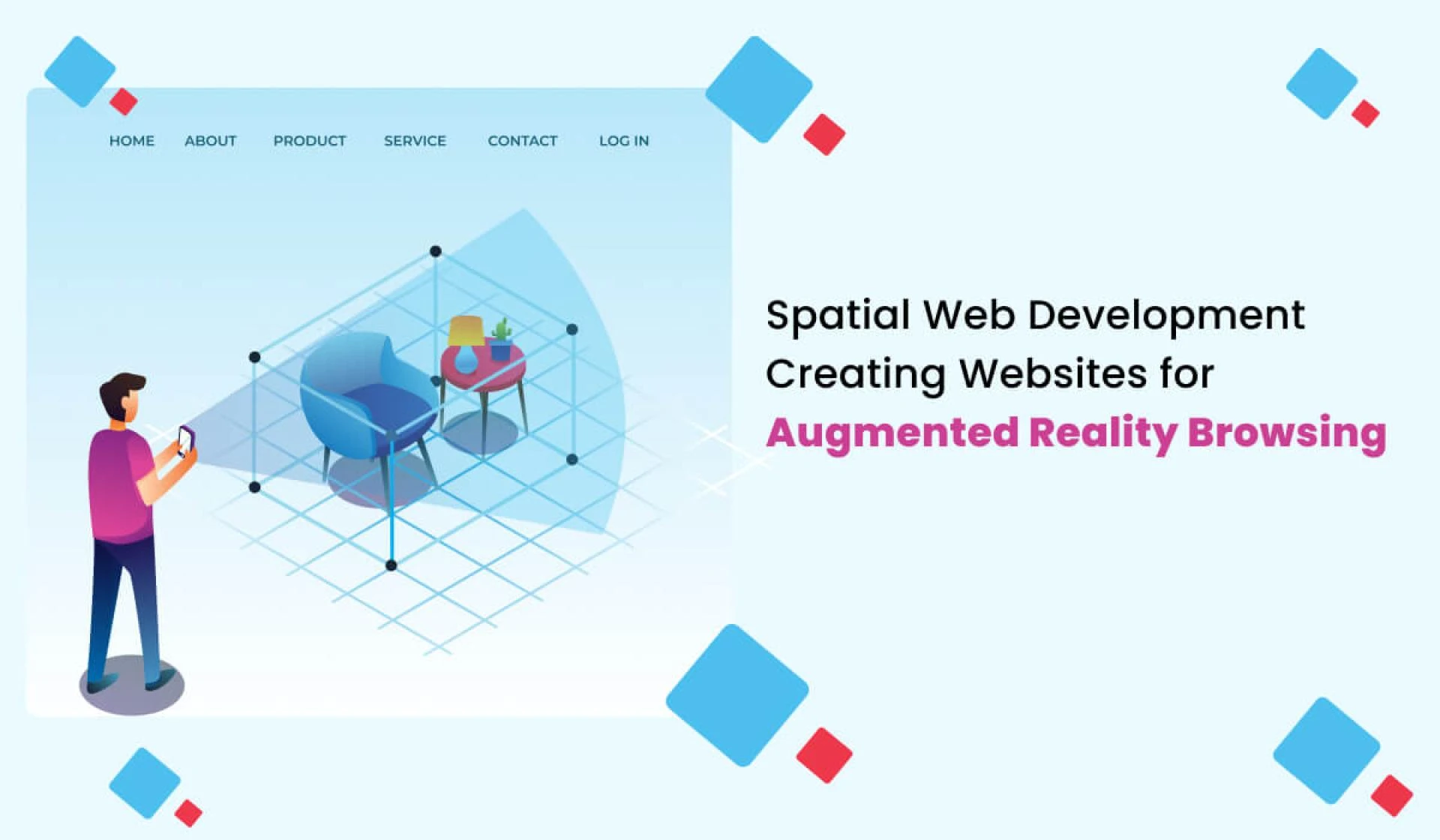

The advent of augmented reality (AR) technology has ushered in a new era in the digital realm, offering transformative experiences that blend the physical and digital worlds. Spatial web development stands at the forefront of this revolution, enabling the creation of websites and applications that users can interact with in three-dimensional space through AR browsers.
In this article a Bangalore-based web developer - Webomindapps explores the key aspects of spatial web development, including its principles, tools, and applications, providing a comprehensive overview for developers and enthusiasts alike.
Understanding Spatial Web
The spatial web, often referred to as Web 3.0, represents the next evolution of the internet, where digital information is no longer confined to flat screens but is instead integrated into our physical environment. This integration allows users to interact with digital content in real space and time, creating immersive experiences that are both informative and engaging.
Core Principles of Spatial Web Development
Three-Dimensional Interaction: Unlike traditional web development, spatial web focuses on creating experiences in a 3D space, where users can navigate and interact with content in all directions.
User Context Awareness: Spatial web applications are designed to be contextually aware, adjusting content and interactions based on the user\'s physical location, orientation, and even time of day.
Seamless Integration: The goal is to blend digital content with the physical world seamlessly, making the transition between the two as natural as possible for the user.
Tools and Technologies
Developing for the spatial web requires a new set of tools and technologies, distinct from traditional web development:
- AR Development Platforms: Tools like ARKit (for iOS) and ARCore (for Android) enable developers to create AR experiences that can run on billions of devices.
- WebXR API: This API allows for the creation of immersive web experiences that can be accessed through AR or VR headsets, providing a bridge between the spatial web and virtual reality.
- 3D Modeling Software: Creating assets for the spatial web often involves 3D modeling. Software like Blender, Maya, and SketchUp are critical for designing complex three-dimensional scenes and objects.
- Frameworks and Libraries: A-frame, Three.js, and Babylon.js are popular frameworks and libraries that simplify the development of 3D and AR web experiences, allowing for the use of standard web technologies like HTML, CSS, and JavaScript.
Applications of Spatial Web Development
The applications of spatial web development are vast and varied, touching upon numerous industries:
- Retail: AR shopping experiences allow customers to visualize products in their own space before purchasing, enhancing decision-making and customer satisfaction.
- Education: Spatial web can transform learning by providing immersive educational content that students can interact with in a more engaging and effective way.
- Tourism: AR tours can enhance the visitor experience by overlaying historical information and interactive content on real-world landmarks.
- Real Estate: Virtual tours enable potential buyers to explore properties remotely, providing a realistic sense of space and layout.
Challenges and Future Prospects
While the potential of the spatial web is immense, there are challenges to overcome, including technical limitations, privacy concerns, and the need for standardization across devices and platforms. However, ongoing advancements in AR technology and the increasing adoption of AR-enabled devices signal a bright future for spatial web development.
As developers continue to innovate and push the boundaries of what\'s possible, the spatial web is poised to redefine our interaction with the digital world, making it more intuitive, immersive, and integrated into our daily lives.
Conclusion
Spatial web development is not just a technological advancement; it\'s a paradigm shift in how we perceive and interact with the internet. By harnessing the power of AR and 3D technologies, developers can create experiences that enrich our physical world with digital content, opening up new avenues for engagement, education, and entertainment. As we venture further into this exciting frontier, the spatial web promises to bring about a more connected, interactive, and immersive digital future.






Sign in to leave a comment.