

You finish reading your speech aloud. It sounds good. You close the document, stand up, and try again.
The opening is there. The next sentence is not.
That gap is easy to miss during preparation. With the script open, you can practice your pace, pronunciation, and pauses. You still need a separate test of what happens when the words disappear.
A speech memorizer is useful when it helps you make that test—and work out what to practice next.
Start with what you need to remember
Before choosing a tool or a rehearsal method, mark the parts of your speech that need exact wording.
A quotation needs its checked wording. A name, figure, or formal commitment needs accuracy. Your opening and closing may also deserve a little extra attention.
The rest may have more room to move. If you can explain an example clearly in two slightly different ways, you may not need to force yourself to repeat one version.
This distinction makes preparation more manageable. You have a route through the talk, with a few passages that need closer practice.
Consider a short speech asking colleagues to try a new meeting format. Its route might be:
The problem → one example → the proposed change → the request
Those four prompts will not deliver the speech for you. They let you test whether you can find each part without reading it.
Put the script away sooner than feels comfortable
Once you understand a section, look away and say it aloud.
You might hesitate. You might leave out a detail. Check the original, find the omission, and try that part again. The mistake tells you where your preparation needs work.
A practical rehearsal loop is short:
- Read one section.
- Cover the text.
- Speak from a brief cue.
- Check what changed.
- Repeat the part you missed.
Give the cue enough information to bring back the thought, but not enough to read the section aloud. “Tuesday meeting: three repeated updates” is a more useful prompt than copying the whole paragraph onto a smaller card.
A speech memorizer should help you reduce the script to something you can practice from. If you keep reading the full text on every attempt, you have not yet tested recall.
Repair the join between two sections
Sometimes both sections are familiar, but the transition disappears.
You can explain the problem. You can explain the solution. After finishing the problem, though, you cannot remember how to reach the solution.
Practice that join on its own.
Say the final thought of the first section, then the sentence that introduces the next. Check that you understand the connection: does the next section answer a question, offer evidence, or challenge what came before?
For the meeting example, the bridge might be:
“We already share those updates in writing. What we need from the meeting is time to make a decision.”
That sentence gives the proposed change a reason to follow. Rehearse it with the ideas on either side, then try the complete speech.
Check whether you can start in the middle
Beginning every rehearsal at the opening can hide weak sections. You may reach the middle only after several minutes of familiar wording.
Choose a cue halfway through and start there.
Then try another entry point: the example, the recommendation, or the final request. If one start is difficult, practice that section separately before returning to a full run.
This is also a useful way to judge a speech memorization tool. Does it give you prompts you can use independently? Can you identify a weak section and return to it easily? Do its recall questions make you answer before you see the script?
Those details matter more than how polished the generated outline looks.
Check the tool’s work against your own speech
An outline can leave out something you care about. A short cue can blur two separate points. A generated question can test a minor detail while missing the main argument.
Read the output before rehearsing from it.
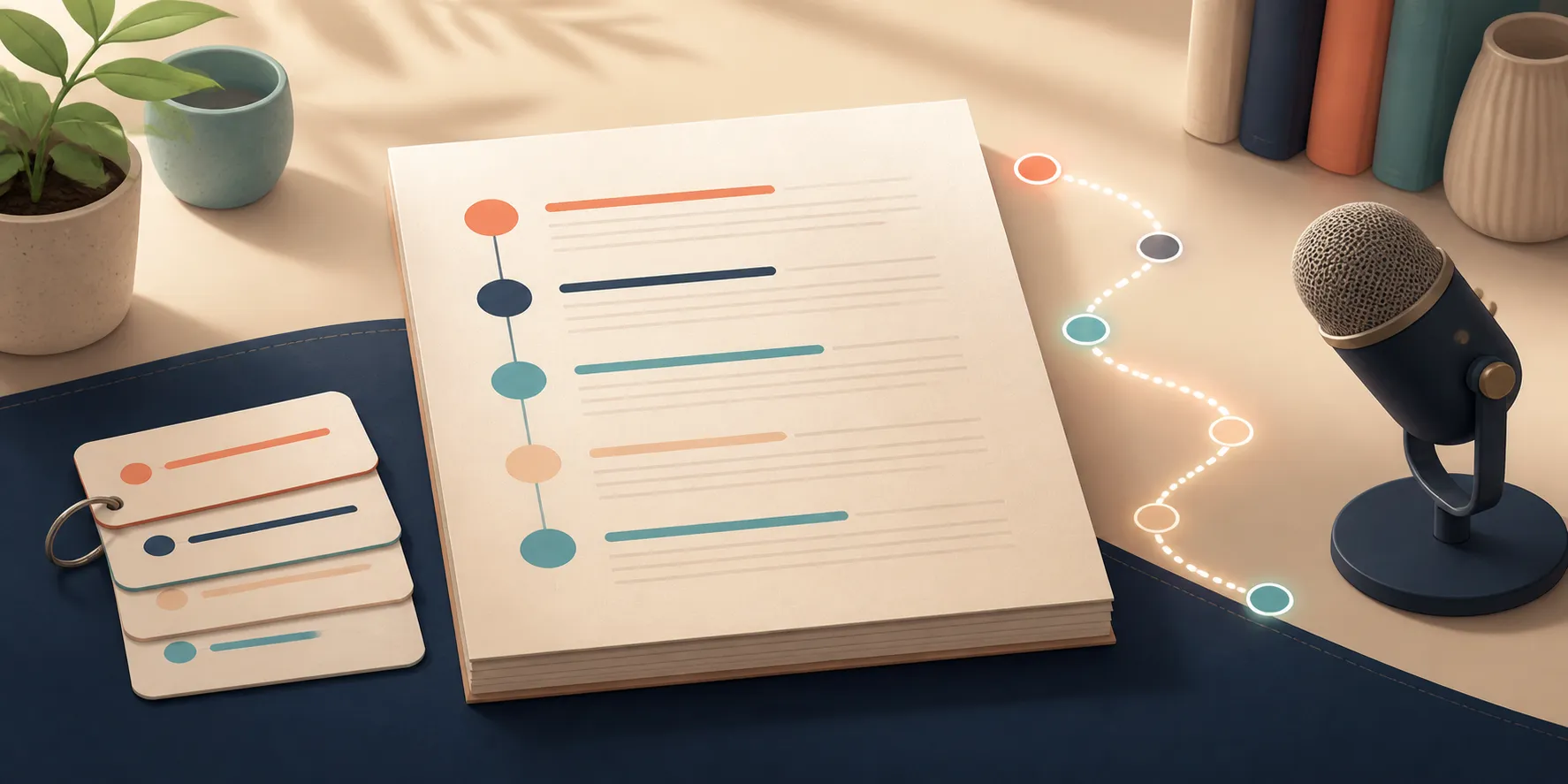
Memorize Speech is one example of a speech memorizer that turns a script into a memory blueprint, cue cards, recall questions, and review steps. Use that first pass to organize practice, then adjust the prompts to match what you actually need to say.
Keep quotations, names, and figures beside the original script for checking. A memory plan is a rehearsal aid; the source text remains your reference for exact details.
Finish with one realistic run
When the sections feel familiar, rehearse as you expect to deliver.
Stand if you will stand. Use the notes you will be allowed to bring. Practice looking up, pausing, and continuing after a small stumble.
Afterward, write down the places where you needed help. That gives your next session a clear purpose.
You do not need every rehearsal to sound finished. You need it to reveal what you can recall, what still depends on the page, and which small repair will make the next attempt more dependable.






















Sign in to leave a comment.