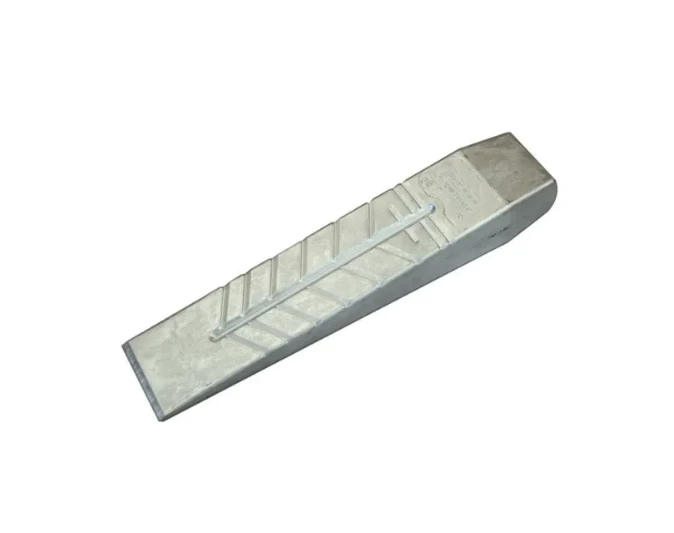

A splitting wedge is a tool used to split wood into smaller pieces. It is a simple and effective way to make firewood, fence posts, and other wooden objects. The wedge is typically made of steel or iron and has a sharp edge that is driven into the wood with a maul or hammer.
The splitting wedge works by creating a split in the wood along its grain. The wedge is driven into the wood with force, causing it to split apart. This process is repeated until the wood is split into the desired size and shape. The size and shape of the wedge can vary depending on the type of wood being split and the desired outcome.
Splitting wood with a wedge is a common practice for many homeowners and professionals alike. It is a cost-effective way to produce firewood and other wooden objects without the need for expensive machinery. However, it is important to use the proper safety precautions when using a splitting wedge to avoid injury.
Fundamentals of Splitting Wedges
Design and Types
Splitting wedges are tools used to split wood logs into smaller pieces. They come in different designs and types, each with its own unique features. The most common types of splitting wedges are the traditional wedge, the diamond wedge, and the twisted wedge.
The traditional wedge is the simplest design and is often made of steel or iron. It has a tapered shape with a broad base and a pointed tip. The diamond wedge is similar to the traditional wedge, but it has a diamond-shaped cross-section. This design allows it to split wood more efficiently than the traditional wedge. The twisted wedge has a spiral design that helps it to penetrate the wood more easily.
Material Composition
Splitting wedges are made of different materials, including steel, iron, aluminum, and plastic. Steel and iron are the most common materials used to make splitting wedges because of their durability and strength. Aluminum is a lightweight material that is often used to make splitting wedges for light-duty tasks. Plastic splitting wedges are also available, but they are not as durable as metal wedges and are best suited for occasional use.
Mechanical Principles
Splitting wedges work on the principle of mechanical advantage, which is the concept of using a simple machine to multiply force. When a splitting wedge is driven into a log, it creates a gap that allows the wood fibers to separate. The force applied to the wedge is multiplied as it moves deeper into the log, making it easier to split the wood.
To maximize the mechanical advantage of a splitting wedge, it is important to choose the right size and shape for the job. A larger wedge will generate more force, but it may be more difficult to control. A smaller wedge may be easier to handle, but it may not generate enough force to split larger logs.
In conclusion, splitting wedges are essential tools for anyone who needs to split wood. By understanding the design, material composition, and mechanical principles of splitting wedges, you can choose the right tool for the job and get the most out of your splitting experience.
Applications and Techniques
Wood Splitting
Splitting wedges are commonly used in wood splitting to split logs into smaller pieces for firewood or woodworking. The wedge is driven into the log with a sledgehammer, causing the log to split along its grain. The angle of the wedge and the force used to strike it can be adjusted to control the direction and depth of the split. Wedges are often used in conjunction with a maul or axe to make the splitting process more efficient.
Stone Masonry
Splitting wedges are also used in stone masonry to split large rocks into smaller, more manageable pieces. The wedge is driven into a pre-drilled hole in the rock, and then a series of wedges are used to split the rock along its natural grain. This technique is commonly used in the construction of stone walls, foundations, and other structures.
Metal Working
Splitting wedges can also be used in metalworking to split or cut metal objects. Wedges made of hardened steel can be used to split or cut metal bars, rods, or sheets. The wedge is driven into the metal with a hammer or press, and the force of the wedge causes the metal to split or cut. This technique is commonly used in metal fabrication, blacksmithing, and other metalworking applications.
Overall, splitting wedges are versatile tools that can be used in a variety of applications. With proper technique and safety precautions, splitting wedges can be a valuable addition to any toolkit.










Sign in to leave a comment.