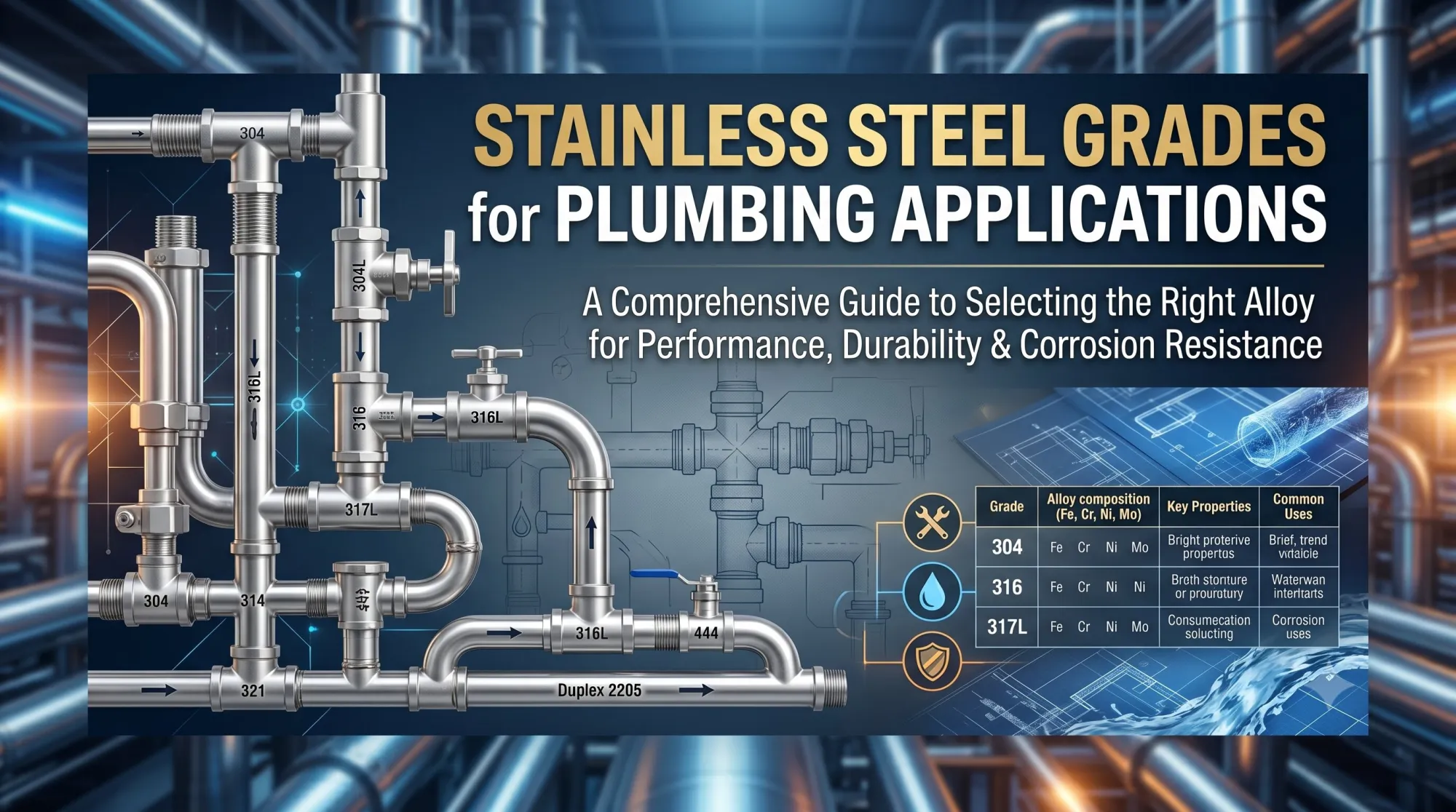

SS 304 vs SS 316: A Comprehensive Comparison Guide
When selecting stainless steel pipe fittings for plumbing, construction, and industrial systems, the choice of material grade is one of the most critical decisions an engineer or contractor will make. Two grades dominate the market: SS 304 and SS 316. While both offer excellent corrosion resistance compared to mild steel, copper, or PVC alternatives, they serve different applications and cost profiles. Understanding the differences between these grades helps ensure optimal performance, long service life, and cost-effectiveness of your piping system.
What Are Stainless Steel Grades?
Stainless steel grades are alloy compositions defined by their chromium, nickel, and molybdenum content. The numbers in the designation (304, 316) refer to standardized ASTM specifications that detail the precise chemical composition and mechanical properties required for each grade. Both 304 and 316 are austenitic stainless steels, meaning they belong to the same family with similar crystal structure and non-magnetic properties, but their alloying elements create distinct performance characteristics.
SS 304: The Standard Grade
SS 304 is the most widely used stainless steel grade globally and the baseline standard for most plumbing, food processing, and general-purpose industrial applications.
Chemical Composition
SS 304 contains 17–19% chromium and 8–11% nickel. The chromium provides primary corrosion resistance by forming a protective oxide layer on the steel surface. The nickel enhances ductility, weldability, and toughness. This composition delivers strong performance in neutral and mildly corrosive environments.
Corrosion Resistance
SS 304 performs excellently in fresh water, atmospheric conditions, and most food-industry environments. It resists rusting in normal indoor and outdoor conditions, making it suitable for residential cold and hot water supply lines, hospitals, hotels, and commercial plumbing. However, it shows sensitivity to pitting corrosion when exposed to high chloride concentrations—such as coastal environments, swimming pools, or salt-treated water systems.
Common Applications
- Residential water supply systems
- Commercial building plumbing
- Food and beverage processing
- Pharmaceutical facility pipelines
- Industrial water treatment systems
SS 316: The Premium Grade
SS 316 is an enhanced version of SS 304 with superior corrosion resistance, particularly in harsh or chemically aggressive environments. It is the preferred choice for demanding applications where reliability is non-negotiable.
Chemical Composition
SS 316 contains 16–18% chromium, 10–14% nickel, and 2–3% molybdenum. The critical difference is the molybdenum addition, which enhances chloride corrosion resistance and high-temperature stability. This alloying element significantly improves pitting and crevice corrosion resistance, making SS 316 the steel of choice in aggressive chemical environments.
Corrosion Resistance
SS 316 offers superior resistance to chloride-induced pitting corrosion, making it essential in coastal zones, marine applications, and facilities with saltwater or chemically corrosive exposure. It also resists sulfuric, phosphoric, and acetic acid attack better than SS 304, making it ideal for chemical processing plants. The molybdenum addition provides an additional protective layer, allowing SS 316 to maintain integrity in higher-chloride and higher-temperature conditions where SS 304 would begin to fail.
Common Applications
- Coastal and marine piping systems
- Chemical processing and refining plants
- Pharmaceutical manufacturing pipelines
- High-temperature industrial applications
- Critical infrastructure in aggressive environments
Direct Comparison: SS 304 vs SS 316
| Property | SS 304 | SS 316 |
| Chromium % | 17–19% | 16–18% |
| Nickel % | 8–11% | 10–14% |
| Molybdenum % | None | 2–3% |
| Chloride Resistance | Moderate | Superior |
| Cost | Lower | 15–30% higher |
How to Choose the Right Grade for Your Application
Choose SS 304 If:
- Your project is in a non-coastal, non-corrosive environment
- You are building residential apartments or commercial office plumbing
- Budget is a critical constraint
- The application involves fresh water supply or standard HVAC systems
- Piping will not be exposed to high-chloride or acidic environments
Choose SS 316 If:
- The project is located in a coastal region or near salt water
- Your facility involves chemical processing, pharmaceuticals, or refined products
- The installation will operate at elevated temperatures or pressures
- Long-term reliability and minimal maintenance are priorities
- You are specifying for critical infrastructure (hospitals, data centres, refineries)
Installation Method: Press Fittings and Material Grade
Both SS 304 and SS 316 are compatible with modern press-fitting systems, which offer significant advantages over traditional welded or threaded connections. Flame-free press-crimp installation eliminates on-site welding hazards, reduces installation time, and creates permanent, leakproof joints. Many modern press fitting manufacturers—including Rhinox India—produce both SS 304 and SS 316 variants, allowing engineers to select the appropriate grade without changing installation methodology.
This flexibility is particularly valuable in mixed-environment projects where some zones may require standard stainless steel while others demand enhanced corrosion resistance. A unified press fitting system accommodates both grades seamlessly, simplifying procurement, training, and site execution.
Cost-Benefit Analysis
While SS 316 typically costs 15–30% more than SS 304 per fitting or pipe section, the long-term cost analysis often favors the upgrade when corrosion risk is present. Replacement costs, emergency repairs, downtime, and liability exposure in a failed system can dwarf the initial material savings of choosing SS 304 in a corrosive environment.
For projects with a 25+ year lifecycle and high corrosion risk—such as coastal commercial buildings or critical industrial facilities—the premium for SS 316 is a prudent investment. For low-risk, budget-sensitive projects in protected inland environments, SS 304 provides excellent value and adequate performance.
Real-World Application: High-Rise Residential in an Urban Setting
A developer planning a 28-storey residential tower in Delhi might specify SS 304 press fittings for most potable water and cold-water lines, reducing material costs across the entire network. However, if the building were located in Mumbai (a coastal city with higher salt-air exposure), the same developer would likely upgrade to SS 316 for roof-level tanks, external lines, and open-air rooftop plumbing to prevent pitting corrosion over the building's 30-year design life.
Manufacturers like Rhinox India supply both SS 304 and SS 316 variants of their press fitting ranges, enabling engineers to implement zone-based material specifications—using SS 304 in protected zones and SS 316 only where environmental exposure demands it, optimizing both performance and cost.
Conclusion
Choosing between SS 304 and SS 316 is not about which grade is universally 'better'—it's about matching the grade to your specific environment, budget, and long-term reliability requirements. SS 304 remains the standard for most plumbing applications, delivering excellent corrosion resistance at a competitive cost. SS 316 is the premium choice for harsh, chemically aggressive, or salt-exposed environments where pitting corrosion is a genuine risk.
Modern press-fitting systems accommodate both grades, allowing flexible, cost-optimized material strategies across large projects. When combined with certified installation methods—such as the flame-free press-crimp technology offered by Indian manufacturers—both grades deliver durable, low-maintenance piping systems that meet today's demands for performance and sustainability.
By understanding the chemical, corrosion, and cost differences between these grades, you can make informed specifications that balance performance, durability, and project economics.



















Sign in to leave a comment.