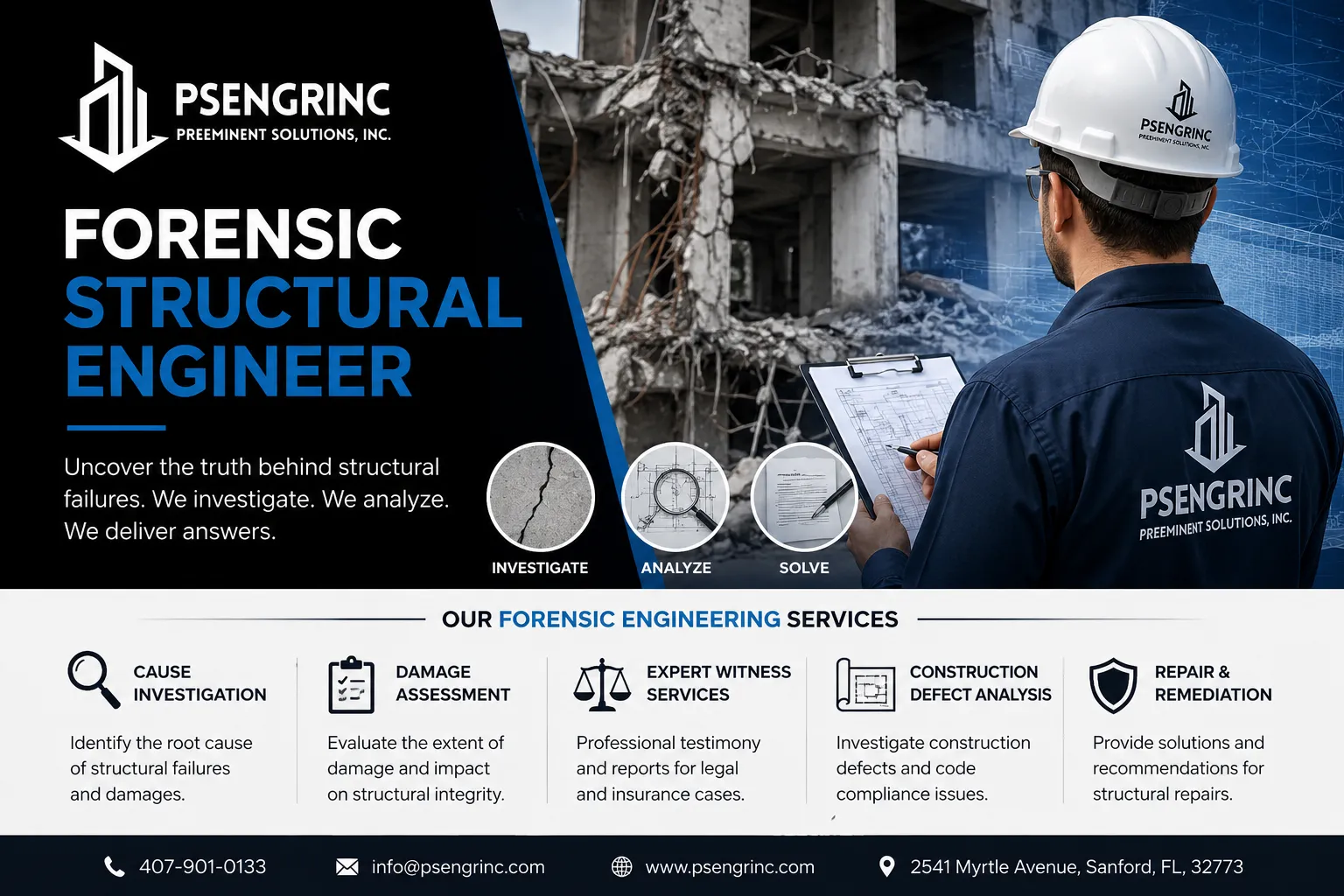

The safety and reliability of buildings depend on proper design, quality construction, and ongoing maintenance. When structural issues occur, determining what happened and why it happened becomes critical. Property owners, insurance companies, attorneys, and construction professionals often require expert analysis to identify failures, assess damage, and establish responsibility. This is where forensic engineering plays an essential role.
Forensic engineering is a specialized field focused on investigating structural problems and identifying the factors that contribute to damage or failure. These investigations provide valuable insights that help guide repairs, support insurance claims, and resolve legal disputes. Through a systematic evaluation process, engineers can uncover the underlying causes of structural concerns and recommend effective solutions.
Understanding the Role of Forensic Engineering
Forensic engineering combines technical expertise, investigative methods, and analytical problem-solving. Unlike traditional engineering, which focuses on designing and constructing structures, forensic engineering examines existing conditions to determine why a problem occurred.
Engineers in this field conduct detailed assessments of residential, commercial, and industrial properties. Their work often includes site inspections, material evaluations, structural analysis, and comprehensive reporting. The findings help stakeholders understand the severity of the issue and determine the most appropriate course of action.
A forensic investigation is particularly important when structural failures result in significant financial losses, safety concerns, or legal challenges. Accurate assessments provide objective evidence that supports informed decision-making.
Common Causes of Structural Damage
Structural problems can develop for many reasons. Understanding these factors helps property owners recognize potential risks and address issues before they become more severe.
Construction Deficiencies
Improper construction practices can lead to long-term structural concerns. Inadequate workmanship, incorrect installation methods, or deviations from approved plans may affect a building's performance and stability.
Material Failures
Building materials must meet specific standards to perform effectively. Defective or deteriorated materials can weaken structural systems and increase the likelihood of damage.
Environmental Factors
Natural events such as hurricanes, floods, earthquakes, and severe storms can place significant stress on structures. Environmental exposure over time may also contribute to deterioration and reduced structural integrity.
Foundation Movement
Settlement, soil expansion, and changing ground conditions can affect a building's foundation. These movements often result in cracks, uneven floors, and other visible signs of structural distress.
Design-Related Issues
Errors in engineering calculations or design specifications may create weaknesses that become apparent years after construction is completed.
The Importance of Standards in Structural Investigations
Engineering standards provide the framework for evaluating structural performance and safety. These standards establish requirements for design, construction, materials, and maintenance practices.
During an investigation, engineers compare existing conditions against applicable standards to determine whether a structure was designed and constructed appropriately. This comparison helps identify deficiencies and provides insight into potential causes of failure.
Standards also help ensure consistency in evaluations. By following established engineering principles, forensic professionals can provide objective findings that withstand scrutiny from insurers, attorneys, and regulatory agencies.
Standard and Cause and Forensic Engineer in Modern Assessments
A Standard and Cause and Forensic Engineer plays a crucial role in identifying the relationship between engineering standards and the causes of structural failures. Through detailed inspections and technical analysis, these professionals evaluate whether structures meet accepted requirements and determine how deficiencies may have contributed to damage.
Their work often involves reviewing construction documents, inspecting damaged areas, analyzing material performance, and assessing environmental influences. By examining all relevant factors, they can establish a clear understanding of how and why structural issues developed.
This investigative process provides valuable information for insurance claims, legal proceedings, repair planning, and risk management.
Key Components of a Forensic Investigation
Successful forensic engineering investigations follow a structured approach designed to uncover accurate and reliable findings.
Site Inspection
Engineers begin by conducting a thorough inspection of the affected structure. This step involves documenting visible damage, identifying areas of concern, and collecting relevant information.
Evidence Collection
Photographs, measurements, material samples, and construction records provide important evidence that supports the investigation.
Technical Analysis
Collected data is analyzed using engineering principles and industry standards. This process helps identify contributing factors and determine root causes.
Reporting and Documentation
A detailed report summarizes findings, conclusions, and recommendations. These reports often serve as critical resources in legal and insurance matters.
Expert Testimony
In some cases, forensic engineers provide expert witness services to explain technical findings during litigation or dispute resolution.
Benefits of Professional Forensic Engineering Services
Working with experienced forensic engineers offers numerous advantages for property owners and stakeholders.
Key benefits include:
- Accurate identification of structural issues
- Objective and evidence-based conclusions
- Support for insurance claims
- Assistance with legal disputes
- Improved repair planning
- Enhanced safety and risk management
Professional investigations help reduce uncertainty and provide confidence when making important decisions regarding property repairs and investments.
Why Experience Matters in Structural Investigations
Forensic engineering requires extensive technical knowledge and practical experience. Investigations often involve complex structural systems, multiple contributing factors, and detailed analysis of construction practices.
Experienced professionals understand how buildings respond to environmental forces, material deterioration, and design limitations. Their expertise enables them to identify subtle indicators that may otherwise go unnoticed.
Organizations such as Preeminent Solutions provide comprehensive engineering assessments designed to deliver accurate and reliable results. Their commitment to detailed investigations and professional analysis helps clients address structural concerns with confidence.
Conclusion
Structural failures and property damage can have significant financial and safety implications. Understanding the cause of these issues requires specialized knowledge, objective analysis, and adherence to established engineering standards. A qualified Forensic Engineer provides the expertise needed to investigate structural concerns, determine root causes, and develop practical solutions. Through detailed evaluations and evidence-based findings, forensic engineering supports safer buildings, informed decision-making, and long-term structural reliability.



























Sign in to leave a comment.