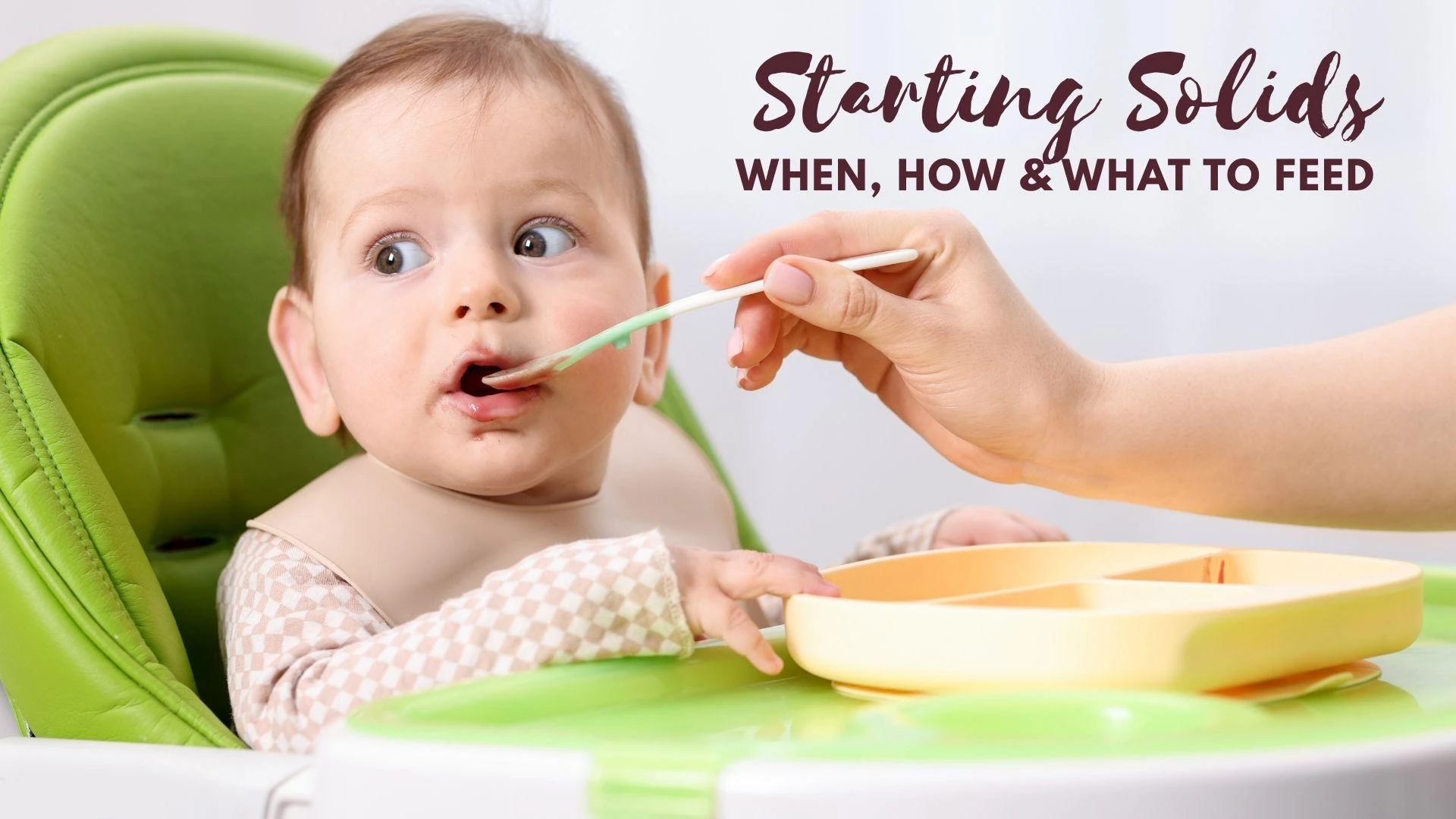
There’s a moment most parents don’t forget the first time your baby tries something other than milk. You wait for their reaction, half excited, half nervous… and then comes the face. Sometimes it’s curiosity, sometimes confusion, and sometimes pure rejection.
If you’ve found yourself wondering “when should I start solids?” or “am I doing this the right way?”, you’re definitely not alone. This phase sounds simple in theory, but in reality, it comes with a lot of opinions, advice, and second thoughts.
So instead of overcomplicating it, let’s just talk about it the way it really is honest, simple, and a lot more doable than it seems.
What Does Starting Solids Really Mean?
Starting solids (also known as weaning) is about introducing your baby to new textures, tastes, and nutrients alongside milk feeds.
In the early days, food was more about exploration than nutrition. Your baby will taste, spit, smear, and sometimes completely refuse and all of that is part of the process.
This phase gently prepares their digestive system, oral skills, and even their relationship with food.
When to Start Solid Foods for Babies
You’ll often hear “start at 6 months,” and that’s a solid general guideline. But babies don’t follow calendars; they show readiness through behavior.
Instead of focusing only on age, watch your baby closely. A baby who is ready for solids begins to show curiosity about food and better physical control.
Signs Your Baby May Be Ready
- Can sit upright with minimal support
- Holds their head steady
- Watches you eat with interest
- Opens mouth when food is offered
- Swallows food instead of pushing it out
If most of these signs are present, you’re likely at the right stage.
Why This Stage Matters More Than You Think
Starting solids is a developmental leap.
Your baby is learning how to:
- Move food from the front to the back of their mouth
- Accept different textures and flavors
- Recognize hunger and fullness cues beyond milk
At the same time, their nutritional needs begin to expand. Nutrients like iron and zinc, which were earlier met through milk, now need to come from food sources too.
For mothers, this stage often brings a shift from predictable feeding routines to something more hands-on and, at times, unpredictable. It can feel like a lot to manage, especially if you're balancing other responsibilities.
What Are the Best First Foods for Babies?
This is where many parents feel stuck. Should you start with fruits? Cereals? Traditional foods?
The truth is there’s no single “perfect” first food. What matters more is simplicity, softness, and digestibility.
Common First Foods That Work Well
- Mashed banana
- Steamed and puréed apple or pear
- Rice or oats porridge
- Soft khichdi or dal mash
- Mashed sweet potato or carrot
- Avocado
Start with single-ingredient foods and give your baby a couple of days before introducing something new. This helps you notice any reactions and understand what suits your baby best.
How to Introduce Solids Without Overwhelm
This is where expectations often clash with reality. You might imagine neat spoonfuls and happy eating but in reality, it’s messy, slow, and sometimes confusing.
Start small. One meal a day is more than enough in the beginning. A few spoonfuls, once a day, gradually increasing as your baby gets comfortable.
Let your baby take the lead. Some days they’ll eat more, some days less. Try to focus on consistency rather than quantity.
Also, prepare for messit’s unavoidable situation. This is where practical things like easy-to-clean baby outfits, bibs, and feeding-friendly clothing make a real difference in your daily routine. When you’re not stressed about stains, you’re able to enjoy the moment more. Also invest in good food feeders be it pacifiers or squeezy spoons to make your baby savour food easily and comfortably.
How This Phase Affects Babies and Mothers
For babies, this stage can feel like a sensory overload. New textures, unfamiliar tastes, and a completely different way of eating it's a lot to process.
You might notice:
- Funny facial expressions
- Food being pushed out repeatedly
- Sudden likes and dislikes
All of this is normal.
For mothers, this stage often brings emotional ups and downs. There can be excitement when your baby eats well, and worry when they don’t. It’s easy to question yourself“Am I feeding enough?” or “Am I doing it right?”
The key is to remember: this is a learning phase, not a performance test.
Common Challenges While Starting Solids
Even with the best preparation, most parents face a few bumps along the way.
What You Might Encounter
- Baby refusing food repeatedly
- Gagging while trying new textures
- Mild constipation or gas
- Irregular eating patterns
These are extremely common and usually temporary. Babies need time to adjust, and their digestive systems are still developing.
Instead of reacting quickly, observe patterns. Often, consistency and patience solve most of these challenges.
Home Remedies: Helpful or Harmful?
In many households, advice flows in quickly; add ghee, try traditional mixes, and give certain herbs.
While some practices may be beneficial, not all are suitable for young babies.
It’s safer to keep things simple in the beginning. Fresh, home-cooked, minimally processed food works best. Avoid adding salt, sugar, or honey, especially in the first year.
If you’re ever unsure, it’s always better to check with a pediatrician rather than experimenting.
When Should You Consult a Doctor?
Most feeding journeys are smooth with minor hiccups. But there are situations where professional advice is important.
Watch Out For:
- Consistent refusal to eat over time
- Signs of food allergies (rashes, swelling, vomiting)
- Difficulty swallowing
- Poor weight gain
- Ongoing digestive discomfort
If something feels off, trust your instincts and seek guidance.
Baby-Led Weaning vs Traditional Feeding
You may come across the concept of baby-led weaning, where babies feed themselves soft finger foods instead of being spoon-fed.
There’s no right or wrong method here.
Some parents prefer spoon feeding for control and ease, while others like baby-led weaning for independence and exploration. Many families naturally adopt a mix of both approaches.
The goal is the samehelp your baby develop a healthy relationship with food.
Making Daily Feeding Easier (Practical Tips)
A few small adjustments can make a big difference in your everyday routine:
- Keep mealtimes calm and distraction-free
- Don’t force your baby to finish food
- Repeat foods multiple times before deciding preferences
- Stick to a loose routine, not a rigid schedule
Over time, feeding becomes less of a task and more of a shared experience.
Final Thoughts
Starting solid foods is not just about nutrition but also about discovery, patience, and growth for both you and your baby.
There will be messy days, doubts, and small wins that feel huge. Some meals will be refused, others surprisingly loved.
What matters most is staying consistent, observing your baby, and letting go of perfection.
Because in the end, this phase isn’t about getting it “right” it’s about learning together, one spoon at a time.

























Sign in to leave a comment.