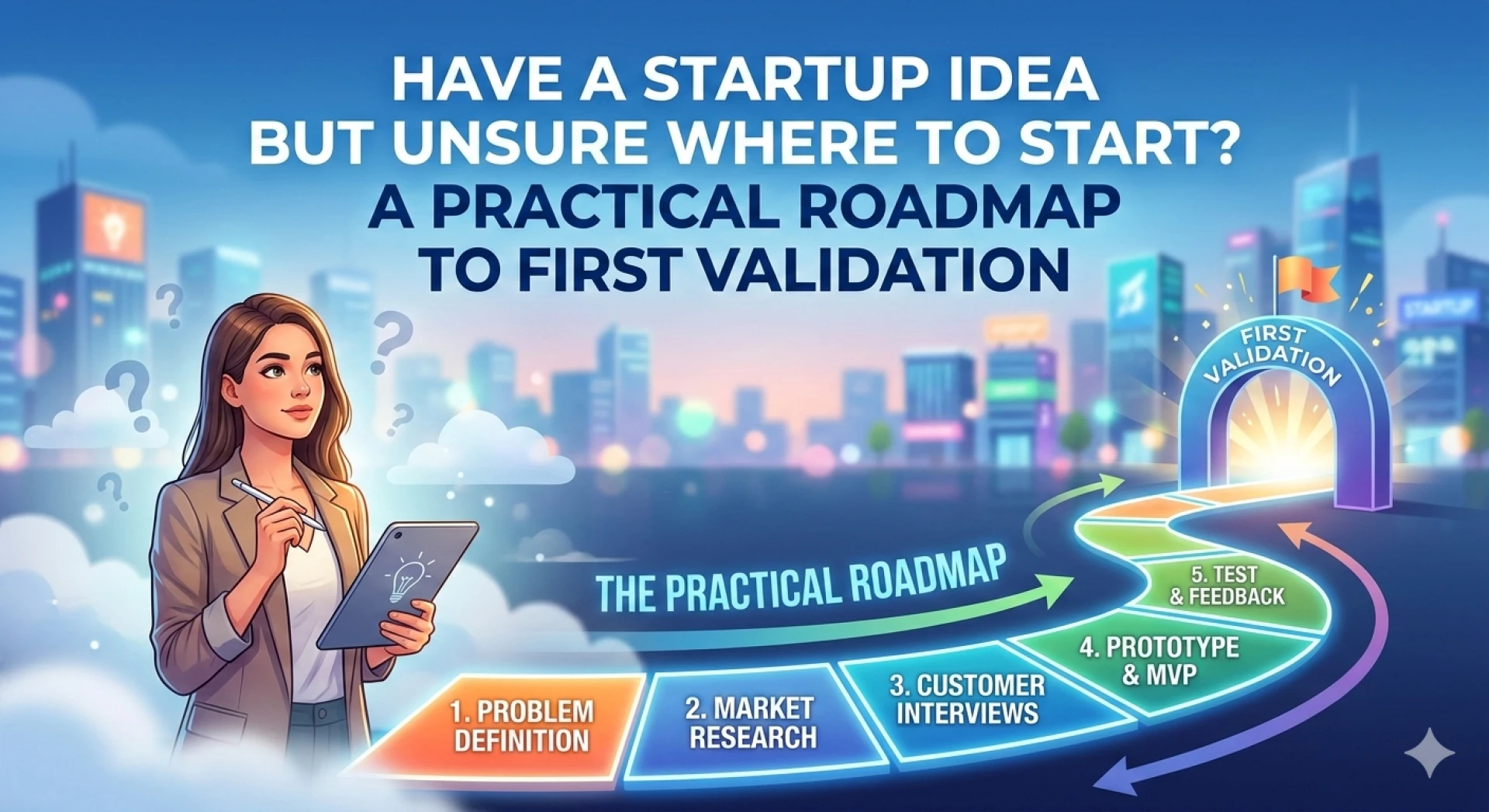

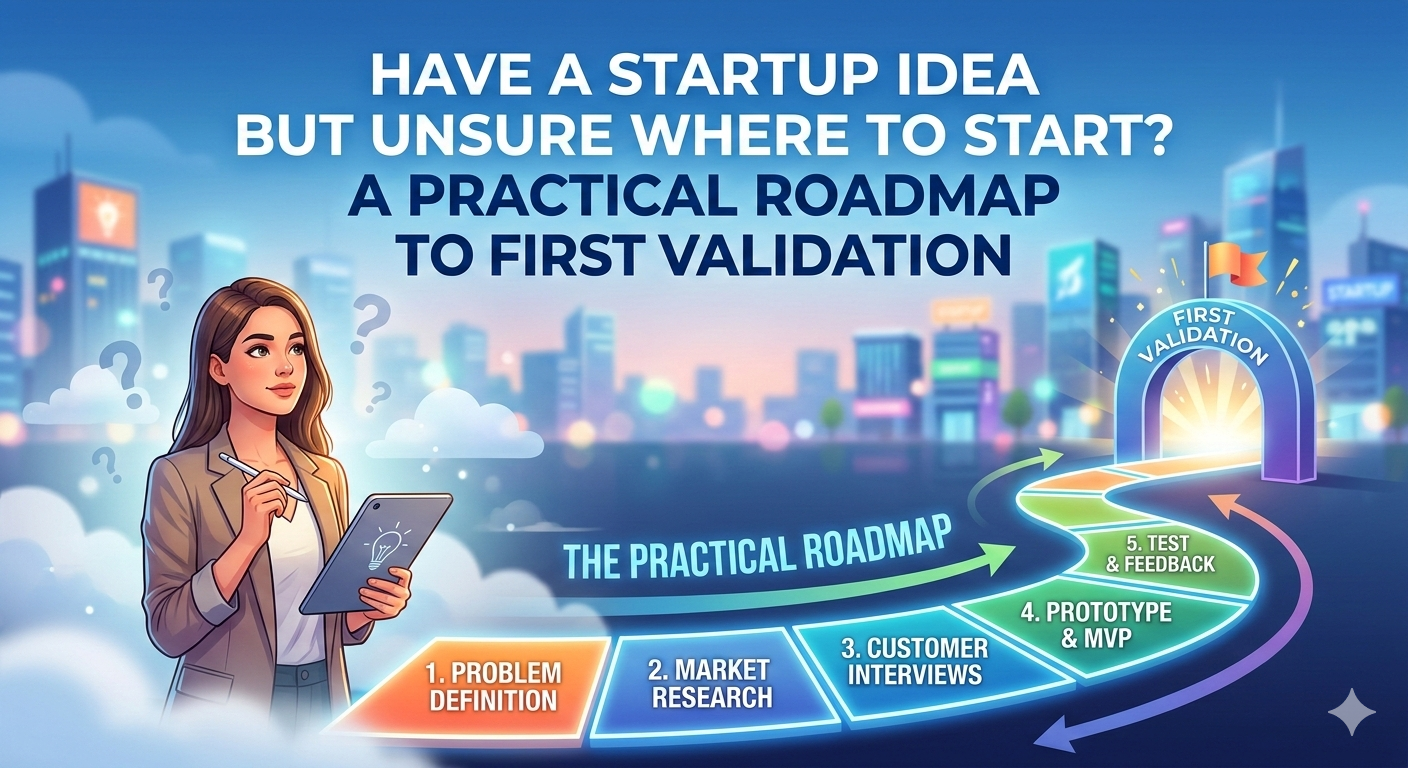
Every startup begins with a spark — an idea that feels exciting, promising, and full of potential. But between inspiration and execution lies the most critical stage: validation.
Many founders rush straight into building. They invest in design, hire developers, or approach a product development company before truly confirming whether the market wants what they’re creating. The result? Wasted time, stretched budgets, and products that struggle to gain traction.
If you have a startup idea but aren’t sure what to do next, here’s a practical roadmap to reach your first real validation milestone.
Step 1: Define the Problem Clearly
Before focusing on features, focus on the problem.
Ask yourself:
- Who exactly faces this problem?
- How are they solving it today?
- Why is the current solution inadequate?
The stronger and more specific the problem statement, the easier it becomes to test demand. Avoid vague ideas like “a better marketplace” or “an AI-powered platform.” Instead, clarify the pain point in measurable terms.
Validation begins with clarity.
Step 2: Identify Your Ideal Customer
Many startup ideas fail because they target “everyone.”
Narrow your audience:
- Industry or niche
- Company size (if B2B)
- Job role or buyer type
- Geography
The more defined your audience, the easier it becomes to test messaging and gather meaningful feedback.
This stage often overlaps with what professional Product Validation Services focus on — narrowing scope before investing in development.
Step 3: Talk to Potential Users
There is no substitute for direct conversations.
Reach out through LinkedIn, founder communities, industry forums, or personal networks. Your goal is not to sell — it’s to learn.
Ask:
- How do you currently solve this problem?
- What frustrates you most?
- Have you paid for a solution before?
If people acknowledge the pain but show no urgency to solve it, that’s a signal. If they express frustration and interest in a better solution, that’s traction.
This is the foundation of Product Idea Validation Service frameworks used by experienced teams.
Step 4: Test Demand Before Building
Before engaging a product development company, validate demand in lightweight ways:
- Create a simple landing page explaining the solution.
- Run small paid ads to test interest.
- Offer early access sign-ups.
- Collect emails from interested users.
- Share a clickable prototype.
The goal is evidence, not perfection.
Even for mvp development for startups, validation should precede code. Building without proof is guesswork.
Step 5: Define the Core Value Proposition
At this stage, you should understand:
- The primary problem
- The target audience
- Their current alternatives
- The urgency level
Now define your core value in one sentence:
“We help [specific audience] achieve [specific outcome] without [common frustration].”
If this message resonates consistently in conversations and testing, you’re ready to move forward.
Step 6: Build a Focused MVP Plan
Only after validation should you move toward execution.
An MVP is not a smaller version of your full vision. It is the simplest version that delivers core value.
Partnering with an experienced mvp development company or mvp software development company at this stage helps you:
- Avoid feature overload
- Prioritize critical functionality
- Prevent early technical debt
- Plan for scalability from day one
A reliable team offering product development services will help translate validation insights into a structured build plan — not just write code.
Step 7: Measure Real Market Signals
Once your MVP is live, validation continues.
Track:
- Activation rate
- User engagement
- Retention
- Conversion to paid users
- Customer feedback patterns
Validation is not a one-time event. It’s an ongoing cycle of testing, learning, and improving.
Professional Product Validation Services don’t stop at idea testing — they extend into real-world user behavior analysis.
Common Mistakes to Avoid
- Building too early – Excitement is not validation.
- Overbuilding the MVP – More features don’t mean more success.
- Ignoring negative feedback – Honest criticism is data.
- Targeting too broad an audience – Specificity drives traction.
- Choosing the wrong development partner – Not all teams understand startup constraints.
A strategic product development company focuses on business outcomes, not just deliverables.
Final Thoughts
Having a startup idea is powerful. But turning that idea into a validated opportunity requires structure.
Start with clarity.
Validate with conversations and demand testing.
Define your value proposition.
Then build lean — with the right support.
Whether you choose to work with a mvp development company, explore mvp development for startups, or engage a team offering full-scale product development services, the key is simple:
Validate first. Build second.
Because in startups, certainty doesn’t come from belief — it comes from proof.






















Sign in to leave a comment.