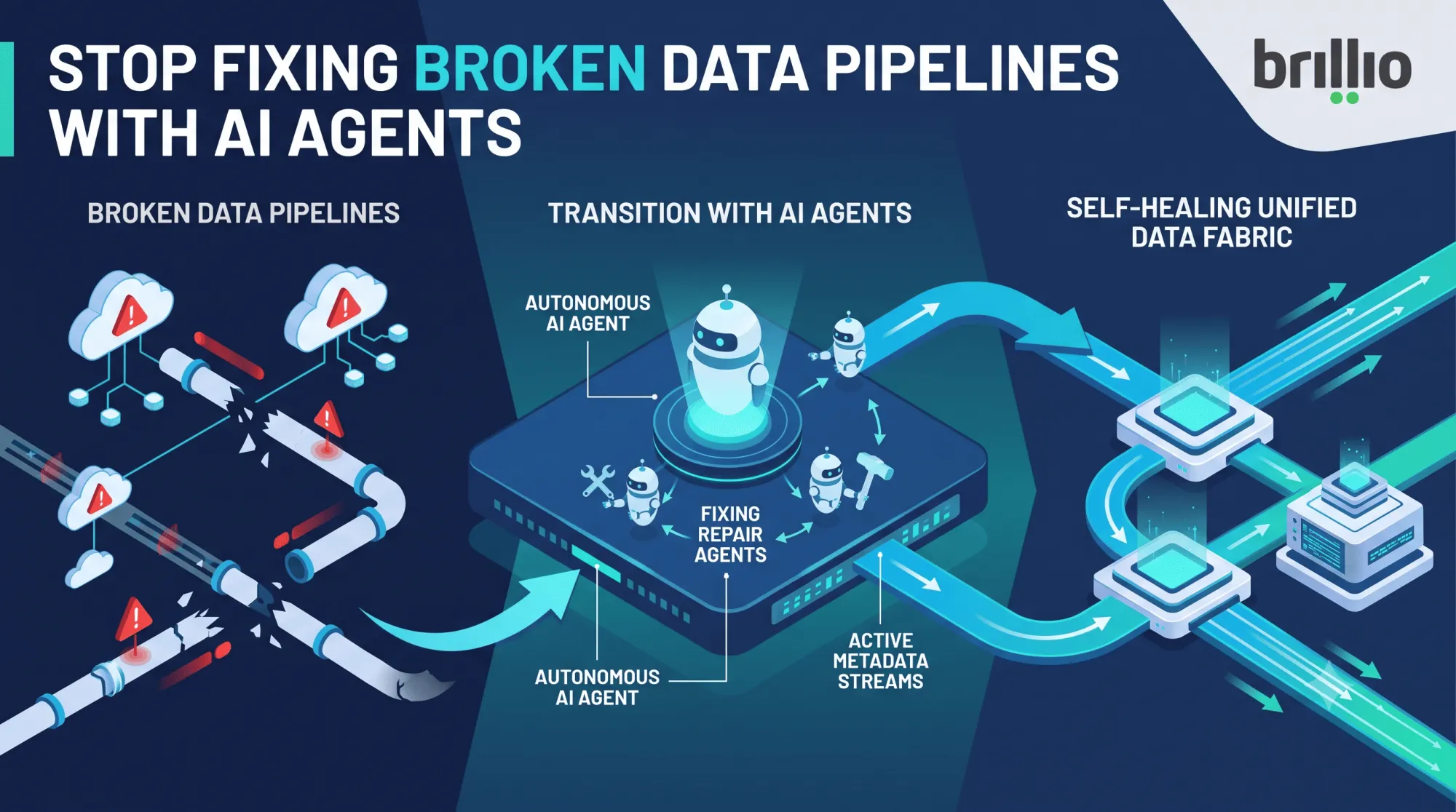

How Agentic Data and Application Management fixes schema errors before dashboards crash.
Every data engineering team knows the routine: at 6:30 AM, an upstream CRM or billing database renames an essential field without notice. By 7:00 AM, the streaming ETL pipeline throws an unhandled exception, batch ingestion halts, and the executive revenue dashboard displays broken metrics. Data engineers spend upwards of 35% of their working hours acting as emergency maintenance crews-parsing log traces, drafting manual migration scripts, and stress-testing downstream dependencies.
Deploying conversational AI assistants does not resolve this operational drag. While generative copilots can summarize error logs, they cannot execute database fixes. Eliminating pipeline downtime requires transitioning to AI-driven DevOps and modern platform engineering with AI, where autonomous data agents monitor, test, and repair data flows without human friction.
What is Agentic Data and Application Management?
Agentic Data and Application Management (ADAM) is an enterprise architecture where context-aware, autonomous AI agents actively track data lineage, detect schema evolution, and execute verified operational repairs across distributed data fabrics and enterprise applications without manual intervention.
Unlike static scripts or passive chatbots, an Agentic AI Platform for Enterprises operates on real-time feedback loops. By bridging data modernization, marketplaces, and active metadata graphs, autonomous agents transform fragile ETL jobs into dynamic systems of action. This architectural foundation eliminates silent data corruption, protects downstream data consumers, and delivers continuous commercial intelligence alongside reliable real-time decision intelligence directly to business stakeholders.
The 4-Step Architecture of a Self-Healing Data Pipeline
Replacing manual pipeline firefighting with autonomous remediation requires a dedicated AI Agent Orchestration Platform that routes tasks through four synchronized operational phases:
1. Anomaly & Schema Drift Detection: When an upstream system renames a field (e.g., client_id to customer_uuid), an ingestion agent identifies the structural deviation immediately during staging and quarantines the affected payload to protect the warehouse.
2. Semantic Mapping & Reasoning: The agent queries the active metadata catalog to verify semantic intent. It cross-references historical transformations to ensure the incoming field matches existing business logic.
3. Containerized Auto-Patching: An autonomous engineering agent writes a targeted schema patch, executes it within an isolated sandbox container, and runs automated synthetic regression tests to verify downstream integrity.
4. Production Sync & Audit Logging: Once validation criteria pass, the orchestrator applies the verified patch to the live pipeline, updates lineage graphs, and notifies the engineering team with zero production downtime.
Governing Autonomous Execution: Security and Cost Controls
Granting autonomous agents write access to production database systems introduces operational liability if left unconstrained. An uncalibrated agent could trigger cascading table drops or get stuck in recursive execution loops that drain cloud budgets.
According to enterprise research by Gartner, scaling automated data environments requires strict active metadata controls and continuous quality governance. Achieving this level of reliability requires an Enterprise AI Governance Platform that enforces:
- Agentic Role-Based Access Control (RBAC): Restricting agents to short-lived, task-specific credentials instead of shared root administrative keys.
- Deterministic Guardrails: Implementing non-negotiable security boundaries that block unauthorized column drops, data truncation, or unmasked PII exposure.
- FinOps & Token Budget Caps: Applying automated session limits and kill-switches to prevent runaway LLM compute expenditures during complex reasoning chains.
- AI-Driven Data Governance: Recording tamper-proof audit trails for every query evaluation, schema adjustment, and tool execution to ensure compliance readiness.
Measuring AI's ROI: The Impact of Brillio's Enterprise Accelerators
When evaluating autonomous data infrastructure, executive decision-makers focus on measuring AI's ROI and accelerating time-to-value.
Building multi-agent coordination frameworks, memory layers, and custom tool connectors internally often consumes 12 to 18 months of engineering resources. Leading organizations avoid custom engineering delays by implementing proven ai accelerators for enterprise.
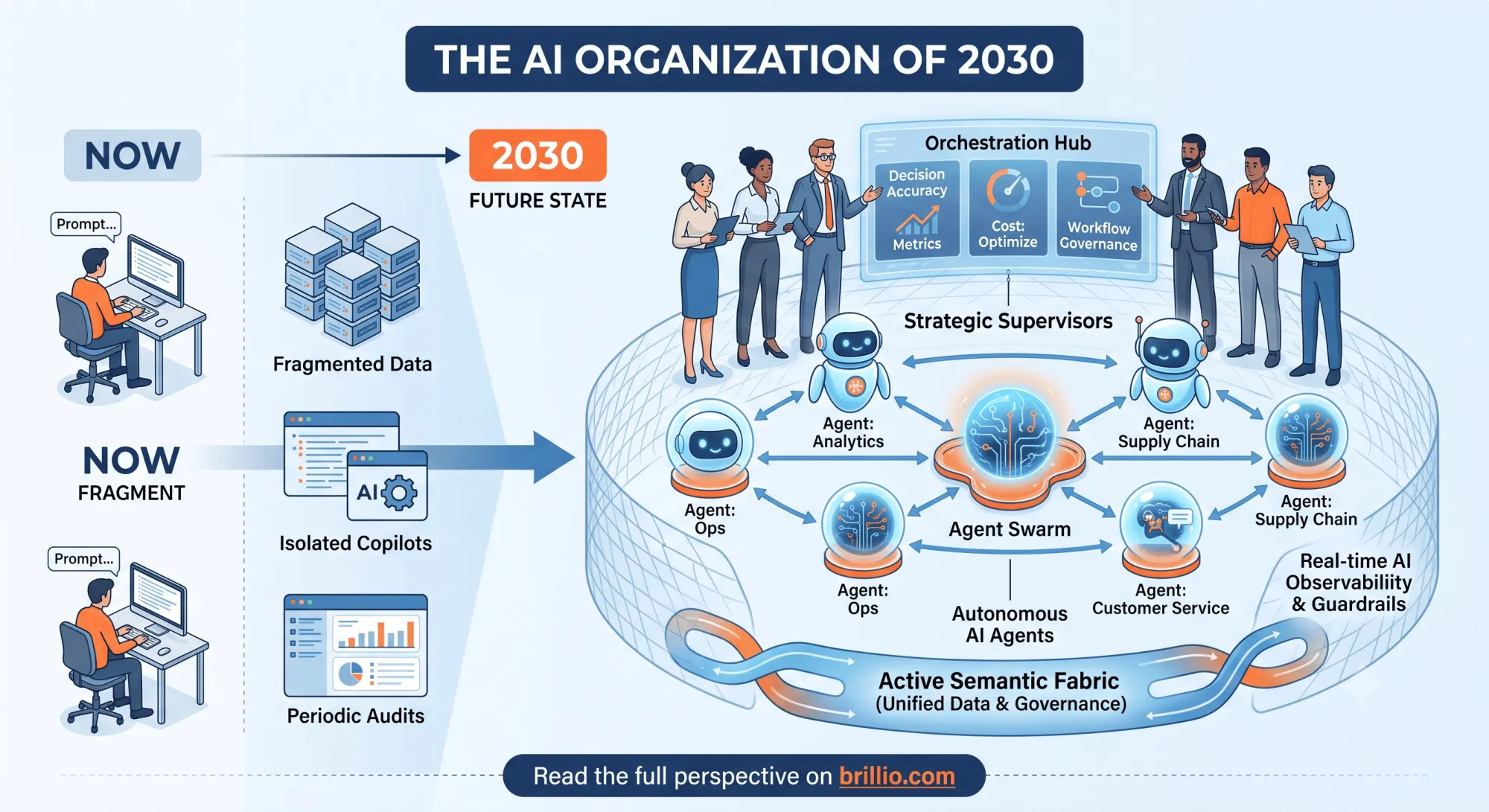
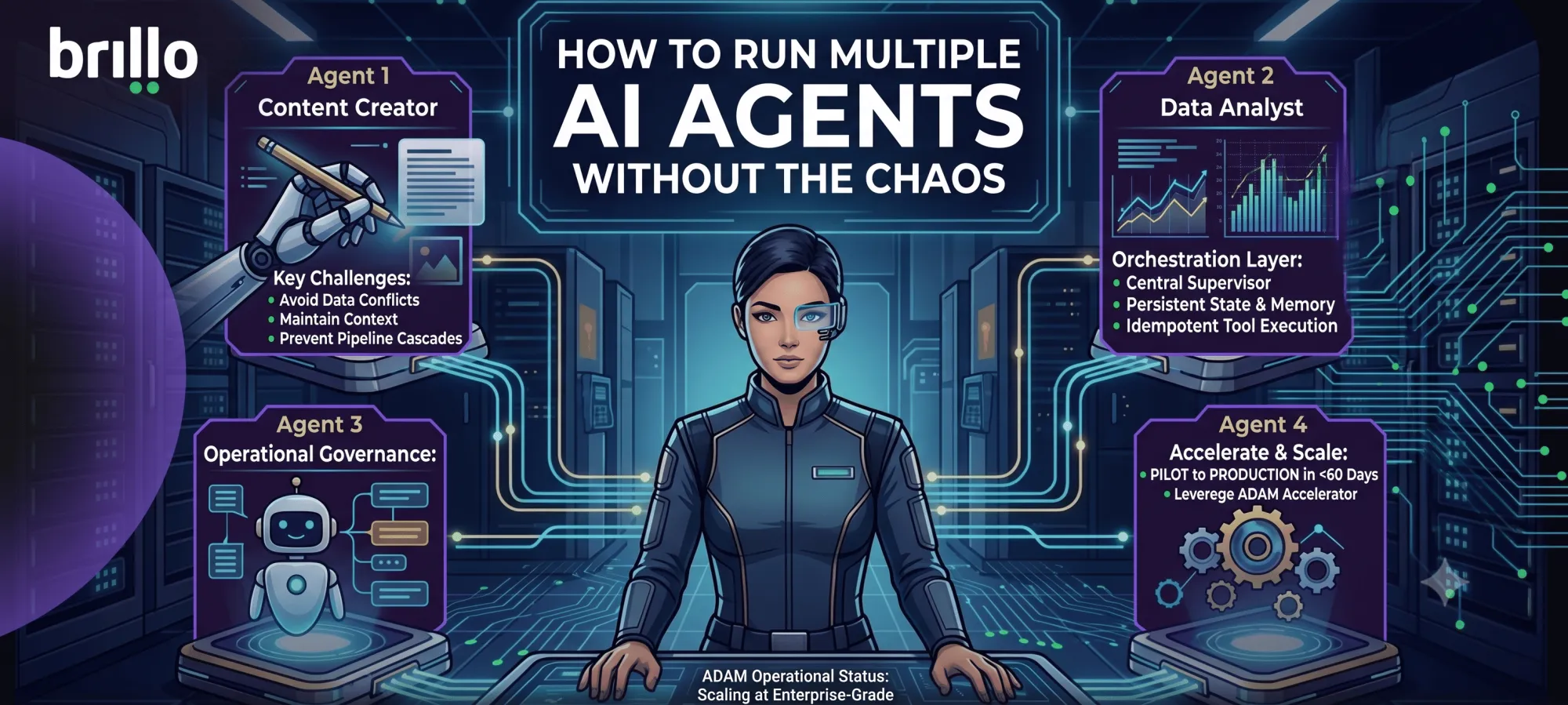
This is where purpose-built platforms change the economics of automation. Through Agentic Data and Application Management (ADAM) platform, enterprises unify fragmented storage tiers with an active, autonomous execution plan. By leveraging pre-built domain agent templates and composable Brillio Enterprise AI Accelerator solutions, engineering teams can move from sandbox prototypes to production deployments in under 60 days.
This composable approach forms the core of sustainable Enterprise AI Transformation. It successfully transitions organizations from reactive firefighting to operationalizing AI at scale, empowering teams to replace fragile data pipelines with governed, self-healing digital systems that support continuous enterprise growth.

























Sign in to leave a comment.