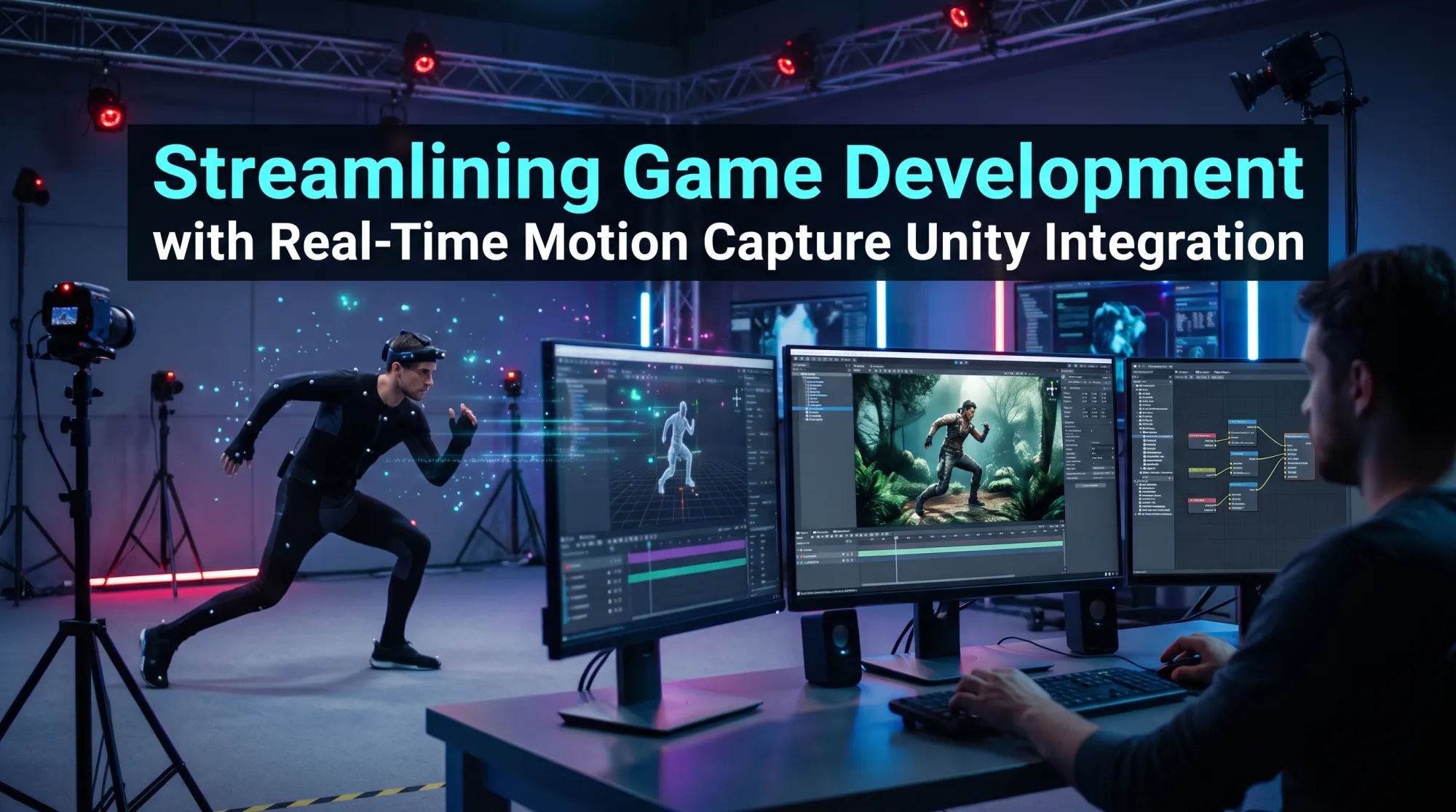

Modern game development moves at an extraordinary pace, and players expect characters to move with lifelike fluidity, emotional nuance, and physical believability. Traditional keyframe animation, while foundational to the craft, often demands hundreds of hours of meticulous frame-by-frame adjustments to achieve natural weight distribution, subtle finger articulation, and convincing facial expressions. As interactive worlds grow larger and production timelines grow tighter, studios and independent creators alike are turning toward live performance capture directly inside their game engines to bridge the gap between human movement and digital storytelling.
Real-time pipelines eliminate the tedious cycle of recording an action, exporting raw files, cleaning skeletal curves in external software, and re-importing clips just to see how a movement feels inside a playable scene. Instead, animators and directors can watch a performer step onto a capture space and immediately drive a three-dimensional character rig inside the engine viewport. Seeing lighting, camera angles, environment collisions, and character proportions respond instantaneously transforms animation from a delayed post-production task into an interactive, collaborative creative session.
Building a seamless pipeline through Motion Capture Unity Integration allows Virdyn to empower developers with direct, ultra-low-latency skeletal and facial streaming right into their active game scenes. By connecting wearable inertial hardware and dedicated studio broadcasting software directly to the engine, creators can bypass complex file conversions and focus entirely on performance quality. Whether a team is prototyping combat mechanics, directing cinematic cutscenes, or building immersive virtual reality experiences, real-time streaming keeps creative momentum unbroken from the very first take.
Key Advantages of Real-Time Engine Pipelines
Instant Visual Feedback in Context: Viewing a character perform inside the actual game environment reveals spatial relationships, sightlines, and terrain interactions immediately. Directors can adjust camera framing or actor blocking on the spot rather than discovering scale mismatches days later.
Dramatically Accelerated Iteration Cycles: When a jump, sword swing, or subtle gesture does not quite match the gameplay feel, performers can repeat the take within seconds. Rapid iteration encourages creative experimentation and produces far more expressive character acting.
Unified Full-Body, Finger, and Facial Capture: Modern real-time plugins synchronize body posture, intricate hand articulation, and nuanced facial expressions in a single unified stream. Characters feel genuinely alive when subtle finger movements and micro-expressions align naturally with gross motor actions.
Multi-Actor Scene Choreography: Supporting multiple simultaneous performers inside the same virtual environment enables natural combat exchanges, dialogue scenes, and cooperative interactions. Actors react to one another organically, eliminating the stiffness that often occurs when blending isolated solo animations.
Cost-Effective Production Scalability: Lightweight wearable inertial systems remove the need for massive dedicated optical stages or rigid studio lighting setups. Small indie teams and large studios alike can capture professional-grade movement in standard office spaces, rehearsal rooms, or even outdoor locations.
Flexible Connection Workflows for Every Studio Setup
One of the greatest strengths of a modern engine plugin is its ability to adapt to different hardware configurations and studio workflows. Depending on project complexity, developers generally rely on two streamlined connection methods to bring live performance data into their scenes.
Direct Hardware-to-Engine Connection: For rapid prototyping, solo creators, or live interactive installations, connecting motion capture sensors directly to the engine provides immediate model control with minimal software overhead. Performers can suit up in just a few minutes, run a quick pose calibration, and begin driving a humanoid character rig right away.
Studio Software Data Broadcasting: For larger productions requiring advanced data filtering, trajectory recording, or multi-person coordination, dedicated capture software acts as a central hub. The software processes raw sensor streams, applies anti-magnetic interference and temperature compensation algorithms, and broadcasts clean skeletal and facial data into the engine over a local network. This setup ensures rock-solid stability even during high-dynamic movements like flips, rolls, and rapid combat sequences.
Core Features That Elevate Character Animation
Integrating live movement into a game engine goes far beyond simply rotating bones on a skeleton. To make live capture truly production-ready, dedicated plugins incorporate specialized tools tailored specifically for real-time engine mechanics.
Smart Calibration and Drift Suppression: Accurate spatial tracking relies on multi-sensor fusion algorithms that combine gyroscopes, accelerometers, and magnetometers. Built-in calibration modes and magnetic interference resistance keep foot placement grounded and prevent directional drift during extended recording sessions.
Precision Hand and Gesture Recognition: Expressive hands are essential for VR immersion, spellcasting systems, and tactile object interactions. High-density finger tracking captures individual joint angles while built-in gesture recognition triggers specific gameplay states or animations automatically.
Waist Locking and Root Motion Control: Game developers often need to switch between world-space displacement for cinematic cutscenes and in-place animation cycles for player-controlled locomotion. Convenient features like waist locking, instant model resetting, and clean interface toggles make switching between gameplay states effortless.
Seamless Virtual Reality Compatibility: When developing VR titles, pairing motion capture gloves and full-body tracking with popular head-mounted displays creates unmatched embodiment. Players and testers can look down and see their exact posture, arm reach, and finger movements mirrored in real time without noticeable latency.
Practical Steps for a Smooth Engine Integration
Setting up a reliable real-time capture pipeline becomes straightforward when teams follow clean, repeatable engineering habits from the start of production.
Standardize Character Rig Hierarchies: Ensure your custom character models adhere cleanly to standard humanoid bone mappings before connecting live data. Consistent joint naming and clean T-pose or A-pose rest orientations guarantee accurate retargeting across characters of varying heights and proportions.
Optimize Network and Frame Rate Settings: Match the capture data transmission frequency—such as 60Hz, 72Hz, 80Hz, or 96Hz—to your target game frame rate. Keeping wireless latency down to the 10–20 millisecond range ensures responsive visual feedback for both actors and directors.
Combine Live Capture with Procedural Animation: Real-time motion capture works wonderfully alongside inverse kinematics and blend trees. You can stream upper-body acting or combat strikes live while letting procedural foot placement adapt dynamically to uneven stairs, slopes, and obstacles.
Record Clean Takes for Post-Processing: Even when working in real time, capturing raw motion data simultaneously allows animators to trim clips, refine loop transitions, and archive reusable movement libraries for future levels or character variants.
Transforming Creative Possibilities Across Genres
The impact of accessible real-time capture extends across virtually every style of interactive entertainment. Action and adventure titles benefit from authentic martial arts choreography, realistic weapon weight, and dynamic parkour transitions that feel grounded in real physics. Narrative-driven games gain emotional depth when voice actors perform full-body and facial takes simultaneously, preserving the natural cadence between vocal inflection and physical posture.
Meanwhile, virtual reality creators and live virtual streamers use these exact same pipelines to host interactive events, real-time concerts, and responsive digital avatars. Because Virdyn designs its ecosystem around accessible setup, free plugin updates, and comprehensive documentation, teams spend less time troubleshooting technical hurdles and more time crafting memorable player experiences.
As real-time rendering and physics simulation continue to advance, live performance capture stands out as one of the most empowering tools in a modern developer's toolkit. By removing friction between human movement and digital worlds, Virdyn helps creators bring ambitious characters to life faster, smoother, and with greater artistic authenticity than ever before.
To explore the innovative engineering team and vision behind these real-time motion capture solutions, visit https://www.virdynm.com/about-us/.























Sign in to leave a comment.