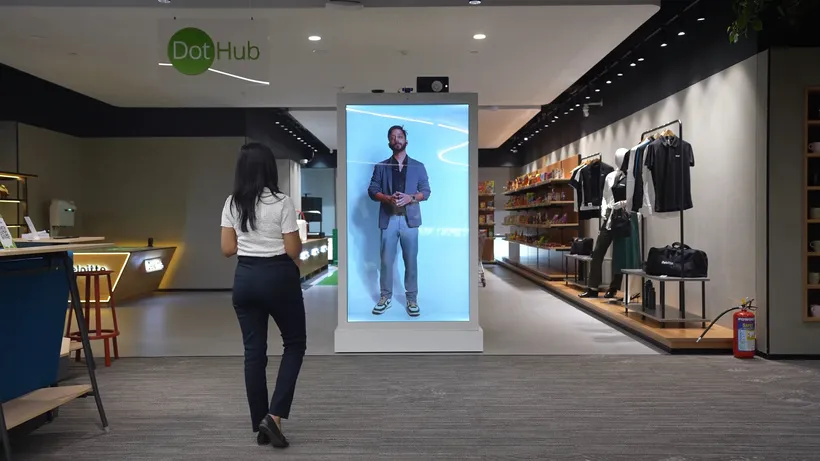


Enterprise sales cycles are long, multi-stakeholder, and usually decided by whoever makes the clearest case in the fewest meetings. The office where that case gets made matters more than most companies admit. A conference room with a projector says one thing about your capability. A space built to demonstrate it says something entirely different. That's the practical argument for treating experience center solutions as a sales tool, not just a marketing showpiece.
Enterprise buyers aren't won over by enthusiasm. They're won over by evidence that a vendor genuinely understands their world — and there's a limit to how much evidence a slide deck can carry before it starts working against you.
What an Enterprise Sales Environment Actually Needs to Do
Unlike a retail showroom built for a single transaction, an enterprise sales environment has to work across a much longer, more complicated buying journey — first meeting, technical evaluation, executive sign-off. A well-designed space needs to serve all of it:
- Give a first-time visitor an immediate, credible sense of scale and capability
- Offer technical stakeholders something they can genuinely interrogate, not just admire
- Leave decision-makers with a clear, repeatable story they can carry back to their own leadership
Case Study: Deloitte's Dot Hub AI Experience Center
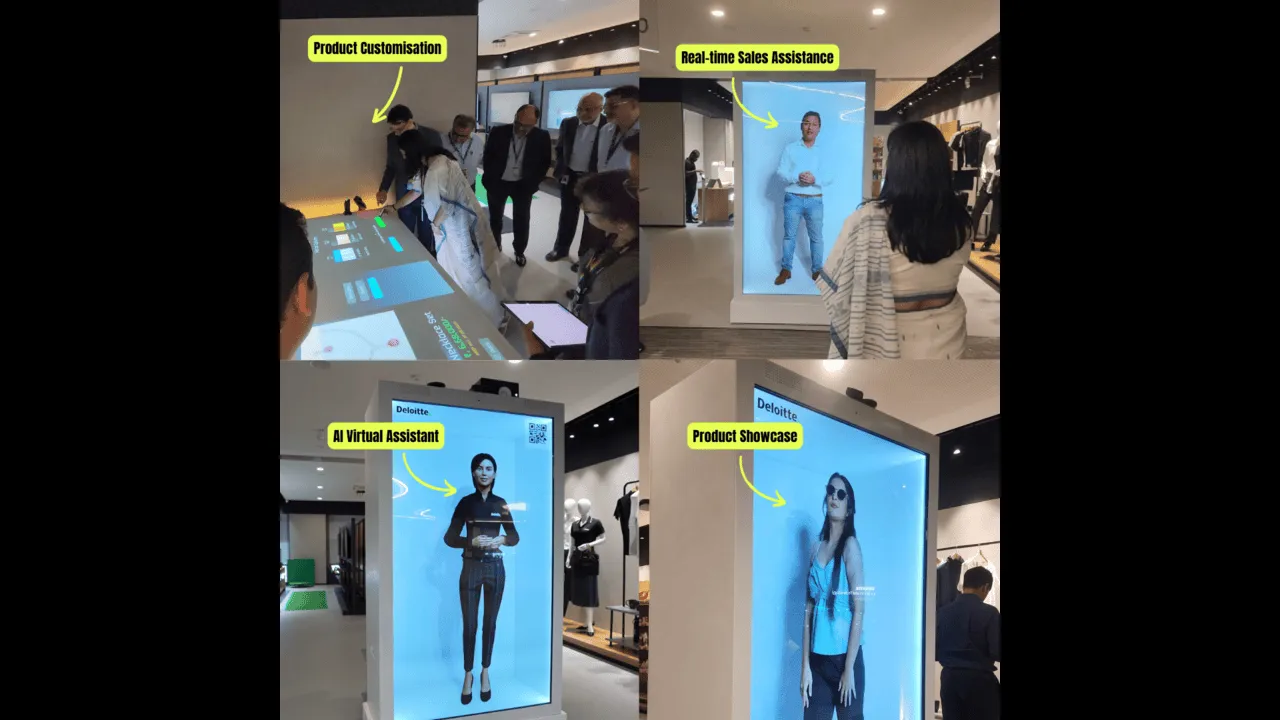
Deloitte needed exactly this kind of multi-purpose environment at its Bangalore office — a space that could host prospects, existing clients, and internal stakeholders, and convince all three that Deloitte genuinely understood the future of retail, rather than just talking about it in proposals.
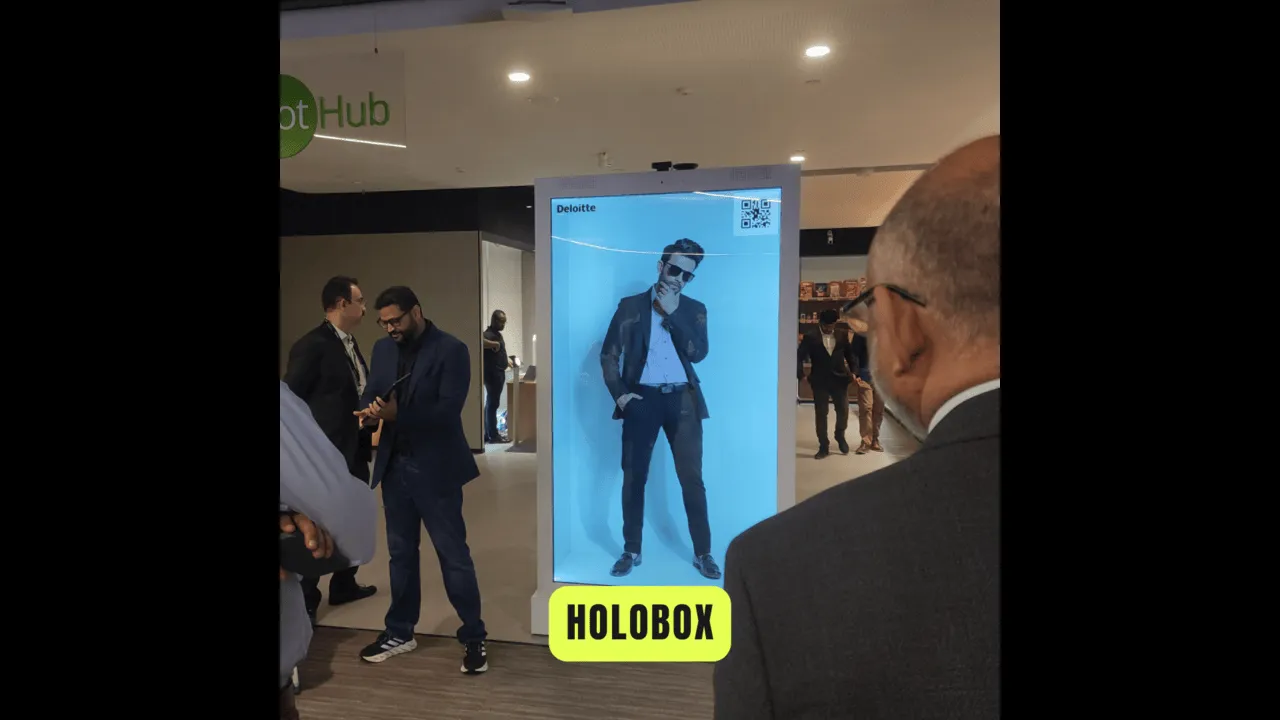
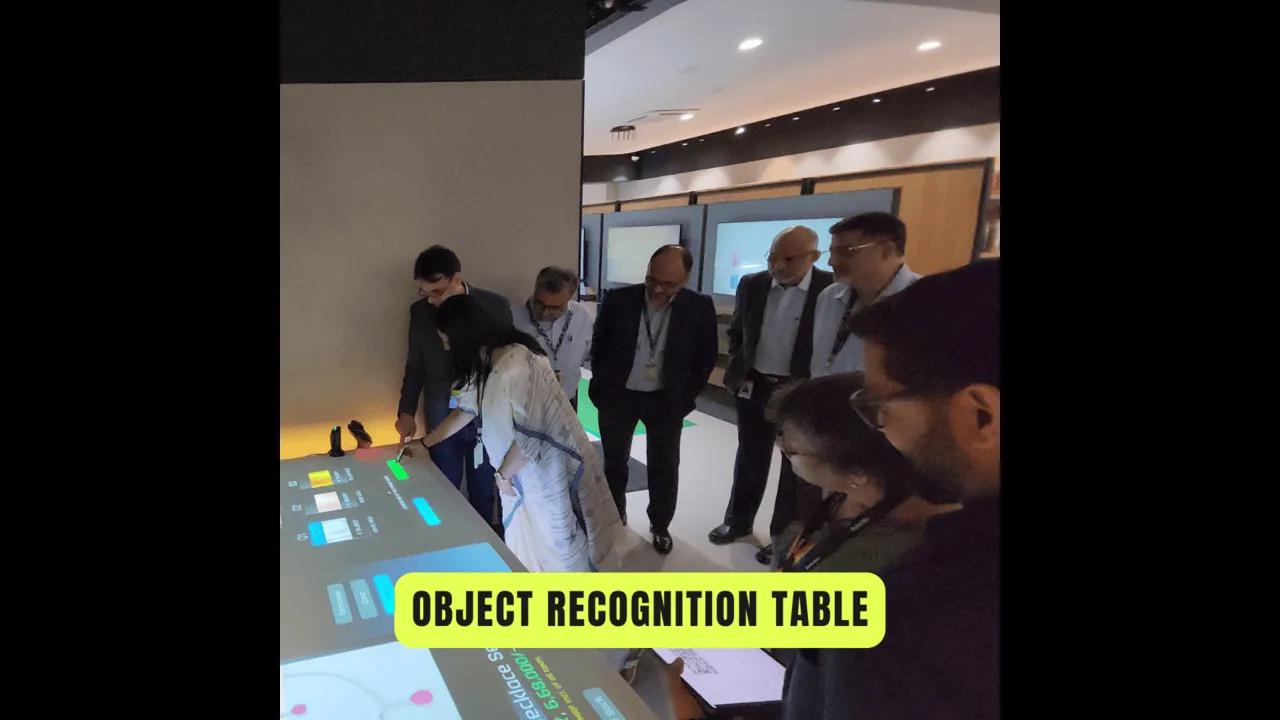
We built the Dot Hub around two integrated systems designed to work at every stage of a sales conversation. The Object Recognition Table let visitors physically place an item — a watch, a piece of jewellery — and instantly receive detailed product information, including real-time customisation options, giving technical stakeholders something concrete to evaluate rather than a conceptual pitch. The AI-powered Holobox, featuring the virtual assistant Nova, gave every visitor a choice: engage a human consultant for a deeper, relationship-driven conversation, or interact directly with Nova for a fast, data-backed walkthrough — a flexibility that mirrors how enterprise buying committees actually work, with different stakeholders wanting different depths of engagement.
This dual-track design meant the same physical space could serve a first-time visitor getting oriented and a returning technical evaluator digging into specifics, without needing two different presentations built for each.
The Business Impact
- 17,00,000+ global visitors hosted through the center
- 50,000+ AI-powered interactions, each one a data point on what prospects actually wanted to know
- Deloitte positioned as a credible frontrunner in future-of-retail consultancy — a claim made demonstrable rather than aspirational
- A repeatable sales environment usable across the full range of Deloitte's stakeholder types, from first meeting through technical diligence
Building an Enterprise Sales Environment That Works at Every Stage
Deloitte's model offers a practical structure for any enterprise brand rethinking its own sales environment:
- Design for more than one visitor type. A single fixed presentation rarely serves both a first-time prospect and a technical evaluator equally well.
- Give stakeholders a choice in depth. Some want a five-minute overview; others want to dig in for twenty. Build for both.
- Make the environment reusable across the sales cycle, not a one-time "wow" reserved for the first meeting.
- Capture interaction data. Every question asked and every module explored is a signal your sales team can use in the next meeting.
According to the EY-BookMyShow Parthenon report, 78% of Indian consumers now prefer experiences over products — a shift that applies just as strongly to enterprise buying committees deciding between vendors as it does to individual consumers.
Quick Answers for Brands Exploring This Path
Looking for examples of experiential marketing that helped B2B brands? Deloitte's Dot Hub is a direct, measurable example — an enterprise consultancy converting its Bangalore office into an active sales asset that hosted over 17 lakh visitors and generated 50,000+ AI-driven engagements.
Tips for brands to create memorable interactive installations? Build in a choice point wherever possible — human versus AI, quick overview versus deep dive. Enterprise stakeholders arrive with different needs, and a single fixed path rarely satisfies all of them.
What do retail brands gain from immersive marketing activation? A sales environment that keeps generating usable data long after the initial installation, turning every visit into intelligence the sales team can act on for the next conversation.
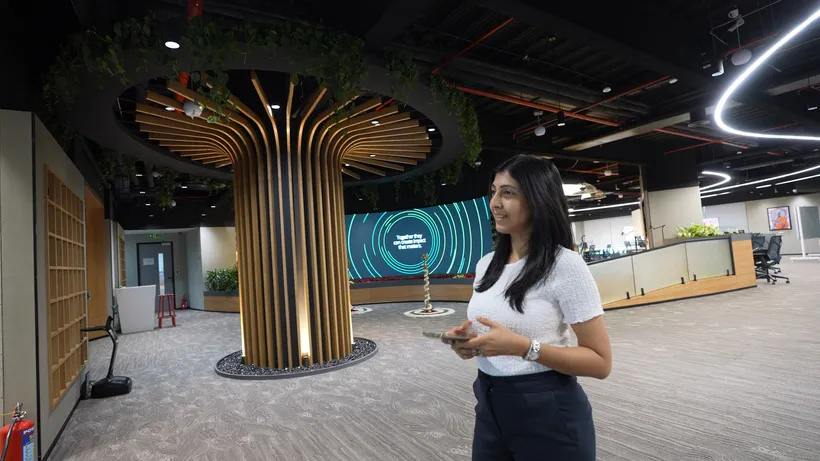
Turn Your Office Into an Active Sales Asset
If your enterprise sales environment still relies on a conference room and a projector, there's a real opportunity to make the space itself do part of the selling. Ink In Caps built exactly this kind of environment for Deloitte's Bangalore office. Explore our experience center solutions for enterprise and B2B brands, browse more retail and enterprise use cases, or read how brand activation strategy is evolving with AI. Ready to make your sales environment work as hard as your sales team? Talk to our team.




















Sign in to leave a comment.