
Stress Relieving: Enhancing Metal Stability and Performance
In the world of metalworking and fabrication, residual stress is an unavoidable outcome of welding, machining, casting, and forming processes. These internal stresses, if left untreated, can lead to distortion, cracking, or premature failure of components. That’s where stress relieving comes into play — a crucial heat treatment process that enhances the dimensional stability and performance of metals.
What is Stress Relieving?
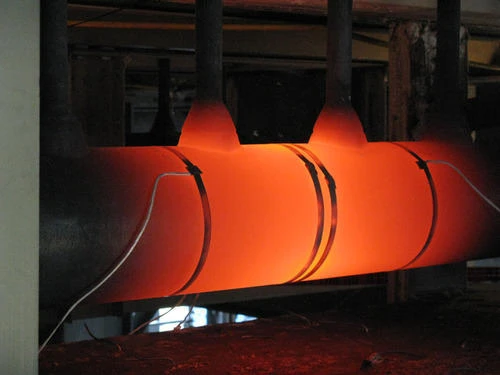
Stress relieving is a controlled heat treatment process used to reduce or eliminate residual stresses in metals without altering their overall mechanical properties. The component is heated to a specific temperature — typically below its critical transformation point — and held there for a set period before being cooled gradually.
The process relaxes internal strains caused by previous operations such as welding, machining, or cold working, making the material more stable and less prone to deformation or failure during service.
Why is Stress Relieving Important?
Residual stresses can cause serious problems if not addressed. These include:
- Warping or distortion during or after machining
- Cracking or failure under load or temperature changes
- Reduced fatigue strength
- Poor dimensional accuracy
Typical Applications
Stress relieving is commonly used in:
- Welded structures – to reduce stress at joints
- Machined parts – to prevent movement after final machining
- Castings and forgings – for dimensional stability
- Pressure vessels and pipelines – for safety and compliance
Materials That Benefit from Stress Relieving
- Carbon steel
- Alloy steel
- Stainless steel
- Cast iron
- Aluminum (under controlled conditions)
Conclusion
Stress relieving is a vital heat treatment technique used across industries to ensure product reliability, safety, and performance. By minimizing residual stress, manufacturers can deliver parts that hold their shape, resist cracking, and perform better under pressure.
If you're in fabrication, welding, or precision machining, consider stress relieving as part of your quality assurance process to extend the life and performance of your components.
























Sign in to leave a comment.