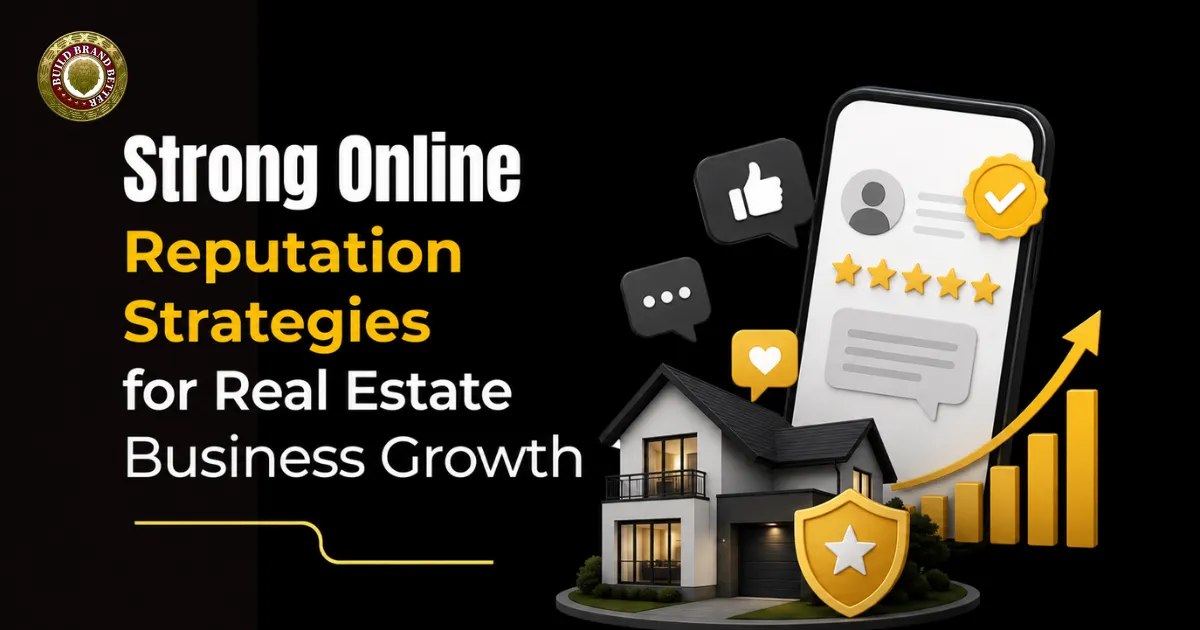

Introduction: Why Your Online Reputation Is Your Biggest Sales Asset
Imagine a potential homebuyer searching for a reliable real estate agent in their city. They open Google, type a quick query, and within seconds they are scanning reviews, star ratings, and business profiles. If your name does not appear, or worse, if what they find is a string of unanswered negative reviews, that prospect is gone — usually forever.
This is the daily reality for real estate professionals across India and globally. The property market is one of the most trust-sensitive industries in the world. Buyers and sellers are making decisions worth lakhs or crores of rupees, and they will not work with someone they cannot verify online.
Yet most real estate businesses still treat their online reputation as an afterthought — something to manage only when a crisis hits. This guide changes that thinking. Here you will find practical, actionable strategies to build a reputation that drives consistent business growth, generates qualified leads, and positions your brand ahead of every competitor in your market.
[ Insert Image: Real Estate Online Reputation Overview Illustration ]
What Is Online Reputation Management for Real Estate?
Online Reputation Management (ORM) for real estate is the ongoing process of monitoring, shaping, and strengthening how your brand appears across digital platforms. This goes far beyond collecting a few five-star reviews. It covers everything from your Google Business Profile and responses to client feedback, to the quality of content you publish and how consistently your business information appears across the web.
For real estate agents, developers, and brokers, ORM is the bridge between how you want to be perceived and how potential clients actually experience your brand online. When managed well, it functions as a 24/7 trust-building system working on your behalf.
Why Reputation Matters More in Real Estate Than Any Other Industry
Real estate transactions are deeply personal and financially significant. Before signing a single agreement, most clients spend time researching agents and agencies online. Consider what this means for your business:
- More than 95% of online traffic goes to the first page of search results. If you are not there, you are invisible.
- Over half of homebuyers today begin their property search on the internet before ever contacting an agent.
- Consumers trust online reviews almost as much as personal recommendations from friends and family.
- A single unresolved negative review on Google or a property portal can redirect multiple potential clients to your competitors.
The challenge is that most real estate businesses focus entirely on sales and listings while ignoring the digital signals that determine whether anyone chooses to call them in the first place. A proactive reputation strategy closes that gap.
[ Insert Image: Consumer Trust and Online Reviews Statistics Chart ]
Core Strategies to Build a Strong Online Reputation in Real Estate
1. Claim and Optimize Your Google Business Profile
Your Google Business Profile (GBP) is often the first interaction a potential client has with your business. An incomplete or outdated profile signals unprofessionalism before a single word is exchanged. Ensure your profile includes the following:
- Accurate business name, address, and contact details
- Business category set to Real Estate Agency or Real Estate Agent
- High-quality photos of your office, team, and key properties
- Regularly updated posts about listings, market insights, or client success stories
- A clear and compelling business description with relevant local keywords
Optimizing your GBP not only improves your visibility in Google Maps and local search but also signals to search engines that your business is legitimate, active, and trustworthy.
2. Build a Consistent Review Generation System
Positive reviews do not appear on their own. You need a reliable process for encouraging satisfied clients to share their experiences. The key is to make it as simple as possible for them to do so.
Send a short direct link to your Google review page immediately after closing a deal or completing a successful consultation. You can also follow up via WhatsApp, email, or SMS with a personalized message thanking the client and gently inviting feedback. Timing is everything: reach out while the positive experience is still fresh.
- Aim for a positive review ratio of at least 90 percent across platforms
- Monitor Zillow, Google, Facebook, 99acres, MagicBricks, and Housing.com regularly
- Track volume, rating average, and sentiment trends every month
Never offer incentives for reviews — this violates platform policies and damages credibility. Instead, build a culture of excellence that naturally generates positive feedback.
[ Insert Image: Review Generation Workflow Diagram for Real Estate ]
3. Respond to Every Review — Positive and Negative
One of the most damaging things a real estate business can do is ignore client reviews. When potential clients see that you have not responded to feedback, it raises an immediate red flag.
Responding to positive reviews is simple — express genuine gratitude and briefly reinforce what made the experience great. Responding to negative reviews requires more care. Acknowledge the concern without being defensive, offer to resolve the issue offline, and demonstrate professionalism throughout.
This approach achieves two things. First, it shows the unhappy client that you care. Second, and more importantly, it shows every future client reading that exchange exactly the kind of business you run. A well-handled negative review can actually strengthen trust more than a string of positive ones.
4. Local SEO as a Reputation Tool
Search Engine Optimisation and reputation management work hand in hand. When your business consistently ranks on the first page for real estate searches in your area, it creates an automatic perception of authority and credibility.
For real estate specifically, local SEO is the priority. Focus on:
- Targeting location-specific keywords such as "real estate agent in [city]" or "property consultant in [area]"
- Building consistent NAP (Name, Address, Phone) citations across all online directories
- Publishing location-specific content such as neighbourhood guides, property market updates, and area investment analyses
- Earning backlinks from reputable local publications, property portals, and industry associations
Every piece of authoritative content you publish adds to your digital footprint and reinforces both your SEO rankings and your reputation as a credible expert in your market.
5. Content Marketing That Establishes Authority
The most respected real estate professionals online are those who consistently share valuable, relevant knowledge. Publishing quality content does more than attract website traffic — it positions you as a trusted advisor rather than just another salesperson.
Consider developing the following types of content:
- Weekly or fortnightly blog posts covering market trends, buying guides, and investment tips
- Video walkthroughs and virtual property tours shared on YouTube and Instagram
- Short educational posts on LinkedIn about market conditions or legal processes in property
- Client success stories and case studies (with permission) that demonstrate real results
Content with genuine depth and practical value naturally earns trust, shares, and backlinks — all of which compound your reputation over time.
6. Social Media Reputation Management
Your social media presence is an extension of your reputation. Inconsistent posting, unanswered comments, or a poorly maintained profile communicates the same message as an empty office window: that this business does not care enough to show up.
Establish a regular posting cadence. Engage genuinely with followers. Share market insights, client milestones, and community involvement. When someone messages your page with a question or complaint, respond promptly and professionally. Social media is often where reputation issues begin to surface, and early, thoughtful engagement can prevent minor friction from becoming a public relations problem.
7. Monitor Your Brand Across All Platforms
You cannot manage what you do not monitor. Set up alerts and use tools to track every mention of your business name across the web. This includes review platforms, social media, local forums, news sites, and property portals.
When you spot a negative mention early, you have the opportunity to respond, address the issue, and prevent it from spreading. Tools such as Google Alerts, Brand24, or Mention can help you stay ahead of conversations happening about your business.
- Check all review platforms at least twice a week
- Respond to all new reviews within 24 to 48 hours where possible
- Document recurring complaints and use them to improve your actual service delivery
[ Insert Image: Brand Monitoring Dashboard Screenshot or Illustration ]
Real-World Example: What a Strong Reputation Strategy Looks Like
Consider a mid-sized real estate agency that was struggling with inconsistent online reviews and poor visibility in local search. The business had been operating for several years but had never invested in reputation management or local SEO.
After working with a professional digital marketing team, they implemented a structured review generation process after every transaction, optimized their Google Business Profile with updated information and regular posts, and began publishing monthly market insight blogs targeting their city's most searched property queries.
Within six months, their average Google rating improved noticeably, their visibility in local search increased, and they reported a meaningful rise in inbound enquiries from potential clients who had found them through organic search. The business did not change what it offered — it changed how that offering was communicated and perceived online.
This kind of result is achievable for any real estate business that commits to a consistent and professional approach.
Common Mistakes That Damage Real Estate Reputations
Understanding what to avoid is just as important as knowing what to do. These are the most damaging reputation mistakes we see real estate businesses make:
- Ignoring negative reviews and hoping they disappear on their own
- Purchasing fake reviews, which violates platform policies and can result in permanent listing removal
- Inconsistent business information across directories, which confuses both clients and search engines
- Failing to maintain an active social media presence, which creates the impression of an inactive business
- Neglecting to claim and verify profiles on major property portals and review sites
- Reacting emotionally or defensively to critical client feedback online
Each of these mistakes is avoidable with the right processes in place. The good news is that even businesses that have made several of these errors can recover with a focused and sustained effort.
Measuring the Results of Your Reputation Strategy
A reputation strategy without measurement is a guess. Track these key indicators on a monthly basis to understand what is working and where to improve:
- Average star rating across Google, Facebook, and property portals
- Total number of reviews and the rate at which new ones are being generated
- Search ranking for your primary local real estate keywords
- Website traffic from organic search, and the pages generating the most visits
- Inbound lead volume and the source attribution for new enquiries
- Response rate and average response time to reviews and messages
Consistent tracking not only shows you progress but also helps you make smarter decisions about where to invest your time and resources going forward.
How 360 Digital Idea Can Help Real Estate Businesses Build a Winning Online Reputation
Managing your online reputation effectively requires expertise, the right tools, and consistent effort across multiple platforms simultaneously. For real estate businesses focused on growing their client base, managing this in-house can quickly become overwhelming.
360 Digital Idea is a performance-driven digital marketing agency with deep expertise in online reputation management, local SEO, content marketing, and social media strategy. For real estate clients specifically, the team builds integrated reputation systems that work together to generate trust, visibility, and leads.
Services include:
- Google Business Profile setup and ongoing management
- Review generation and response management across all major platforms
- Local SEO targeting the exact property keywords your clients are searching for
- Content writing and publishing for real estate authority building
- Brand reputation monitoring with proactive issue management
- Social media management that builds credibility and drives engagement
Whether you are a solo agent, a growing brokerage, or a property development company, a tailored reputation strategy from a team that understands your industry can produce measurable, lasting results.
Conclusion: Your Reputation Is Your Business
In the real estate industry, reputation is not a soft concept — it is a business-critical asset. The agents and agencies who invest in building a strong, consistent online presence are the ones who attract more clients, command greater trust, and grow more sustainably over time.
The strategies covered in this guide are not complex. They require consistency, professionalism, and a genuine commitment to serving your clients well — both in person and online. Start with what you can control: your Google Business Profile, your review responses, and the quality of content you put into the world.
From there, build systematically. Each review generated, each piece of content published, and each search ranking earned adds to a foundation that compounds in value over months and years.
If you are ready to take your real estate brand's online reputation seriously and turn it into a genuine competitive advantage, the right partnership can accelerate everything. Reach out to 360 Digital Idea to explore how a customised reputation strategy can work for your business.
Frequently Asked Questions
Q1. How long does it take to see results from online reputation management in real estate?
Results vary depending on the starting point and the intensity of effort. Minor improvements to your review volume and local search visibility can appear within four to eight weeks. More significant shifts in overall reputation and search rankings typically take three to six months of consistent effort. The key is to stay committed — reputation building is a long-term investment, not a quick fix.
Q2. What are the most important review platforms for real estate businesses in India?
Google Business Profile is the most critical platform for any real estate business, as it directly influences local search visibility and first impressions. Beyond Google, platforms such as MagicBricks, 99acres, Housing.com, JustDial, and Facebook are highly relevant for property professionals in India. Maintaining an active and positive presence across all of these significantly strengthens your overall reputation.
Q3. Can I remove a negative review from Google?
You can flag a review for removal if it clearly violates Google's policies — for example, if it is fake, spam, or contains inappropriate content. However, Google does not remove reviews simply because they are negative or unfavourable. The most effective approach is to respond professionally to every negative review, address the concern, and consistently generate new positive reviews to balance the overall perception of your business.
Q4. How does local SEO connect to reputation management for real estate agents?
Local SEO and reputation management are deeply interconnected. Positive reviews improve your local search rankings. Higher rankings increase visibility, which brings more clients, which generates more opportunities for positive reviews. Additionally, consistent business information across directories and authoritative content publishing both contribute to search engine trust — which directly supports your ranking position and your reputation simultaneously.
Q5. How many reviews should a real estate business aim to have?
While there is no fixed number, a healthy goal is to maintain a minimum of 25 to 50 reviews on your Google Business Profile with an average rating of 4.5 stars or above. More importantly, aim for a continuous rate of new reviews rather than a static total. Recent reviews carry more weight with both search algorithms and potential clients, so an active review generation process is more valuable than simply having many old ones.
Q6. Should a real estate business handle reputation management in-house or hire an agency?
Both approaches can work, but they have different trade-offs. In-house management offers more control and immediate responsiveness but requires dedicated time and expertise that most real estate teams do not have. A specialist agency brings tools, experience, and a systematic approach that typically delivers faster and more consistent results. For most growing real estate businesses, partnering with an experienced digital marketing agency — particularly one with ORM and local SEO expertise — offers the best return on investment.


























Sign in to leave a comment.