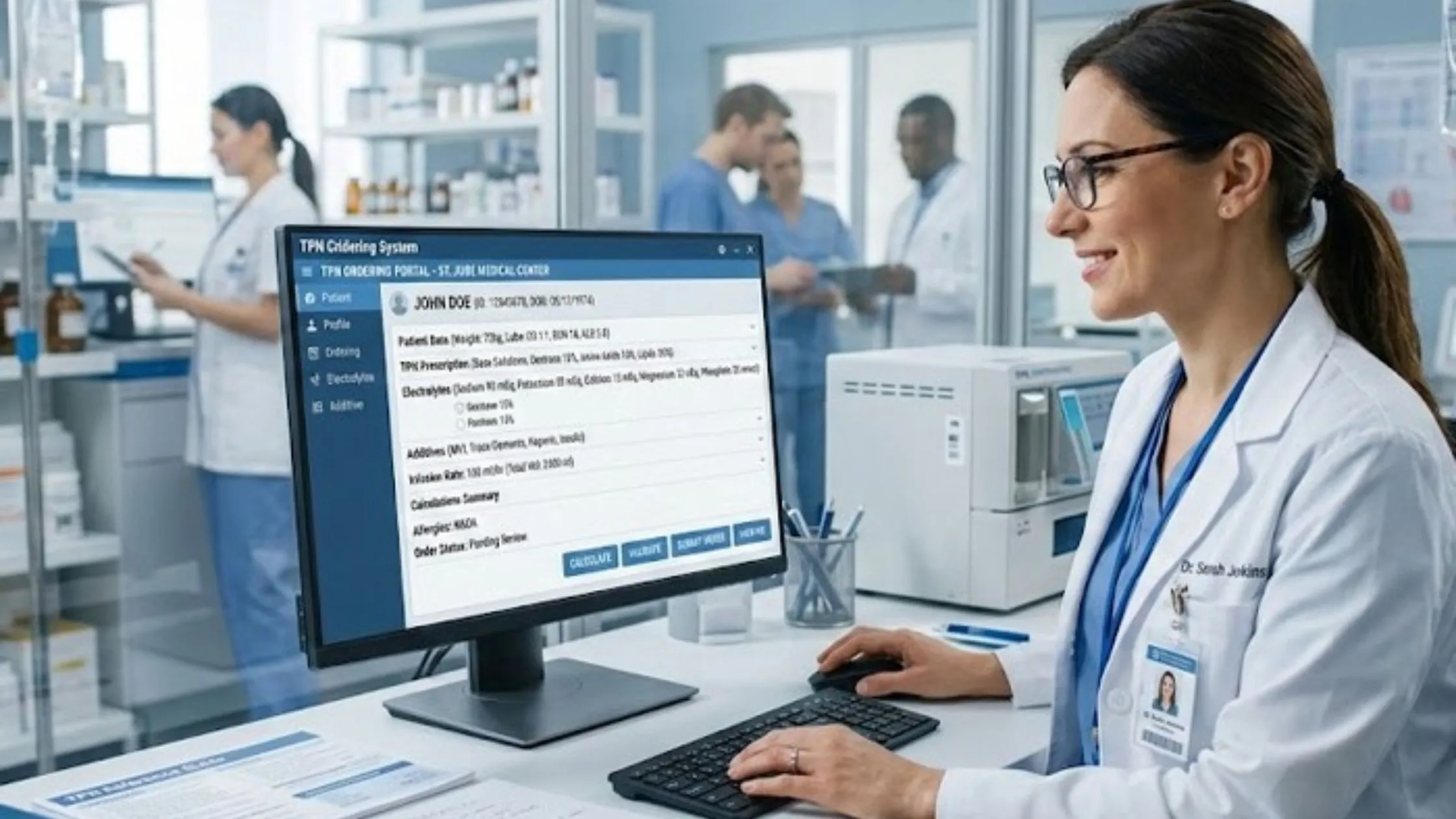
A tiny heartbeat measures life in milliliters. In a neonatal intensive care unit, every drop of fluid carries the heavy weight of survival. Precision defines the difference between a steady recovery and a dangerous complication. Neonatal TPN software improves accuracy by automating complex dose calculations and cross-referencing nutritional limits against the unique clinical profile of a newborn. It removes the risk of manual arithmetic errors. The software flags potential ingredient incompatibilities instantly. It ensures that every prescription aligns with established safety protocols before it ever reaches the pharmacy.
The High Stakes of Neonatal Nutrition
Fragile infants require exact balances of amino acids, lipids, and electrolytes. Their organs are often too immature to handle even slight deviations in concentration. Manual calculations involve multiple steps and high cognitive loads for busy clinicians. Fatigue or distractions frequently lead to transcription mistakes. Software intervenes at the point of entry. It acts as a digital safety net for the most vulnerable patients.
Why Are Calculation Errors Common in Manual TPN?
Human brains are not built for repetitive, high-stakes arithmetic under pressure. Traditional paper-based systems rely on the constant vigilance of staff. Errors often stem from simple decimal point shifts. A misplaced dot can result in a tenfold overdose of a potent electrolyte.
- Complex Multi-Step Math: Clinicians must convert weight-based requirements into total volumes.
- Unit Inconsistency: Swapping milligrams for micrograms happens easily during long shifts.
- Transcription Gaps: Moving data from a bedside chart to a pharmacy order form invites risk.
- Incompatibility Risks: Certain minerals, like calcium and phosphorus, can precipitate if mixed incorrectly.
Bridging the Gap Between Prescription and Pharmacy
Accuracy requires more than just correct math. It requires seamless communication. Total parenteral nutrition ordering software synchronizes the physician's intent with the pharmacist's production. It standardizes the language used across the entire care team. Digital systems store historical data for each infant. This allows doctors to see trends in nutritional intake over days or weeks. Adjustments become data-driven rather than reactive.
What Are the Key Features of Reliable TPN Software?
Effective tools must be intuitive for the medical staff. They should mirror the clinical workflow while adding layers of protection. Features focus on preventing errors before they occur.
- Real-Time Alerts: The system warns users if an ingredient exceeds the recommended daily allowance.
- Automated Weight Tracking: Calculations update automatically as the infant’s weight fluctuates.
- Standardized Templates: Pre-built profiles for different gestational ages reduce start-up time.
- Osmolarity Checks: Software calculates the concentration to ensure the peripheral line can handle the infusion.
Enhancing Patient Safety Through Standardized Protocols
Standardization is a powerful tool against medical errors. Every hospital has specific guidelines for neonatal care. Software allows these guidelines to be hard-coded into the ordering process. This ensures that every staff member follows the best available evidence. It eliminates "prestige-based" ordering where individual preferences override safety standards. Consistent care leads to better outcomes and shorter hospital stays.
Reducing the Administrative Burden on Clinicians
Doctors and nurses spend hours on paperwork. This time should belong to the patients. Automated systems slash the time needed to generate a daily TPN order. A process that once took thirty minutes now takes five. Efficiency reduces the stress on the clinical team. Lower stress levels further decrease the likelihood of human error. The software handles the grunt work of data entry and verification.
Managing Electrolyte and Mineral Intricacies
Electrolyte management is a delicate dance. Neonates often experience rapid shifts in potassium or sodium levels. Calculating the exact supplement needed requires constant vigilance. Digital tools track these levels alongside the TPN orders. They provide a clear view of the total intake from all sources. This prevents accidental over-supplementation from multiple IV lines.
Improving Regulatory Compliance and Auditing
Accreditation bodies require detailed records of patient care. Paper charts are difficult to organize and easy to lose. Digital systems create a permanent, legible trail of every nutritional decision. Auditors can easily verify that the facility meets safety standards. This transparency fosters a culture of accountability within the NICU. It also helps in identifying areas where staff might need additional training.
Integration with Electronic Health Records
Siloed data is dangerous data. Modern TPN solutions communicate with the broader hospital network. They pull recent lab results directly into the ordering screen. This ensures the clinician sees the most recent bloodwork while deciding on the day's nutrients. Integration prevents the use of outdated information. It creates a unified picture of the infant's health status.
Cost-Effectiveness of Digital Precision
Errors are expensive. A single adverse event can lead to extended treatment and increased costs. Preventing one major calculation error often covers the cost of the software for the year. Beyond the financial aspect, the human cost of a medical error is immeasurable. Investing in precision is a sign of a high-functioning medical facility. It protects the patients and the reputation of the institution.
Accuracy as a Standard of Care
Precision in neonatal nutrition is a necessity. The complexity of these orders demands more than human memory and a calculator. Modern technology provides the guardrails needed to protect the smallest patients from harm. Implementing Neonatal TPN Software transforms a high-risk manual process into a streamlined, secure system. This shift allows the medical team to focus on the art of healing rather than the stress of arithmetic. Apex Custom Software provides software solutions that address these specific clinical challenges. The company focuses on building robust tools that enhance safety and operational efficiency in healthcare settings. Reliable systems ensure that every infant receives the exact nutrition required for a healthy start. Using Neonatal TPN software ensures that accuracy remains the foundation of every prescription.






























Sign in to leave a comment.