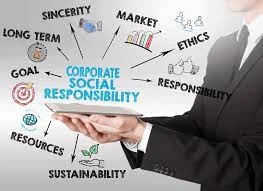

Since customers are more aware of their purchases' implications and firms are under pressure to demonstrate their moral and sustainable practices, social responsibility will become more crucial in brand management.
CSR is becoming a strategic marketing tool that helps brands stand out. CSR perceptions affect consumer preferences for socially responsible brands. CSR matters because investors reward companies that lead on environmental sustainability, and B2B purchasers base their selections on CSR. You can hire LinkedIn Marketing Agency for any help.
Outdated CSR thinking can be problematic for B2B firms, who face severe public scrutiny that affects their reputation and operations.
Understanding CSR:
Business operations can only address environmental and social challenges by prioritising social responsibility.
Charity team building, donations, fundraising, volunteering, and sustainable systems show a company's dedication to local communities and social responsibility.
These initiatives are different from charity and should be central to a company's aim.
In advertising and promotion, these programmes must be prominent to demonstrate the company's social responsibility.
Businesses must practise social responsibility to avoid repercussions. Making misleading statements regarding benefits might be harmful.
Studies show that 55% of consumers are prepared to spend extra on products from socially responsible enterprises, proving that social responsibility benefits both company and society.
How CSR Aids B2B Branding?
Top B2B business branding agencies constantly prioritise CSR.
Here are some key reasons—
Builds trust
Businesses with similar principles, especially B2B markets, have more loyal customers.
Businesses with pro-social programmes, eco-friendly production, and ethical practices attract millennials.
By being upfront about a company's ethical and environmental effects, purpose-driven B2B marketing promotes client trust.
Social responsibility can set a brand apart and win customers who value shared values.
Due to socially conscious B2B consumption, 72% of buyers buy from companies that excel in sociopolitical issues.
By respecting a company's principles and objectives, its target audience can develop lasting relationships.
Stand out from competitors
Companies must stand out from the competition and add value to customers to succeed.
Company actions and commitments to their business mission will affect customers by 2023.
Therefore, companies must express their unique missions and values to stand out.
According to a study, 38% of respondents are willing to spend more than 10% of the average cost to support socially responsible firms, and 17% are willing to pay 25% more to assist companies that effectively execute CSR and ESG programmes.
Following Government Regulations
Since governments worldwide are establishing environmental and social programmes, social responsibility is vital in regulation.
Noncompliant companies risk fines and brand damage.
National governments and private enterprises are working together more in Europe to protect and develop social goals.
The statute shows how CSR has become a primary priority.
Businesses with over 5,000 employees or 10,000 worldwide must prepare, disclose, and implement a strategy to detect risks and avoid human rights violations and environmental damage under this regulation.
Businesses with significant social responsibility also attract investors. Prioritising social responsibility can lower risks and position brands for success in shifting regulations.
Sustainability in B2B Interactions
Companies must set net-zero aims and reduce waste, greenhouse gas emissions, fossil fuels, energy, and water usage as they become sustainable. They are increasingly realising the importance of their suppliers and partners in accomplishing their aims and creating a lasting effect.
Suppliers, partners:
For most large companies, 95% of their supply chain is a broad number of vendors. Many of these partners are small and midsize, but they can still have a big impact on supply chain sustainability and performance. Suppliers that prioritise decarbonisation, circularity, sustainable distribution, and fair labour practises will gain transparency and desirability from existing and prospective business partners undergoing sustainable transformation.
Businesses are prioritising sustainability throughout their supply chains to meet targets and cut scope 3 emissions. Many big organisations use requests-for-proposals (RFPs) to ensure that prospective suppliers, vendors, and external firms can demonstrate sustainable practices. Landsec's tender procedure requires providers to answer a set of sustainability questions by their sustainability requirements in an RFP document. Suppliers must provide product-specific information, such as automobile emissions. After Landsec picks business partners, they must report quarterly on important performance measures.
This implies organisations of any size or industry will have to establish a sustainability plan to capture attractive commercial prospects. As new rules like the Corporate Sustainability Reporting Directive (CSRD) take effect, not addressing carbon emissions would increase expenses due to higher regulations and carbon levies.
Investors:
Investors are vital to business growth. In addition to the importance of sustainability in corporate board decision-making, investors are increasingly investing in sectors and firms with strong sustainability and ESG strategies. A study reported that 80% of mainstream investors consider ESG factors when investing. Therefore, businesses that don't prioritise sustainability risk misalignment with investors' ever-so-sustainable demands and the wide-ranging financial potential linked with external investment.
Research reveals that sustainable and low-carbon products outperform rivals in capital markets in shareholder returns, profit margins, and growth. When including sustainability in their plan, firms must communicate, openly, and consistently with internal and external stakeholders. Businesses will gain value from higher investment returns and long-term asset optimisation.
Conclusion:
In the current market, brands that prioritise social responsibility are more likely to gain customer trust, raise brand awareness, attract and retain top talent, and reduce regulatory concerns. Businesses must demonstrate morality and sustainability to retain customers and investment. Social responsibility affects internal and external growth. Participating in social responsibility projects promotes core values and client trust. Ignoring social responsibility can hurt a company's brand and financial performance because people now buy products and services, they trust from companies that share their beliefs. If you want any help you can contact with LinkedIn Ads Agency.





























Sign in to leave a comment.