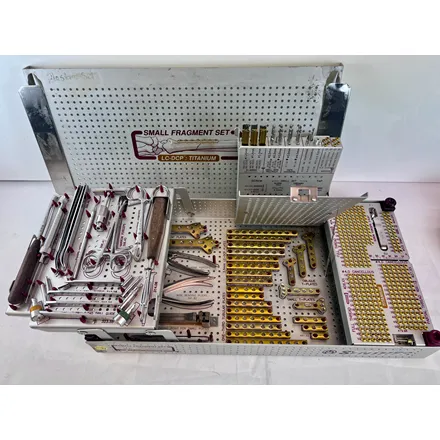

Effective orthopedic fracture management comes down to precise planning. Getting the fixation right, supporting natural bone healing, and giving the patient a realistic path back to full mobility are all connected, and none of them happens by accident. Implant selection depends on fracture type, patient age, bone quality, and what the surgical goals actually are for that specific individual rather than a generalized approach applied across cases.
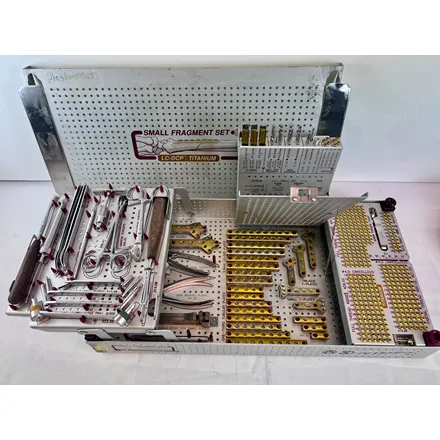
The Synthes Titanium Elastic Nail has become a trusted option for selected long-bone fractures because it combines flexibility with dependable stabilization while keeping soft-tissue disruption to a minimum. That balance matters enormously for both the surgery itself and the recovery that follows.
When Is a Synthes Titanium Elastic Nail the Right Choice for Fracture Fixation?
Choosing the right fixation method is one of the most consequential decisions a surgeon makes, because no two fractures present exactly the same challenge. Stability, biological healing, functional recovery, and minimizing soft tissue damage all have to be weighed against each other, and the right answer looks different depending on the patient in front of you.
A Synthes Titanium Elastic Nail tends to come into consideration for pediatric long-bone fractures and selected adolescent or adult cases where elastic stabilization provides the right kind of support. The flexibility of titanium enables micro-motion that actually promotes callus formation, which is what drives bone healing and maintains alignment during the recovery process.
Situations where elastic nailing is often considered include:
- Pediatric femoral fractures
- Selected tibial and forearm fractures
- Cases where minimally invasive fixation is the preferred approach
- Patients who stand to benefit from reduced soft-tissue disruption
- Fractures requiring stable alignment with biological healing support
The decision is never made by looking at a fracture in isolation. Surgeons evaluate anatomy, fracture pattern, patient activity level, and expected recovery before determining whether elastic nailing is the right fit for that particular case.
Why Titanium Elastic Nailing Continues to Be a Trusted Approach
Titanium has earned its place in orthopedic implants for reasons that hold up in practice. Its strength, elasticity, and biocompatibility make it well-suited to the demands of fracture fixation, enabling controlled movement and stable support while reducing soft tissue damage and working with the body's natural healing rather than against it.
Mechanical Stability
Elastic nails provide balanced internal support by maintaining alignment through opposing forces that stabilize the fracture while allowing the controlled micro-motion that drives the healing process forward rather than interrupting it.
Minimally Invasive Technique
Minimally invasive insertion means less surgical exposure, preserved soft tissues, a lower infection risk, and a recovery that tends to move faster with less postoperative discomfort for the patient.
Biocompatibility Benefits
Titanium works well with the body rather than against it. Its corrosion resistance and long-term stability reduce the risk of adverse reactions and support integration within bone structures that holds up reliably over time.
Clinical Considerations
The implant is only one part of the equation. Patient selection, accurate sizing, honest assessment of the fracture pattern, and disciplined adherence to established surgical principles are what actually determine whether elastic nailing delivers the outcome it should.
Choosing the Right Implant and Supplier Matters
Even after the right fixation technique has been identified, procurement teams and healthcare facilities still face the challenge of sourcing implants from suppliers they can actually rely on. Quality, compatibility, sizing options, inventory availability, and consistent specifications all affect whether surgical planning runs smoothly or hits avoidable obstacles at the worst possible time.
Healthcare organizations evaluating orthopedic implant suppliers tend to apply practical criteria that go beyond the product itself, because dependable supply directly affects patient care and surgical continuity in ways that are difficult to recover from once things go wrong.
Procurement Criteria for Orthopedic Implants
Compatibility, sizing options, quality assurance, documentation, inventory reliability, and supplier responsiveness are not just procurement checkboxes. They are the factors that determine whether the right implant is available when a patient needs it, and what happens in the operating room when it is not.
Ensuring Reliable Supply for Surgical Continuity
Suppliers who offer comprehensive orthopedic systems, the right equipments, and genuine support services give hospitals the foundation they need to maintain surgical continuity and deliver efficient trauma care without being derailed by supply chain gaps at critical moments.
Postoperative Care and Recovery Considerations
After fixation with a Synthes Titanium Elastic Nail, postoperative care is what bridges the gap between a successful surgery and a full recovery. Protocols are tailored to the patient's age, fracture type, and overall health, with gradual rehabilitation and monitored weight-bearing progression at the centre of it.
Regular imaging confirms alignment and tracks how healing is progressing, while also giving clinicians the early warning they need before a developing issue becomes a real problem. Pain management supports early mobility, and physiotherapy is brought in progressively to rebuild strength, flexibility, and range of motion without rushing the process.
Watching for implant irritation, delayed union, and other complications is not a passive exercise. It requires consistent follow-up that allows treatment plans to be adjusted as recovery unfolds, and clinical supervision close enough to catch any deviation from expected healing before it has time to compound into something harder to manage.
Conclusion
Choosing a Synthes Titanium Elastic Nail starts with the clinical picture, not the implant. Thoughtful patient selection, disciplined surgical planning, and sourcing from reliable orthopedic suppliers are what turn a good fixation choice into a good patient outcome. When all three come together, this approach consistently delivers in the cases where it fits.



























Sign in to leave a comment.