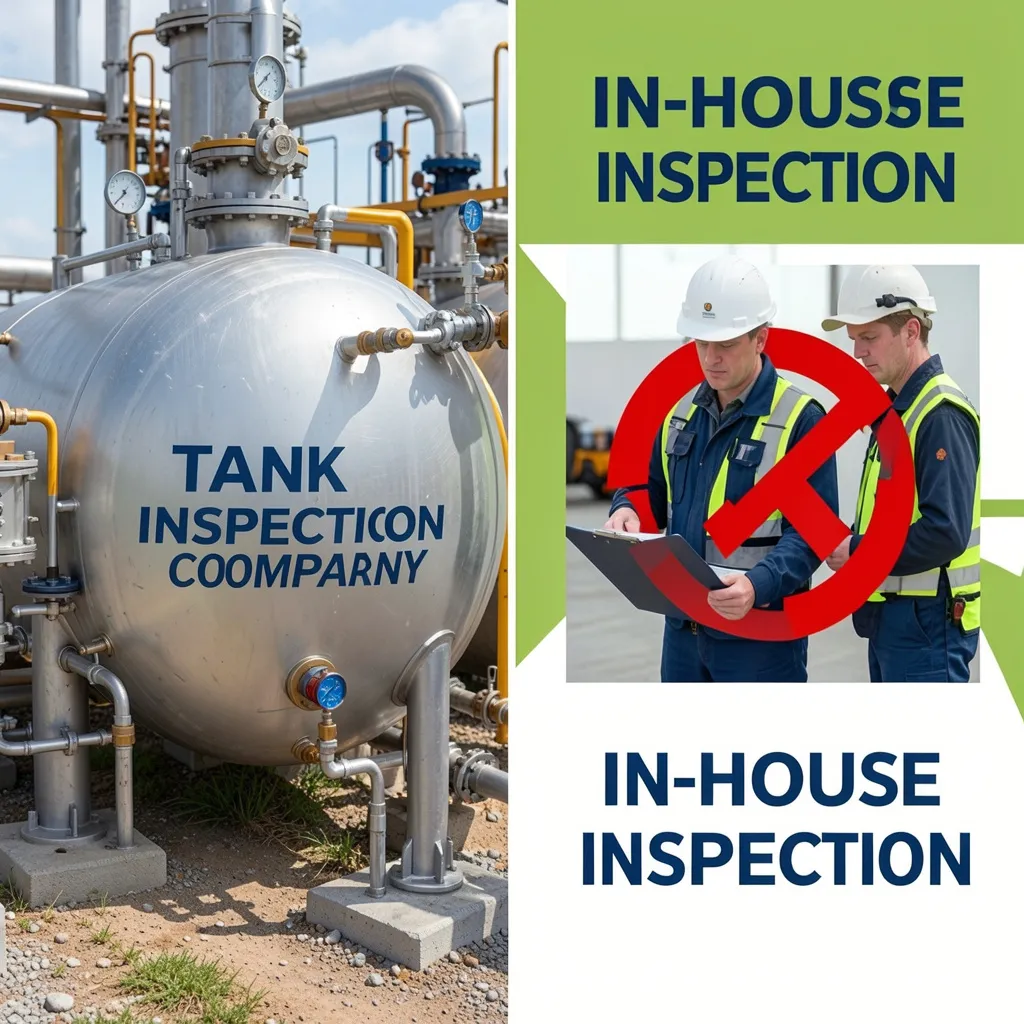

If you manage storage tanks—whether for water, chemicals, or fuel—you’ve probably had this conversation at some point: Should we handle inspections internally, or bring in a professional tank inspection company?
On paper, doing it in-house can seem efficient. You already have a team, you know your facility, and it feels like you’ll save money. But once you dig a little deeper, the decision gets more complicated. Inspections aren’t just routine checks anymore—they’re tied to compliance, safety, and environmental responsibility.
So the real question isn’t just “which is cheaper?” It’s “which approach actually protects your facility in the long run?”
In-House Inspection: Control and Familiarity
The Advantage of Internal Knowledge
There’s no denying that in-house teams know the facility better than anyone else. They understand operating conditions, maintenance history, and day-to-day challenges. That familiarity can be useful, especially for routine visual checks or basic monitoring.
For example, internal teams can quickly spot obvious issues like leaks, unusual noises, or visible corrosion. They’re already on-site, so response time is immediate. That’s a real advantage.
Where It Starts to Get Complicated
The challenge is that modern inspections require more than observation. They involve technical evaluation, data interpretation, and compliance with standards such as API 653.
Most in-house teams aren’t equipped with:
- Advanced inspection tools like ultrasonic mapping systems
- Certified expertise in structural evaluation
- Experience interpreting corrosion data and remaining life
So while they can handle routine checks, deeper integrity assessments often fall outside their scope.
Tank Inspection Companies: Specialized Expertise
What a Professional Tank Inspection Company Brings
A professional tank inspection company operates with a completely different level of specialization. Their teams are trained, certified, and focused entirely on inspection and integrity management.
They bring:
- Structured inspection methodologies
- Advanced tools and technologies
- Compliance knowledge aligned with industry standards
- Detailed reporting and analysis
This is especially important when working with API 653 tank inspection companies, where certified inspectors evaluate tank conditions against strict criteria.
Objectivity Matters More Than You Think
One thing that often gets overlooked is objectivity. External inspectors don’t have operational bias. They assess conditions based purely on data and standards, not internal pressures or assumptions.
That neutrality can make a big difference, especially when critical decisions—like whether a tank needs repair or replacement—are involved.
Technology Gap: A Practical Reality
Access to Advanced Tools
Modern tank inspections services rely heavily on technology. Robotic crawlers, ultrasonic thickness mapping, and digital corrosion analysis tools are now standard in many inspections.
For most facilities, investing in this equipment for occasional use doesn’t make financial sense. That’s why specialized inspection companies exist—they spread that cost across multiple projects.
Data Interpretation and Reporting
It’s not just about collecting data. It’s about understanding it.
Professional inspection companies provide:
- Corrosion heat maps
- Trend analysis over time
- Risk-based repair recommendations
This level of detail supports better decision-making, something that basic in-house inspections typically can’t offer.
Compliance and Regulatory Pressure
Why Standards Can’t Be Ignored
Regulatory expectations are getting stricter, not looser. Inspections must align with recognized standards, and documentation must be thorough and defensible.
Working with water storage tank inspection companies or certified providers ensures that inspections meet these requirements. This is particularly important during audits or investigations.
The Risk of Getting It Wrong
If an issue is missed—or incorrectly assessed—the consequences can include:
- Regulatory penalties
- Environmental damage
- Operational downtime
- Legal liability
This is where environmental inspection services also come into play, evaluating risks related to leaks, contamination, and emissions.
In-house teams may not always have the expertise to manage these complexities effectively.
Water Tanks vs. Industrial Tanks: Different Considerations
Water Tank Inspections Require Additional Focus
For facilities dealing with potable water, inspections go beyond structural integrity. Tank inspection services must also address water quality concerns.
Inspectors evaluate:
- Internal coatings and linings
- Sediment buildup
- Contamination risks
This is why many organizations specifically search for “water tank inspection companies” when dealing with water systems. The requirements are simply different—and more sensitive.
Cost Comparison: Short-Term Savings vs. Long-Term Value
In-House Looks Cheaper (At First)
At a glance, using internal resources seems cost-effective. There’s no external contract, and the work is handled within existing operations.
But that only tells part of the story.
The Hidden Costs
In-house inspections may lack:
- Advanced diagnostic capability
- Certified expertise
- Comprehensive reporting
Which can lead to:
- Missed defects
- Delayed repairs
- Higher long-term maintenance costs
Professional inspection services, while more expensive upfront, reduce these risks significantly.
The Hybrid Approach: What Many Facilities Are Doing Now
Interestingly, many facilities aren’t choosing one option over the other—they’re combining both.
- In-house teams handle routine monitoring and basic checks
- External tank inspection company experts conduct detailed, certified inspections
This approach balances cost, efficiency, and expertise.
And honestly, it works well in most cases.
Conclusion
When you step back and look at it, the decision isn’t really about convenience or even cost alone.
It’s about risk management.
In-house inspections are valuable for day-to-day oversight, but they’re not a replacement for professional expertise. Tank inspection companies bring the tools, certifications, and objectivity needed to ensure compliance, safety, and long-term reliability.
For critical assets—especially those tied to environmental and public safety—the safer choice is usually the more informed one.
FAQs
Can in-house teams handle all tank inspections?
They can manage routine checks, but detailed inspections often require specialized tools and certified expertise.
What do tank inspection companies offer that in-house teams don’t?
They provide advanced technology, certified inspectors, detailed analysis, and compliance with industry standards.
Are water tank inspections different from industrial tank inspections?
Yes. Water tank inspection services also focus on water quality and contamination risks, not just structural integrity.
Is hiring a tank inspection company expensive?
It involves upfront costs, but it often reduces long-term risks and prevents costly failures.
What is the best approach for most facilities?
A combination of in-house monitoring and professional inspection services is often the most effective strategy.


























Sign in to leave a comment.