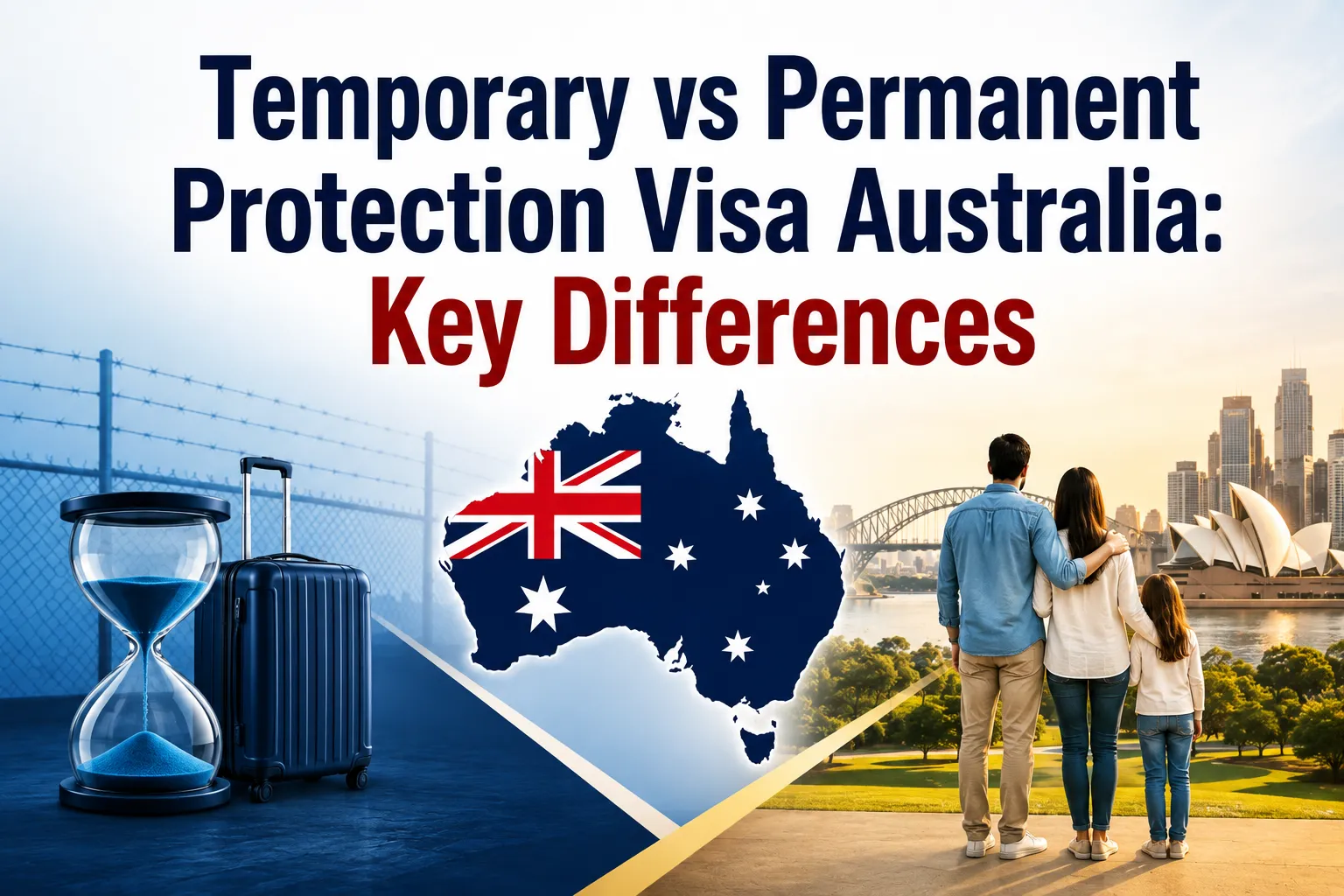

One question comes up in nearly every consultation I've had on this topic: "So is my visa permanent, or do I have to keep doing this again?" It's a fair question, and honestly, it's one the system doesn't explain clearly enough upfront. Protection Visa Australia applicants often assume there's one outcome waiting at the end of the process, when really there are two very different paths, and which one applies to you depends on details you might not think matter until someone points them out.
I've sat with people who were relieved just to be granted something, only to realize months later that "something" wasn't permanent.
The Core Difference, Plainly Put
A permanent protection visa, the Subclass 866, is exactly what it sounds like. Once granted, you're not renewing anything. Full work rights, Medicare, and eventually a path to citizenship. It's the outcome most applicants hope for, and understandably so.
A temporary protection visa Australia outcome is a different animal entirely. It comes with an expiry date, restrictions on movement, and the need to reapply or transition through another process before that date arrives. It's not a lesser finding in your case — that's the part people get wrong most often. It's a different legal pathway triggered by different circumstances, not a verdict on how genuine your fear of returning home actually is.
Why Some People Get Temporary Instead of Permanent
This is where arrival circumstances come into play, and it catches a lot of applicants off guard. If someone arrived by an unauthorized route, they may only be eligible for temporary protection options, regardless of how strong the underlying claim is. That's policy, not judgment. I've had clients take this personally, assuming it meant the Department doubted their story, and I always try to separate those two things clearly for them.
It's a decision baked into how the person entered the country, made well before anyone assesses the substance of their claim. Frustrating, yes. But understanding it early changes how you prepare and what you can realistically expect.
Where the Safe Haven Enterprise Visa Fits In
There's a third option that doesn't get nearly enough attention: the safe haven enterprise visa, or SHEV. It's temporary too, but it's built around a trade-off — spend a set period working or studying in a designated regional area, and it can open a pathway to other visa options that wouldn't otherwise be on the table.
I've watched applicants dismiss SHEV outright because "temporary" sounded like a downgrade. That's a mistake in some cases. For the right person, particularly someone open to regional work or study, SHEV conditions can lead somewhere genuinely useful.
What Temporary Status Actually Means Day to Day
This is the part that surprises people most. A temporary protection visa isn't just "permanent, but with a review date." It restricts overseas travel in most cases, and it requires active renewal before expiry, which means the process doesn't just end once — it's ongoing, with its own risks each time.
There's also the emotional weight of it, which practical guides tend to skip over. Living under temporary status means living with a level of uncertainty permanent visa holders don't carry. Clients have told me it affects everything from financial planning to whether they feel comfortable putting down roots. Worth being upfront about, rather than glossing over it.
What Happens If the Claim Is Refused
Whether someone's applying under a temporary or permanent pathway, a refusal changes everything about the timeline. A protection visa refused appeal has to be lodged with the Administrative Review Tribunal within a strict window, and that window doesn't bend for personal circumstances. I've seen strong cases lose their shot at appeal purely because someone assumed there'd be more time.
The refusal letter is more useful than people give it credit for. It spells out exactly what wasn't convincing the first time, and a solid appeal responds directly to those gaps rather than resubmitting the same account with cleaner formatting. If an asylum visa rejected Australia decision has already been through appeal and failed, the remaining options shrink considerably, usually down to discretionary Ministerial intervention.
A Common Mix-Up Worth Clearing Up
People sometimes talk about an asylum visa Australia process as though it works separately from protection visas, or like it's an offshore application route. It isn't, at least not in the way most people mean it. Protection visas in Australia are for people already onshore, and that distinction shapes the entire process from the start. Getting this confused early on wastes time applicants often don't have to spare.
How to Think About Which Path Applies to You
Rather than assuming an outcome, it helps to ask a few honest questions early: How and when did you arrive in Australia — this alone can determine whether permanent status is even on the table. Is regional work or study realistic for you, in case SHEV is worth serious consideration? Do you have solid evidence and consistent dates, since weak documentation affects outcomes regardless of pathway? And if refused, do you already know your appeal deadline, rather than finding out from the letter itself?
None of this is about gaming the process. It's about walking in with clear eyes instead of assumptions that might not hold up.
The Practical Takeaway
Temporary and permanent outcomes under Protection Visa Australia aren't interchangeable, and they're not a reflection of how believable your story is. They're shaped by arrival circumstances and evidence, and sometimes by paths like SHEV that don't get the attention they deserve. Know which pathway actually applies before building expectations around a permanent outcome and know your appeal deadlines cold in case a refusal lands. Guessing your way through this rarely ends well.
Whether someone qualifies for the permanent pathway or a temporary protection visa Australia outcome, the details that decide it are rarely obvious from the outside. At Vision Aus, this is exactly the kind of assessment we walk clients through — working out where SHEV fits, what arrival circumstances mean for eligibility, and how to build a protection visa refused appeal properly if a first decision doesn't go the right way. If you're unsure whether your situation counts as a genuine asylum visa rejected Australia case worth appealing, get it looked at properly before assuming the door is closed.
Frequently Asked Questions
1. What's the difference between a temporary and permanent protection visa in Australia?
A permanent protection visa (Subclass 866) doesn't expire and leads to citizenship. A temporary protection visa Australia outcome comes with an expiry date, travel restrictions, and the need to renew or transition through another pathway.
2. Why would someone only be eligible for a temporary protection visa?
Eligibility often depends on how and when the applicant arrived in Australia, particularly if they arrived by an unauthorised route. It's a policy-based outcome, not a reflection of the strength of the underlying claim.
3. What is a Safe Haven Enterprise Visa and how is it different from a temporary protection visa?
A safe haven enterprise visa is a temporary pathway tied to working or studying in a designated regional area. Meeting those conditions can open further visa options later, unlike a standard temporary protection visa.
4. Can a temporary protection visa become permanent later?
Not automatically. Holders generally need to reapply or transition through another pathway, such as SHEV conditions, rather than the visa converting to permanent status on its own.
5. What should I do if my protection visa is refused?
Read the refusal letter carefully, then act quickly. A protection visa refused appeal has a strict deadline with the Administrative Review Tribunal, and missing it usually ends the process for that application.
6. Is an asylum visa the same as a protection visa in Australia?
Not formally. What people call an asylum visa Australia process is generally the onshore protection visa system, available only to people already present in the country, not an offshore humanitarian application.





![How to Get Luxembourg Work Visa for Indians [2025]](https://writeupcafe.com/data/post/1473491/3d54b0b313e4da42bfb18b1998255efe.png.webp)















Sign in to leave a comment.