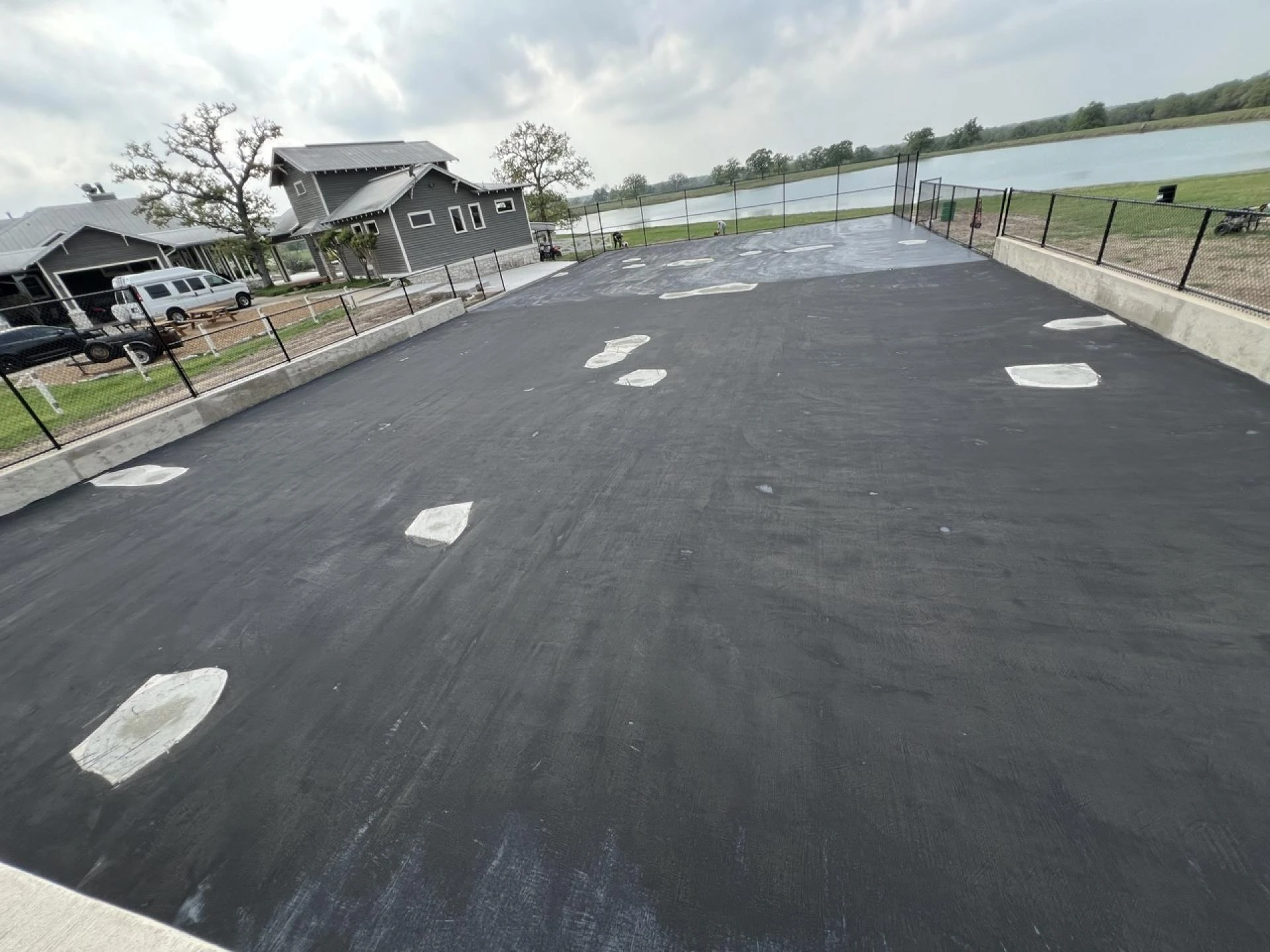

Unsure who you should use for the concrete slab or don’t know why it matters? Read below to see what we’ve seen in our years of doing tennis court surfacings and pickleball courts.
And keep scrolling to see some of our top examples of what can do wrong with outdoor courts.
Appeal of DIY or Subbing-Out
We get it—your local concrete guy, pool guy, or even a neighbor says they can do it. They’ve “poured plenty of slabs” and promise it’ll be flat, level, and ready for your court. It sounds like an easy, affordable way to get started—and on the surface, it feels like the right move.
And sure—home builders, pool contractors, and construction companies all work with concrete. But here’s the truth: building a hard court slab isn’t the same as pouring a driveway, patio, or pool deck. We’ve seen experienced tradespeople pour beautiful concrete that still fails as a court surface—because they didn’t know the critical specs for player comfort, surface pitch, expansion joint placement, or how moisture and extreme weather affects acrylic coatings.
Professional Tennis courts require purpose-built slabs. The wrong surface material, improper slope, poor drainage, low spots, or even the placement of a single joint can ruin the entire surface—no matter how well the concrete was poured.
Generic concrete companies may be able to quote you less to save you money in the short-term but for something as permanent and long-lasting as a game court it will cost you big in the long term.
Going with a Professional Tennis Court Construction company will save you the headache of dealing with improper surface material, low spots, acrylic crack fillers and the issue of acrylic coating not sticking properly.
Check out These Courts Done by Home Builders in Houston ![😮]() :
:
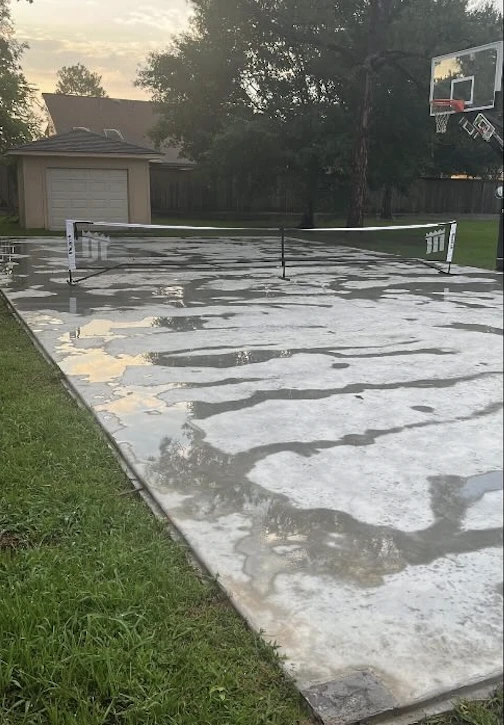
#1 Problem We See 99% of the Time: DRAINAGE
While this looks like just some water that will dry off eventually — a proper court will have no drainage issues. Any water that stays on top of the court once it’s painted will slowly destroy your line paint! 99% of contractors will not build courts with adequate drainage systems.
No Warranty on DIY Concrete
When it comes to your court slab, we cannot warranty any concrete we didn’t pour ourselves—and here’s why:
• Slabs poured too low can trap water.
• Uneven surfaces lead to puddles and “bird baths” (low spots) that ruin playability.
• Improper slope = standing water = damage to acrylic resurfacer over time.
• Even small leveling mistakes can wreck your surfacing investment.
Bottom line: If we didn’t pour it, we can’t stand behind it. The foundation matters—and it needs to be done right.
Even Big Companies Can Mess Up
For this Outdoor Tennis Court Client we had to repair 12 low spots!! Court looked fine until it was time to paint and we flooded the court to test. This job required additionally surface coating and pitch binder work that was only found out after a site visit as it’s impossible to tell without measuring!
Check out this Before and After from Low-Spots to Pro-Level Surfaces
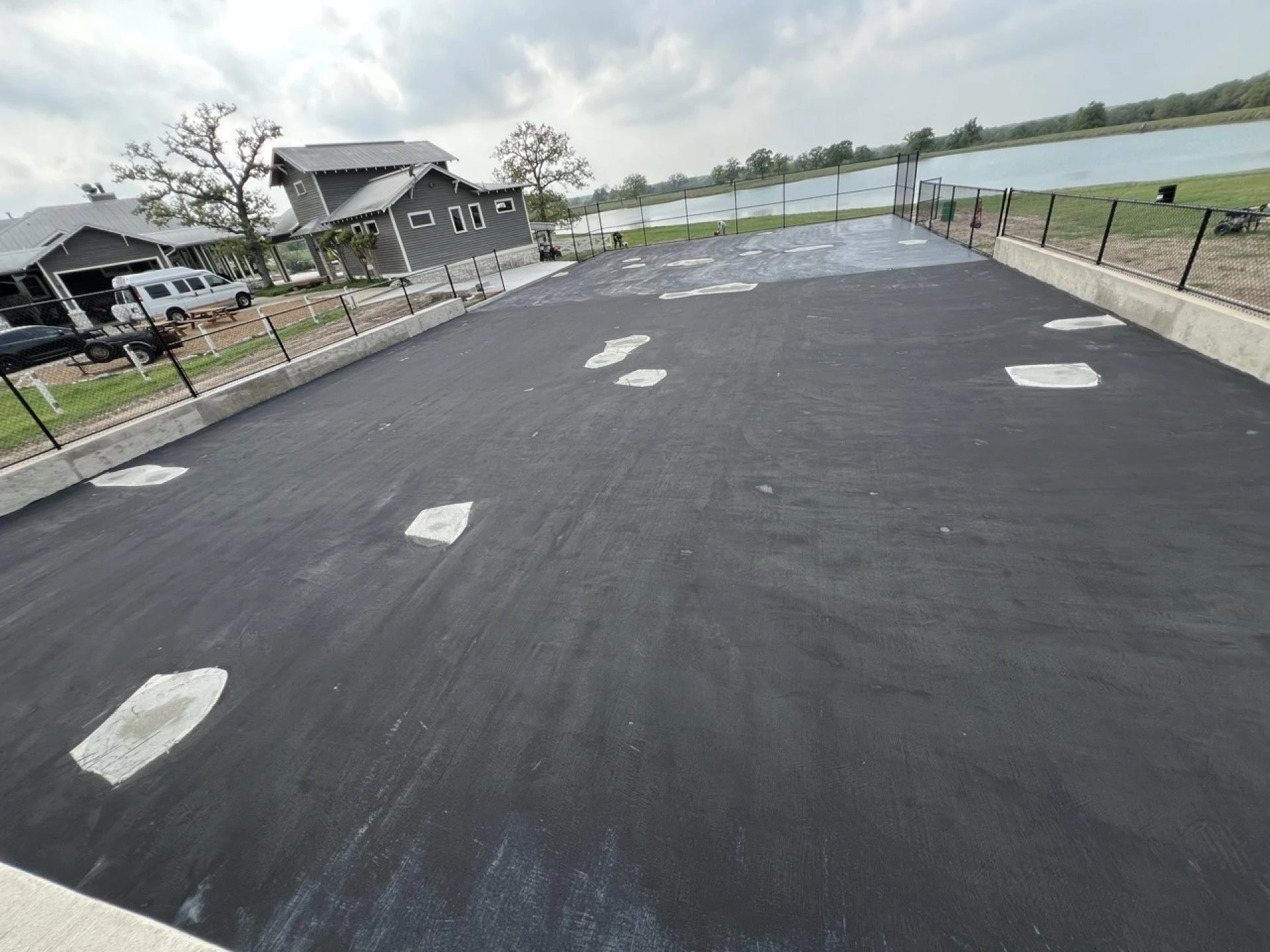
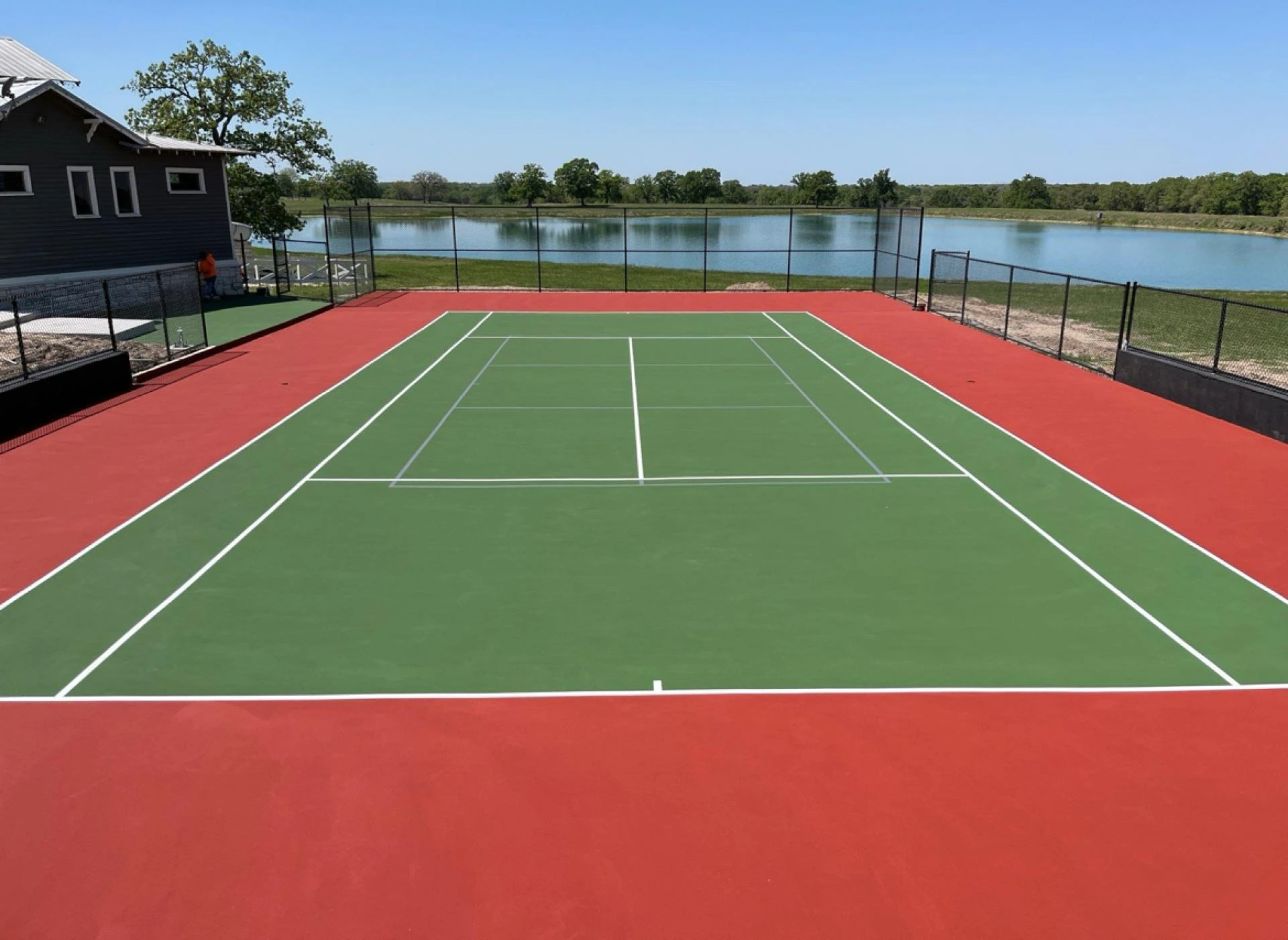
Getting a professional tennis court resurfacing is the only way to get results like shown above. This job required extensive bird bath filing and extra layers of acrylic resurfacer in order to get it from DIY to Pro level.
The Best Way to Get It Done Right the First Time
The best way to make sure your tennis or pickleball court is built to last is to work with a professional tennis court contractor from the start. Unlike a general concrete crew or a local pool guy, a specialized builder understands the specific requirements of tennis court construction—from the correct dimensions and line paint, to the right drainage system and surface material for your environment. Getting the foundation and layout right from the beginning helps prevent costly issues like cracking, shifting, or uneven surfaces down the road.
If you’re resurfacing an existing tennis court, a professional will assess the condition of the slab and guide you through the full tennis court resurfacing process. This includes repairing low spots or cracks, applying acrylic resurfacer, and finishing with high-quality acrylic coating that’s designed for long-lasting performance. More than just a fresh coat of paint, this process restores proper playability, ensures consistent bounce, and improves the overall look of the court. It’s also an opportunity to customize your court color and surface texture to match your preferences.
A qualified court builder can also help you take things further with performance upgrades. Whether you’re looking for a cushioned tennis court surface for joint relief, a clay court feel for slower play, or even a faster hard court, a pro can adjust the speed of play and surface characteristics to fit your game. Done right, your court can easily last 10 to 15 years with minimal maintenance. If you’re planning a new build or considering tennis court resurfacing, the smartest move is to start with a site visit and get a free estimate from a company that specializes in outdoor sports courts—not just general construction. You’ll get expert guidance, better materials, and peace of mind knowing your investment will hold up for the long run.
At Build My Courts, we specialize in professional tennis court builder, pickleball court construction, and full-service game court builds done right the first time. Whether you’re dealing with cracks, drainage issues, or planning a brand-new outdoor court, our team brings the expertise, materials, and precision needed for a long-lasting, pro-level surface.








Sign in to leave a comment.