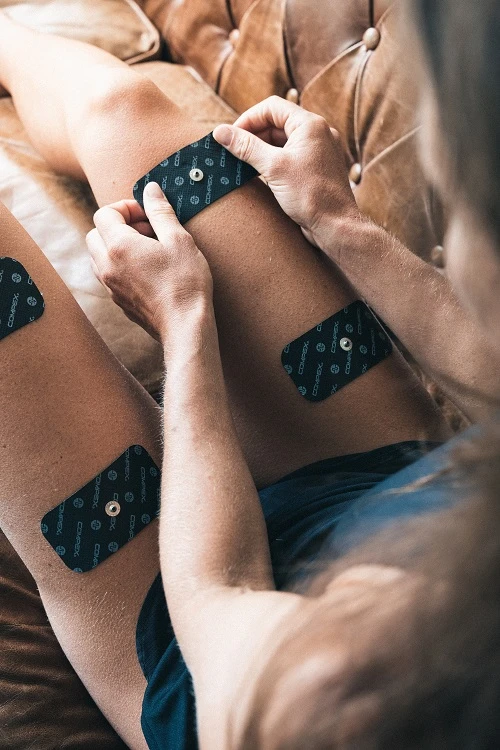

If you are an avid gym goer, a competitive athlete, or work in the sports medicine field, you may have heard of people using EMS or TENS devices to enhance their fitness. These devices can benefit people of all activity levels, but sometimes, the jargon surrounding them can be a bit confusing.
Phrases like “Electrical muscle stimulation” and “Transcutaneous electrical nerve stimulation” may make your head spin. Fortunately, with some research, muscle stimulation programs are easy to understand. Let’s break down these terms so you can decide what type of muscle stimulation may benefit you.
What Is EMS?
Electrical muscle stimulation is a type of electrotherapy that uses electric currents to stimulate motor nerves.
This stimulation causes muscles to contract, making this form of stimulation a great way to enhance physical activity. A personal device that offers electrical stimulation for muscles should target motor nerves with a specifically designed frequency, allowing you to engage more muscle fibers in an activity. This essentially means you can train harder without pushing your body any further, risking injury or other setbacks.
What Is TENS?
Transcutaneous electrical nerve stimulation is a type of electrotherapy that uses electrical currents to stimulate sensory nerves. This stimulation can aid in pain relief programs by providing symptomatic pain relief.
Basically, TENS units can interrupt the nerves that are telling your brain you are experiencing pain, like interference on a phone call. There are two primary types of TENS programs.
- Low-Frequency TENS Programs: Targeted electric currents induce your body’s natural endorphin release symptoms, which may relieve pain.
- High-Frequency TENS Programs: Targeted electric currents apply a nonpainful stimulus to sensory nerves in an attempt to halt pain signals from reaching the brain, a process known as Gate Theory.
Which Is Right for You?
A portable, wireless TENS muscle stimulator device can help people suffering from chronic pain, arthritis, or exercise-induced discomfort experience relief. TENS may also promote circulation and healing, making it a great addition for athletes looking to improve their recovery.
EMS has been shown to help athletes enhance their workouts by engaging more muscle fibers in an activity, which may increase muscle strength and density in both fast and slow twitch muscles. Fortunately, many expertly engineered electrical muscle stimulation devices offer both EMS and TENS programs so you can experience the benefits of both systems with a single device.
While almost anyone can benefit from an EMS or TENS program, both options can help you achieve different goals. Learn about these two different forms of electrical muscle stimulation to find a program that works for you.
About Compex®
Prioritizing your fitness is essential in every stage of life. To optimize their training regimens, competitive athletes and casually active individuals alike turn to Compex® for innovative physiotherapy devices. As a leader in the sports training industry, this Swiss brand has over 30 years of expertise in developing innovative sports medicine equipment. Compex® devices use cutting-edge electrical muscle stimulation technology to help athletes enhance their fitness programs, manage pain, and promote recovery. Electrical muscle stimulation can help you reach your fullest potential, which is why Compex® prioritizes devices that are portable, easy to use, and created with industry-leading technology. Whether you are a professional athlete, work in the sports medicine field, or simply want to stay active as you age, Compex® can help you achieve your fitness goals.
To learn more about EMS and TENS programs and to buy a Compex® device, visit https://www.compex.com/
Original Source: https://bit.ly/3WAsFzy



























Sign in to leave a comment.