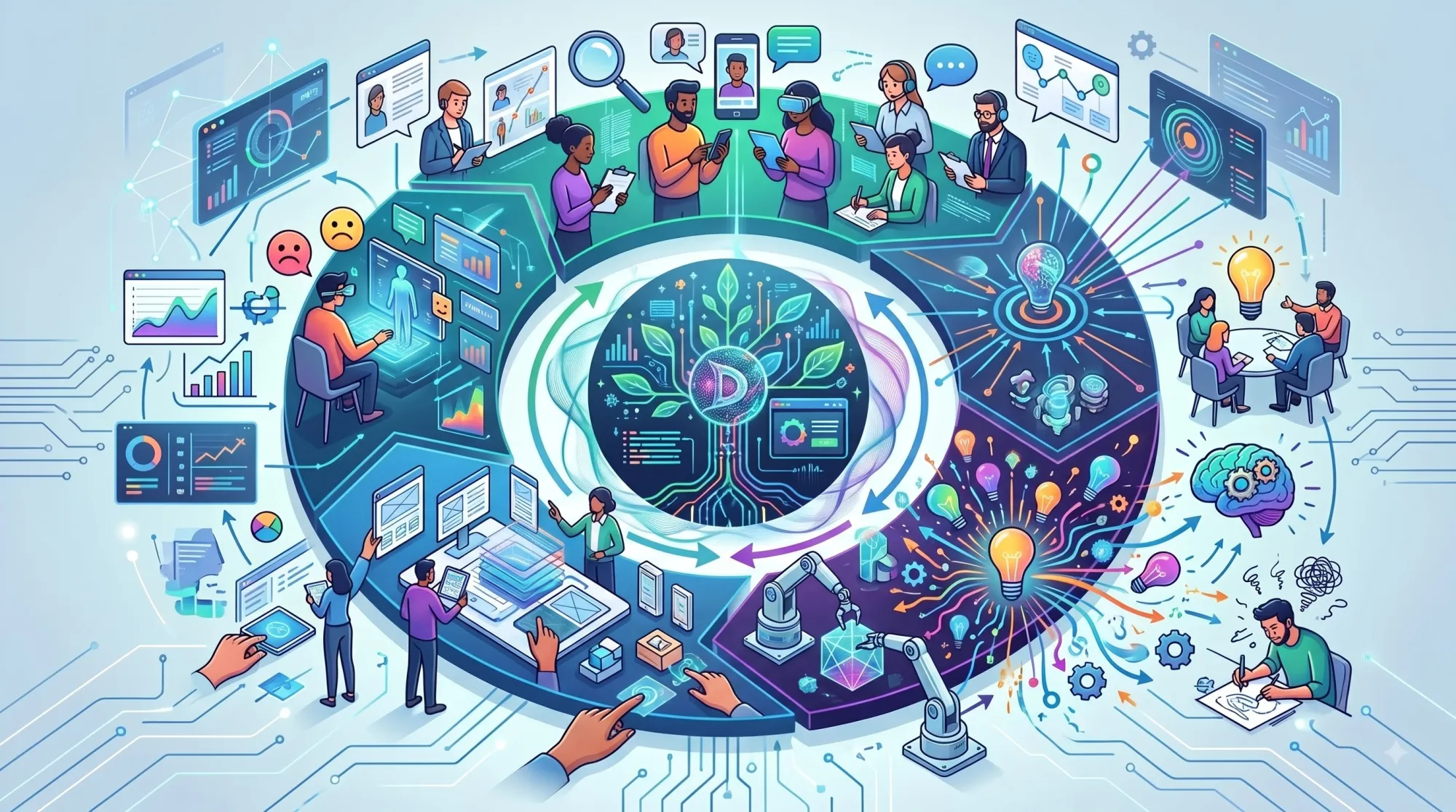

Designing a successful digital product is about much more than creating an attractive interface. It requires understanding users, solving real problems, and continuously improving the experience. This is where design thinking comes in. It is a human-cantered approach that helps businesses create products that are practical, innovative, and aligned with user needs.
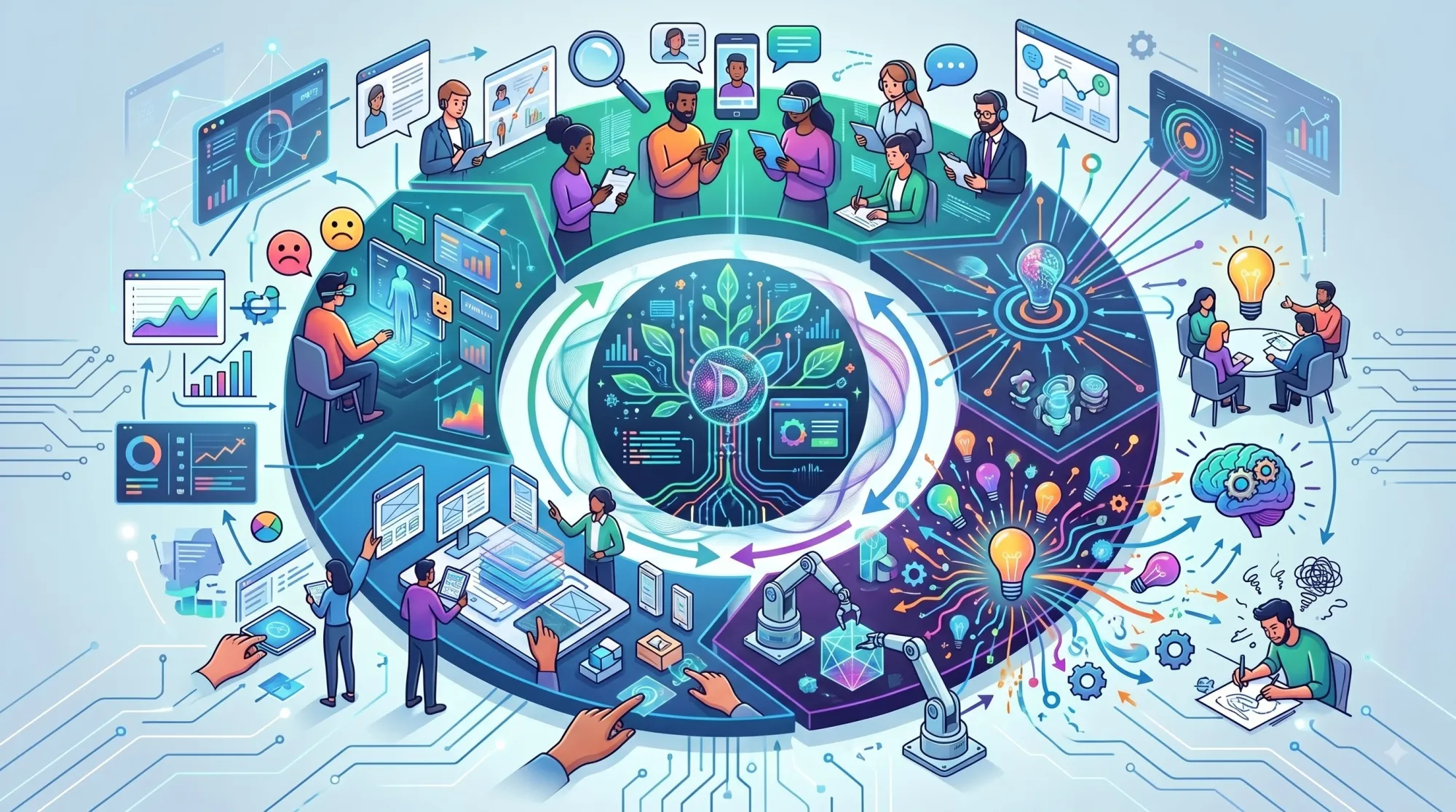
What Is Design Thinking?
Design thinking is a problem-solving methodology that focuses on understanding users before creating solutions. Instead of making assumptions, teams gather insights from real people, identify pain points, brainstorm ideas, build prototypes, and test them before full-scale development.
Stage 1: Empathize
The first stage is understanding the people who will use the product.
During this phase, designers and researchers gather information about user behaviors, challenges, motivations, and goals. They may conduct interviews, surveys, usability observations, or customer journey mapping.
The objective is to answer questions such as:
- What problems are users trying to solve?
- What frustrates them?
- What motivates them?
- How do they currently complete their tasks?
Strong UX product design services begin with empathy because successful products solve genuine user problems rather than imagined ones.
Stage 2: Define
After collecting research, the next step is organizing the findings into a clearly defined problem statement.
Rather than saying:
"We need a better dashboard."
A design thinking team may define the problem as:
"Users struggle to locate important project updates because the dashboard displays too much information at once."
A well-defined problem helps teams stay focused throughout development.
This stage often includes:
- User personas
- Journey maps
- Problem statements
- Business goals
- Product requirements
Stage 3: Ideate
Once the problem is clearly defined, it's time to generate ideas.
The ideation stage encourages creativity without immediate judgment. Teams explore multiple possibilities before deciding on the strongest solution.
Common brainstorming techniques include:
- Mind mapping
- Crazy Eight sketches
- Brainwriting
- Storyboarding
- "How Might We" questions
Organizations providing design thinking services often involve designers, developers, marketers, stakeholders, and customers during brainstorming sessions to gain diverse perspectives.
Stage 4: Prototype
A prototype is a simplified version of the final product that allows teams to test concepts before investing significant development time.
Prototypes can include:
- Wireframes
- Clickable mock-ups
- Interactive interfaces
- Landing pages
- Low-fidelity sketches
Creating prototypes helps teams identify usability issues early while reducing development costs. Instead of spending months building the wrong product, businesses can validate ideas in days or weeks.
Stage 5: Test
Testing involves putting prototypes in front of real users and observing how they interact with the product.
The objective is not proving the design is correct but learning where improvements are needed.
Teams evaluate:
- Ease of navigation
- User satisfaction
- Task completion
- Accessibility
- Performance expectations
Why Design Thinking Matters
Businesses across industries are embracing design thinking because it reduces uncertainty and increases the likelihood of building products users actually want.
Key benefits include:
- Better user experiences
- Reduced development risks
- Faster product validation
- Improved collaboration across teams
- Higher customer satisfaction
- Increased innovation
- Lower long-term development costs
How Design Thinking Supports Digital Transformation
Modern businesses often combine design thinking with IT consulting and software development to build scalable digital solutions.
While software developers focus on technical implementation, designers ensure those solutions remain intuitive and user-friendly.
Together, these disciplines help organizations:
- Modernize legacy systems
- Improve customer experiences
- Increase operational efficiency
- Build scalable digital products
- Reduce costly redesigns
Choosing the Right Design Partner
Successful design thinking requires more than creative ideas. It demands research expertise, technical knowledge, collaboration, and continuous iteration.
When evaluating providers of UX product design services, consider whether they:
- Conduct thorough user research
- Validate ideas through testing
- Collaborate across technical and business teams
- Build interactive prototypes
- Use measurable UX metrics
- Align design decisions with business goals
Conclusion
Design thinking is not just a design framework. It is a strategic approach that helps organizations solve complex problems while keeping users at the center of every decision. If you're looking to accelerate digital innovation, DeveloperTown combines expert UX product design services, design thinking services, and IT consulting and software development to help organizations build user-focused digital products. Their collaborative approach ensures ideas are validated, refined, and transformed into scalable solutions that drive long-term business success.
FAQs
1. What is the primary goal of design thinking?
The primary goal is to understand users deeply and develop innovative solutions that effectively solve their real-world problems.
2. Why are UX product design services important?
They help businesses create intuitive, user-friendly products that improve customer satisfaction, engagement, and overall product success.
3. How does design thinking reduce project risks?
By testing ideas with real users before full development, teams can identify issues early and avoid costly changes later.
4. What industries benefit from design thinking services?
Industries including healthcare, finance, education, retail, manufacturing, and technology use design thinking to improve products and customer experiences.
5. How do IT consulting and software development complement design thinking?
They transform validated design concepts into secure, scalable, and high-performing digital solutions while ensuring technical feasibility and business alignment.























Sign in to leave a comment.