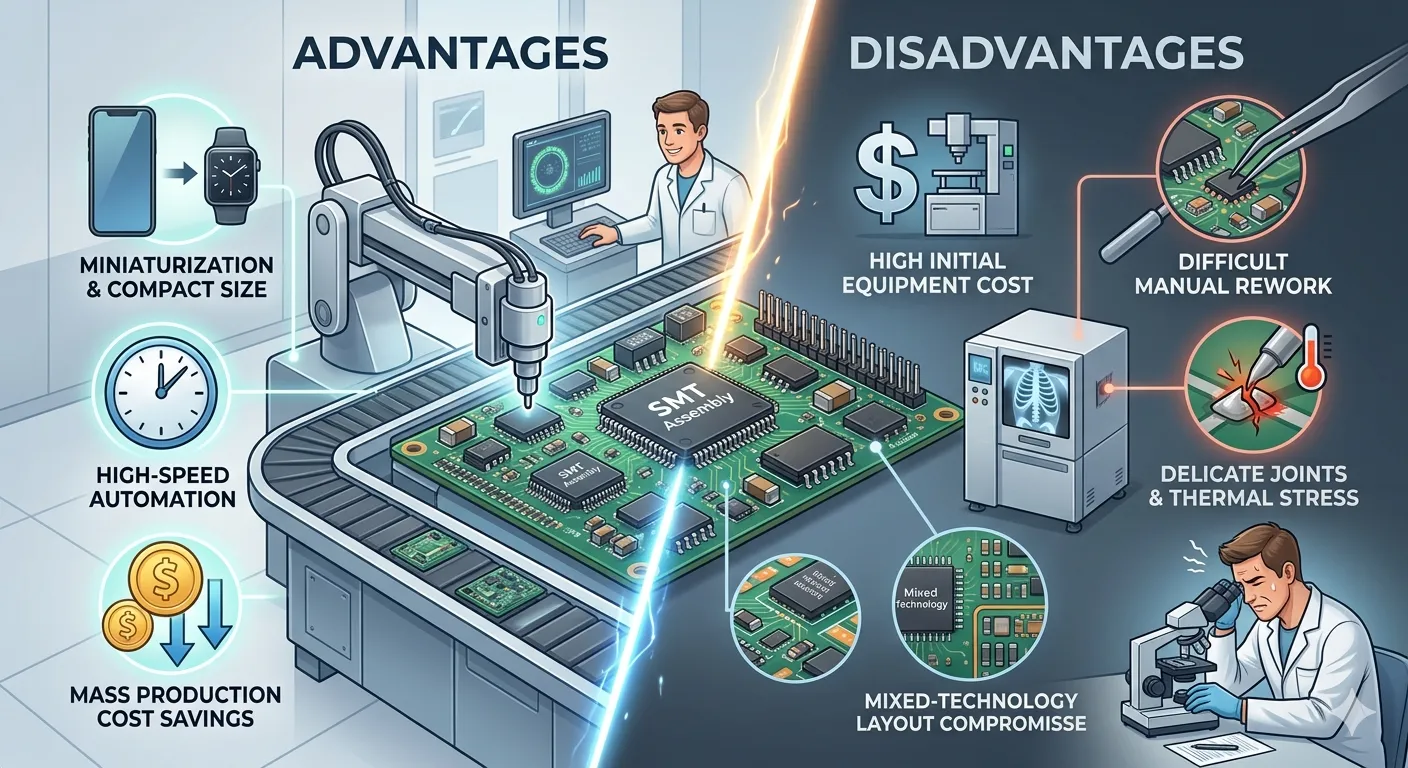

When you look at the complex, compact circuit boards inside your laptop, smartphone, or gaming console, you are witnessing a miracle of modern manufacturing. These aren't hand-soldered by someone with a magnifying glass anymore. They are produced through an incredibly sophisticated, high-speed process known as SMT Assembly. SMT stands for Surface Mount Technology, and it has revolutionized how we build everything electronic. Instead of pushing component leads through holes in the board, SMT Assembly involves placing tiny electronic parts directly onto the surface of the printed circuit board. This shift allows for boards to be smaller, lighter, and much more capable of handling high-speed signals. If you have ever wondered what actually happens inside a high-tech factory once a design is finalized, you are about to find out. In this post, we are going to walk through the complete SMT Assembly workflow, from the moment the bare board enters the line to the final inspection of the finished product.
Understanding the Basics of the SMT Assembly Line
The SMT Assembly line is essentially a series of automated stations connected by a conveyor belt system. Each station has a very specific job to do. If one machine fails or slows down, the entire line loses efficiency. The goal is to keep the boards moving constantly. The process is highly automated to reduce human error and increase speed. Modern factories can place tens of thousands of components per hour with incredible accuracy. To understand this, imagine a high-speed dance where robots, vision systems, and specialized ovens work in perfect harmony. It is a masterpiece of industrial engineering.
Step One: Solder Paste Printing
The process begins with the bare PCB. The first critical step is applying solder paste. Solder paste is a grey, sticky substance that looks like a paste but is actually a mixture of tiny metal solder balls and flux. This paste acts as both the glue to hold the components in place and the material that will create the electrical connection during the reflow process. A stencil is placed over the PCB. The stencil has precision-cut holes that align perfectly with the pads on the circuit board. A squeegee moves across the stencil, pushing the solder paste through the holes and onto the pads. If this step is wrong, the entire board will be a failure. It is the foundation of the whole SMT Assembly operation. Engineers must ensure the thickness of the paste is perfectly controlled to prevent shorts or open circuits later.
Step Two: Solder Paste Inspection
Once the solder paste is applied, the board moves to the Solder Paste Inspection (SPI) station. You might think this is an optional step, but it is actually vital for high-yield manufacturing. The SPI machine uses 3D camera technology to scan the pads. It measures the volume, alignment, and height of the solder paste deposit on every single pad. If the paste is misaligned or too thin, the machine will flag the board for inspection before it ever reaches the expensive component placement stage. This saves a massive amount of time and money. It is far easier to wipe off the paste and reprint the board than it is to rework a board that has already been fully assembled.
Step Three: Component Placement
This is often the most impressive part of the SMT Assembly process to watch. The board moves into the Pick-and-Place machine. These machines are marvels of robotics. They use high-speed nozzles to pick up tiny components from feeders. These feeders hold reels of parts, which can be as small as a grain of sand. The machine uses a vision alignment system to ensure the part is picked up correctly and oriented the right way. It then zips over to the board and places the component into the wet solder paste with micron-level accuracy. The speed at which these machines move is truly breathtaking. They can place components so fast that the human eye can barely follow the movement.
Step Four: Reflow Soldering
Once all the components are placed, the board is still essentially just sitting there with parts held in place by the stickiness of the paste. Now it needs to be permanently soldered. The boards enter a large machine called a reflow oven. The oven is divided into several temperature zones. First, there is a pre-heat zone to gradually warm the board and components. This prevents thermal shock, which could crack the parts. Next, the board enters the soak zone to activate the flux in the solder paste. This removes any oxidation from the metal surfaces. Finally, the board enters the reflow zone. Here, the temperature spikes above the melting point of the solder. The paste turns into liquid, flows over the component leads and the PCB pads, and creates a solid metallurgical bond. After this, the board cools down, and the solder solidifies. This is the moment the components become a permanent part of the circuit board.
Step Five: Automated Optical Inspection (AOI)
After reflow, the board is fully assembled, but it isn't ready to ship yet. It goes through an Automated Optical Inspection, or AOI. These machines use high-definition cameras and complex software to look for defects. The software compares the real-time image of the board against a digital "golden" model of a perfect board. It checks for missing components, tilted parts, wrong polarity, or solder bridges. If it finds a defect, it alerts the operator. This provides a final safety net in the SMT Assembly process. It ensures that the vast majority of errors are caught before the board moves to final testing or shipping.
Step Six: X-Ray Inspection and Beyond
For more complex boards, AOI isn't enough. Many modern components, like BGA (Ball Grid Array) chips, have their solder connections underneath the component body. You cannot see those connections with a normal camera. For these boards, we use X-Ray inspection. The X-rays can see through the components to check the hidden solder balls underneath. If the solder hasn't flowed correctly or if there is a void, the X-ray will show it clearly. This is a critical step for high-reliability electronics, such as medical devices or automotive control units. Some facilities might also perform in-circuit testing (ICT) or functional testing at this stage to ensure the board actually works as expected electrically.
Managing the Workflow for Maximum Quality
The key to a successful SMT Assembly workflow is consistency. Every part of the factory environment is controlled. This includes temperature, humidity, and static electricity levels. Static electricity can destroy sensitive chips, so the entire floor is an ESD (Electrostatic Discharge) protected area. Staff wear special shoes, coats, and wrist straps to ground themselves. Every reel of components is tracked in an inventory system to ensure the right part is always loaded into the right feeder. If the wrong component is loaded, it is called a "kitting error," and it is the fastest way to ruin a production run. Quality management systems like ISO 9001 are standard in high-end SMT facilities to ensure these processes are followed every single time.
Challenges in Modern SMT Assembly
Technology is always shrinking. Components are getting smaller and smaller, making the SMT Assembly process more challenging every year. Today, we are dealing with 01005 packages—parts so tiny they are almost invisible to the naked eye. This requires even better nozzles, more precise stencils, and much more accurate vision systems. Additionally, the move toward lead-free solder has introduced new complexities, as lead-free solder melts at higher temperatures and doesn't flow quite as easily as the old lead-based stuff. These shifts keep the industry on its toes. Engineers are constantly tweaking their oven profiles and material choices to stay ahead of these challenges.
The Future of SMT Assembly
Looking ahead, we can expect to see more AI integration in the SMT Assembly workflow. AI can help optimize the placement order to save milliseconds on every board. It can also help the AOI systems become smarter, reducing "false calls" where the machine thinks there is an error but there really isn't. We are also seeing a push toward smarter factories where every machine communicates with every other machine in real-time. If the printer notices the paste is getting thin, it can automatically tell the oven to adjust its profile. This level of interconnectedness is the next big step in manufacturing.
Why Quality SMT Assembly Matters
At the end of the day, the quality of your electronic product depends on the quality of your assembly. Even the best design will fail if the solder joints aren't perfect. A single loose connection can cause an intermittent fault that is almost impossible to diagnose in the field. That is why professional SMT Assembly is so crucial. It provides the reliability and consistency that consumer, industrial, and medical markets demand. When you see a high-tech device that lasts for years, you are seeing the result of a perfectly executed, highly disciplined manufacturing process.
Conclusion
The SMT Assembly workflow is a blend of extreme precision, cutting-edge robotics, and sophisticated chemistry. From the initial stencil printing to the final X-ray inspection, each step is designed to ensure that the electronic signals flow perfectly through your device. It is a process that has enabled the incredible miniaturization of technology we see today. By mastering these techniques, manufacturers can produce reliable, complex boards at a scale that was once unthinkable. Whether you are designing the next big thing in consumer electronics or working on specialized industrial hardware, understanding this process is essential.
Call to Action
Do you have a project that requires reliable, high-quality SMT Assembly? Designing for manufacturability is the first step toward a successful production run. Our team at PCBCool has the expertise and the advanced technology to take your design from a prototype to full-scale production. Contact us today to learn more about our assembly capabilities, get a quote for your project, or talk to our engineers about optimizing your design for the best possible results. Let us help you turn your innovation into a reality.






















Sign in to leave a comment.