




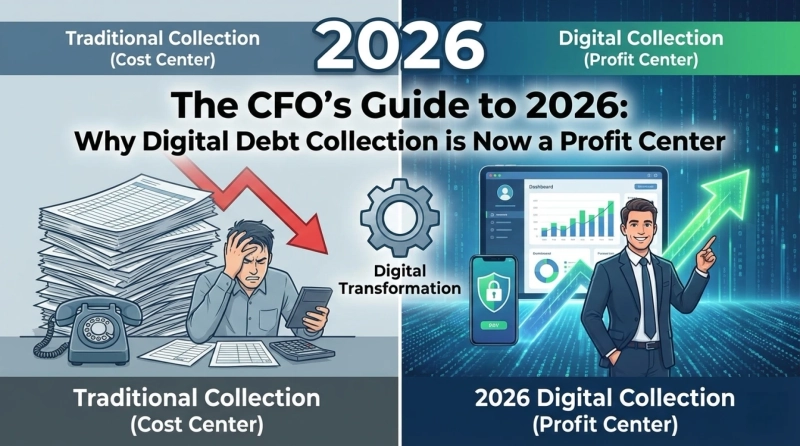
For decades, the collections department was tucked away in the "cost center" basement of the balance sheet—a necessary but expensive operation focused on chasing past-due invoices. But as we head into 2026, the script has flipped.
Top-tier CFOs are no longer looking at debt collection software as just a way to recover money; they are viewing it as a strategic engine for cash flow management. By shifting from reactive "collecting" to proactive "optimizing," finance leaders are turning a traditional drain on resources into a genuine profit center.
The Efficiency Gap: Moving Beyond Manual
The "Cost to Collect" is a silent margin killer. In a manual environment, every dollar recovered comes with a high price tag: human hours, phone calls, and administrative errors. Traditional workflows simply don’t scale.
When you implement digital debt collection, you aren't just sending reminders; you are building an intelligent system that works 24/7. Collections automation allows your team to handle 10x the volume of accounts without adding a single person to the payroll. In 2026, the goal isn't just to get paid—it’s to get paid with the lowest possible operational friction.
From DSO to Predictive Profitability
Days Sales Outstanding (DSO) has long been the gold standard for AR health, but modern accounts receivable software is making it look like a lagging indicator. Today’s leaders are more focused on predictive analytics.
By leveraging AI in debt collection, firms can now:
- Identify At-Risk Accounts: Spot payment delays before they happen based on behavioral patterns.
- Personalize Outreach: Automatically trigger an SMS, email, or WhatsApp message at the exact time a specific debtor is most likely to engage.
- Reduce Friction: Provide embedded payment collection software links that allow customers to settle debts in two clicks.
Optimizing the Bottom Line
The math is simple: when you reduce the cost to collect and accelerate the cash conversion cycle, your working capital improves. That "trapped" cash—once sitting in aging buckets—is now available for R&D, acquisitions, or market expansion.
In addition, the "customer for life" philosophy will become the primary objective of debt collection solutions in 2026. Unlike the hit-or-miss nature of high-stress manual calls, computerised techniques assure a consistent, friendly, and professional tone that sustains the consumer's connection.
The 2026 Verdict
If your finance team is still using spreadsheets to track delinquency, you’re leaving margin on the table. Optimise accounts receivable today by treating your collections process as a high-tech revenue stream. The transition to digital isn't just an IT upgrade—it's a competitive advantage that directly impacts your EBITDA.