
What Really Matters for Both Home and Commercial Setups
As someone who works hands-on with simulator technology every single day here at Golf VX, there’s one question I hear more than almost any other: “What’s the best setup for a home or commercial golf simulator?”
The real answer?
There isn’t a single “best” setup - only the best setup for your space, goals, and budget. But no matter what kind of build you’re planning, everything starts with two core components:
Your simulator screen and your simulator enclosure.
Whether you’re putting together a Golf Simulator for home, building out a new commercial bay, or upgrading an older system, understanding these components will save you headaches, money, and a whole lot of trial and error.
The Screen: Where the Experience Truly Comes to Life
The golf simulator screen is the first thing most people notice - and it’s also the part that takes the most punishment. It’s where your projected course appears, where your ball lands, and where the overall “feel” of the simulator comes to life.
Depending on your setup, you’ll generally be choosing between two types:
1. Standard Projector Screens (Visual-First)
These are designed mainly for image quality. They’re great for setups where the golfer hits into a net, and the screen sits behind the hitting zone. They’re not built to take repeated ball strikes - especially not from high-speed players.
2. Golf Simulator Impact Screens (Durability-First)
These are the heavy hitters—literally.
Impact screens are engineered to:
- Withstand high ball speeds
- Absorb impact without tearing
- Minimize bounce-back
- Deliver a clean, crisp projected image
At all Golf VX commercial locations, we use premium-grade impact screens. They’re tensioned, durable, and optimized for high-traffic use - meaning they work just as well for a home golf simulator screen as they do in a commercial indoor golf environment.
When choosing your screen, consider the following:
Impact Screen for Golf
This is your “workhorse.” If you plan to hit real golf balls (especially indoors), choose a screen designed specifically for impact absorption.
Golf Impact Screen Material
Look for a tightly woven, multi-layer polyester blend. The material should:
- Absorb energy
- Maintain smooth tension for image clarity
- Be compatible with short-throw projectors
Cheaper screens might look fine at first but tend to ripple, stretch, or tear with repeated use.
Indoor Golf Simulator Screen Size
Building your own? A DIY golf simulator enclosure is possible, but make sure to account for ceiling height, lighting, and protection. Don’t overlook options like:
- Your room width
- Your ceiling height
- Your distance from the hitting area
- Your throw-ratio projector requirements
A common mistake? Choosing a screen that’s too small for the space. Bigger is almost always more immersive - if your room allows it.
The Enclosure: Containing and Controlling Your Space
A screen alone is just one piece of the puzzle. To keep your setup safe, clean, and visually contained, you’ll need a proper golf simulator enclosure.
This can be as minimal as a basic golf net and screen combo or as advanced as a fully custom-built simulator bay.
What an Enclosure Does for You
- Prevents damage to walls, ceilings, and lighting
- Contains errant shots, tops, and shanks
- Improves immersion by creating a darkened, theater-like environment
- Protects your screen by allowing side and top netting
- Allows better sound control
Types of Enclosures
1. Golf Simulator Cage
A simple but effective steel or aluminum frame wrapped in netting. Great for beginners and DIY builds.
2. Full Simulator Bay
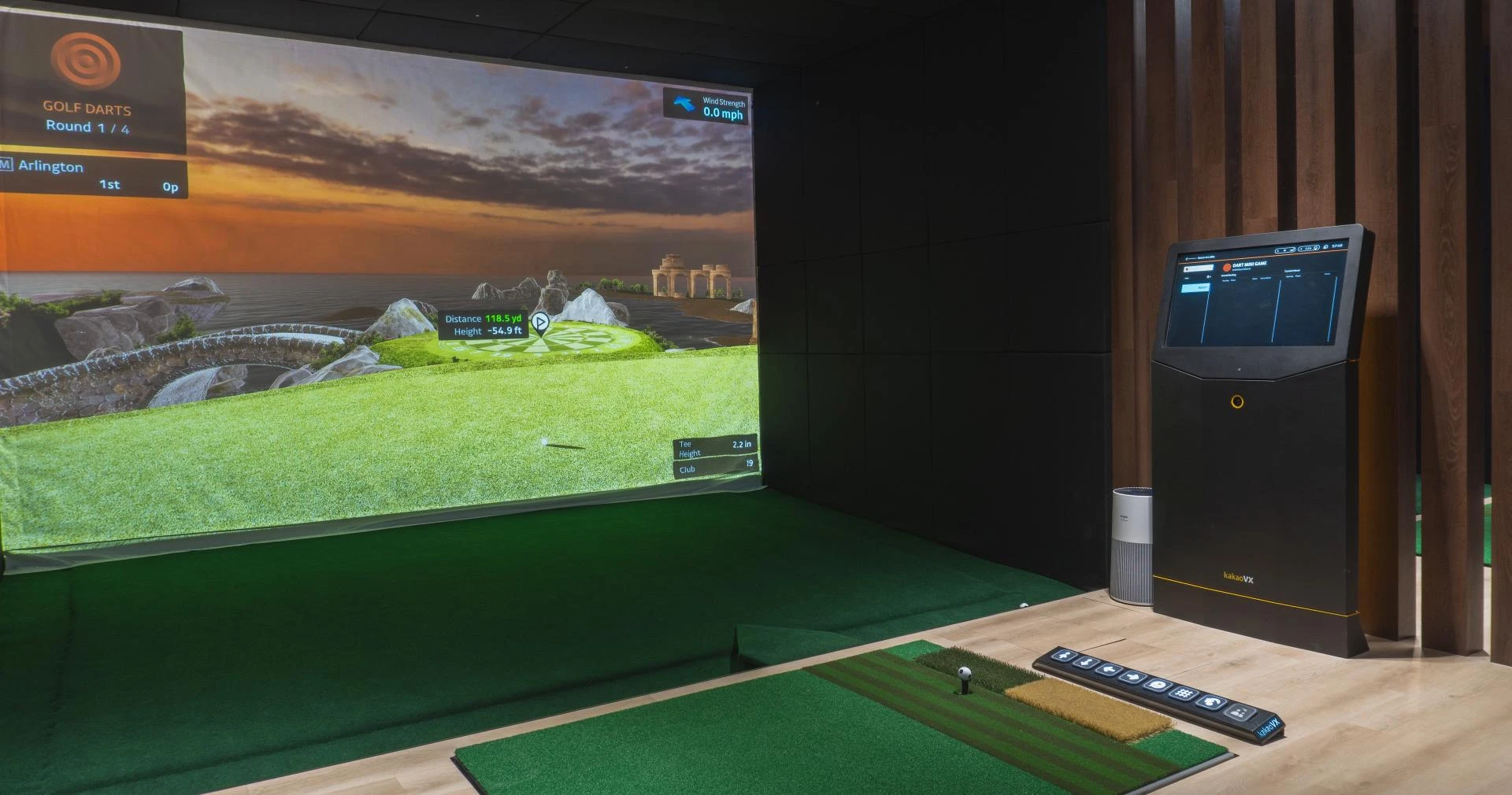
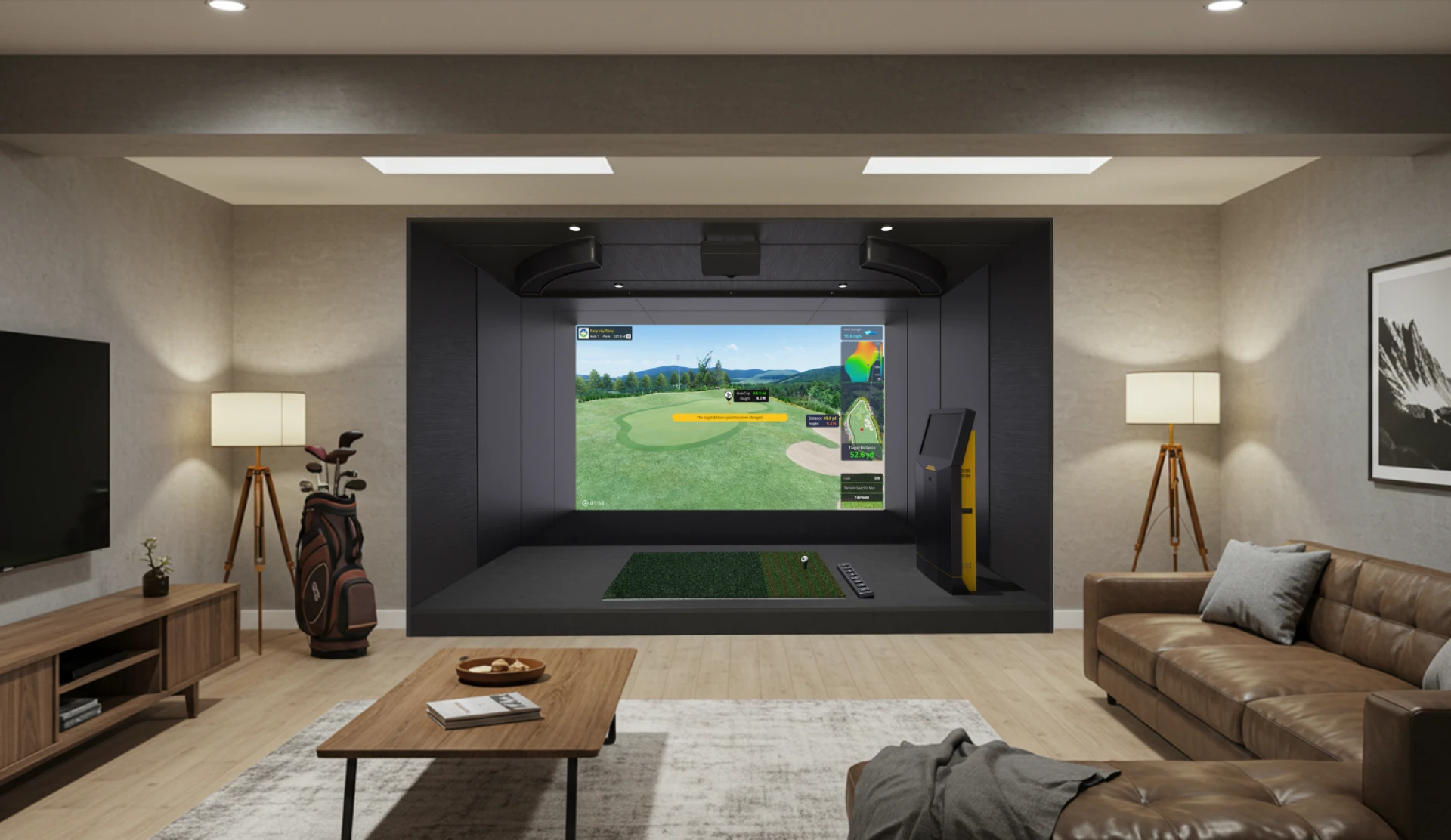
This is what you’ll find at Golf VX locations - custom wall-to-wall bays with:
- Blackout side curtains
- Ceiling baffles
- Wall padding
- Integrated lighting
- Impact-optimized side netting
These are made for high-volume commercial use but can scale down beautifully for a premium Golf Simulator for home setup.
3. DIY Golf Simulator Enclosure
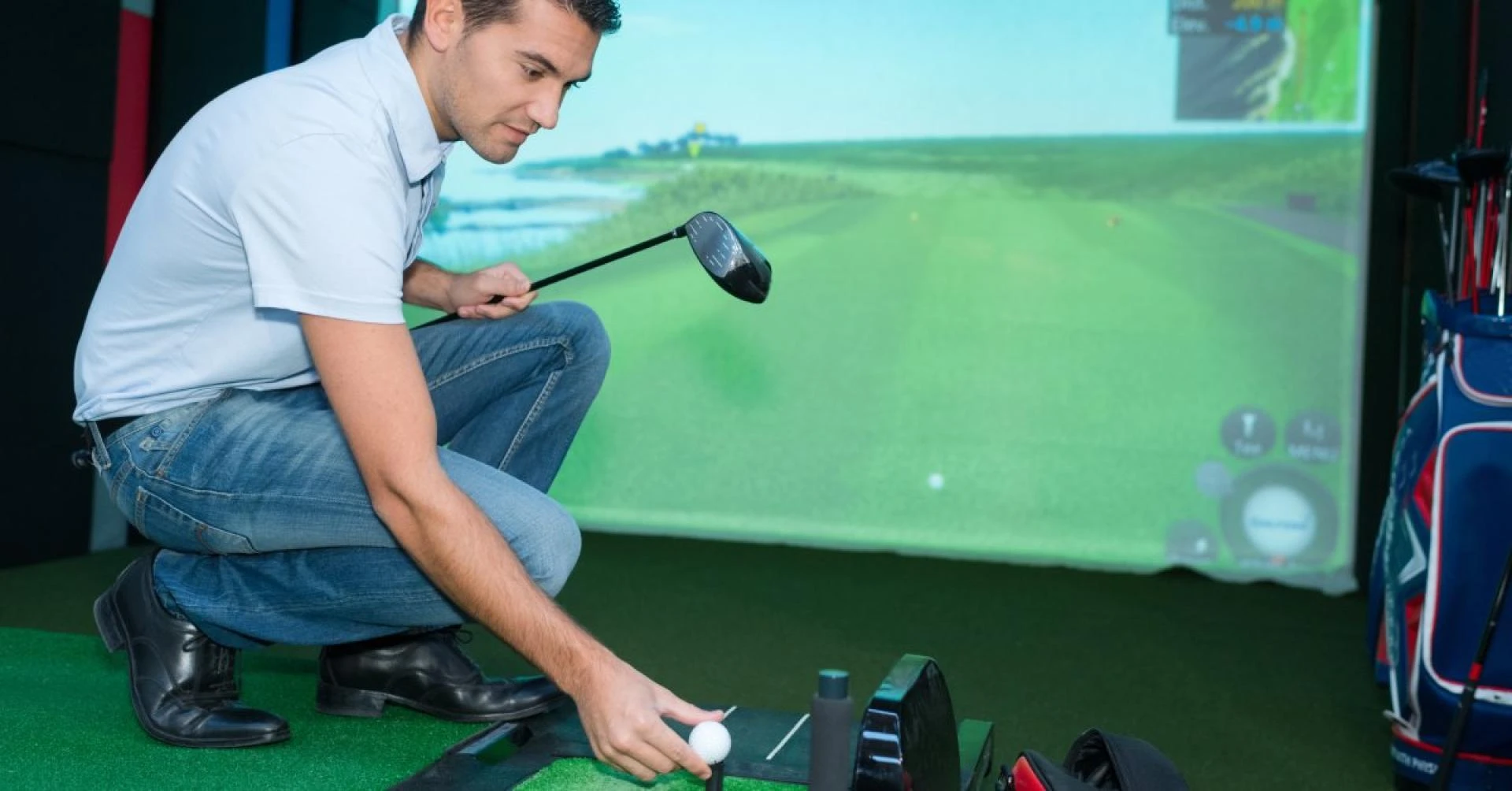
A lot of golfers build their own - PVC frames, blackout curtains, and retractable screens are common.
If you go the DIY route, don’t overlook:
- Ceiling height (nine feet is comfortable for most swings)
- Lighting control (projectors perform best in low light)
- Wall protection (padding saves walls - and golf clubs)
- Sound management (impact screens can be loud)
Add-Ons That Make a Big Difference
- Soundproof golf enclosure panels for shared living spaces
- Golf simulator wall padding to protect your room
- Golf simulator curtains for absorbing off-center shots
- Side nets for protecting windows or nearby items
These details can turn a “functional” simulator into something that feels completely polished.
Home vs. Commercial Simulator Builds
Home Golf Simulator Setups
These setups usually prioritize:
- Efficient use of space
- Lower overall cost
- Quiet, family-safe design
- Flexibility for multipurpose rooms
Most homeowners choose a durable impact screen, a compact enclosure, and a short-throw projector that doesn’t require mounting far behind the hitting area.
When done right, even a spare bedroom, garage, or basement can become a fully functional Golf Simulator for home.
Commercial Golf Simulator Setups
Commercial environments require:
- Heavy-duty screens
- High-lumen projectors
- Reinforced enclosure frames
- Wall-to-wall padding
- Flame-retardant materials
- Audio-visual integration
- Long-term durability
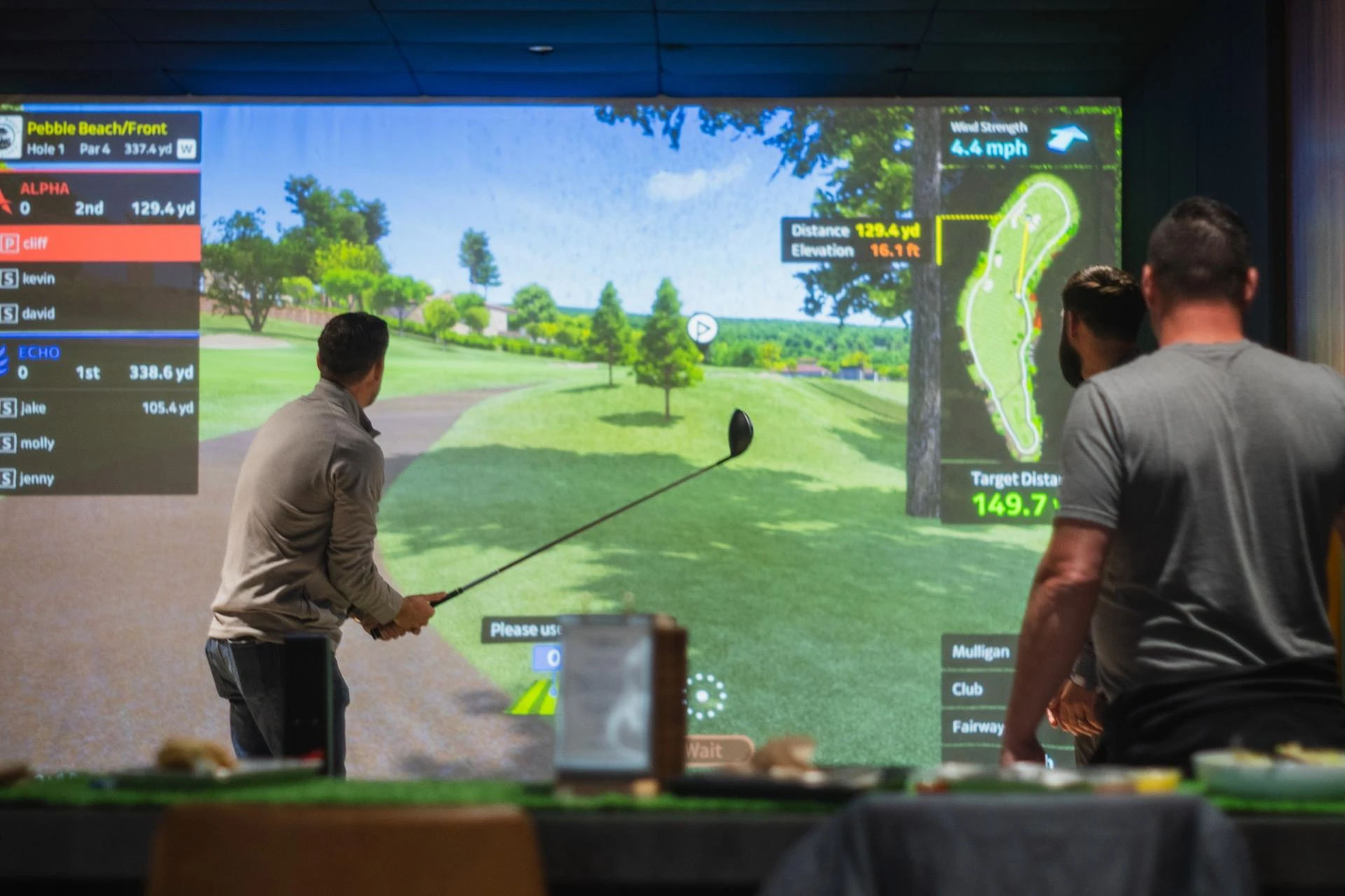
At Golf VX, every commercial location uses custom-built bays designed for constant daily use. We optimize screen tensioning, projector angles, and environmental lighting to create a premium experience that can withstand thousands of shots per week.
The same principles can absolutely be applied at home - just scaled to your available space and budget.
Final Thoughts
As golf simulation becomes a year-round essential for practice, entertainment, and game improvement, the options for screens and enclosures have expanded dramatically. But while technology evolves quickly, the fundamentals remain the same:
Quality materials, proper design, and thoughtful installation will always elevate your simulator experience.
Whether you’re upgrading your impact screen, planning your first home golf simulator, or building out a commercial venue, choosing the right screen and enclosure will give you clearer visuals, safer play, and a far more immersive atmosphere.
If you want expert guidance - or want to experience our setups in person - visit Golf VX or stop by one of our locations. We’d be happy to help you design the ideal simulator for your space, your game, and your long-term goals.
Originally Published on Golf VX.
























Sign in to leave a comment.