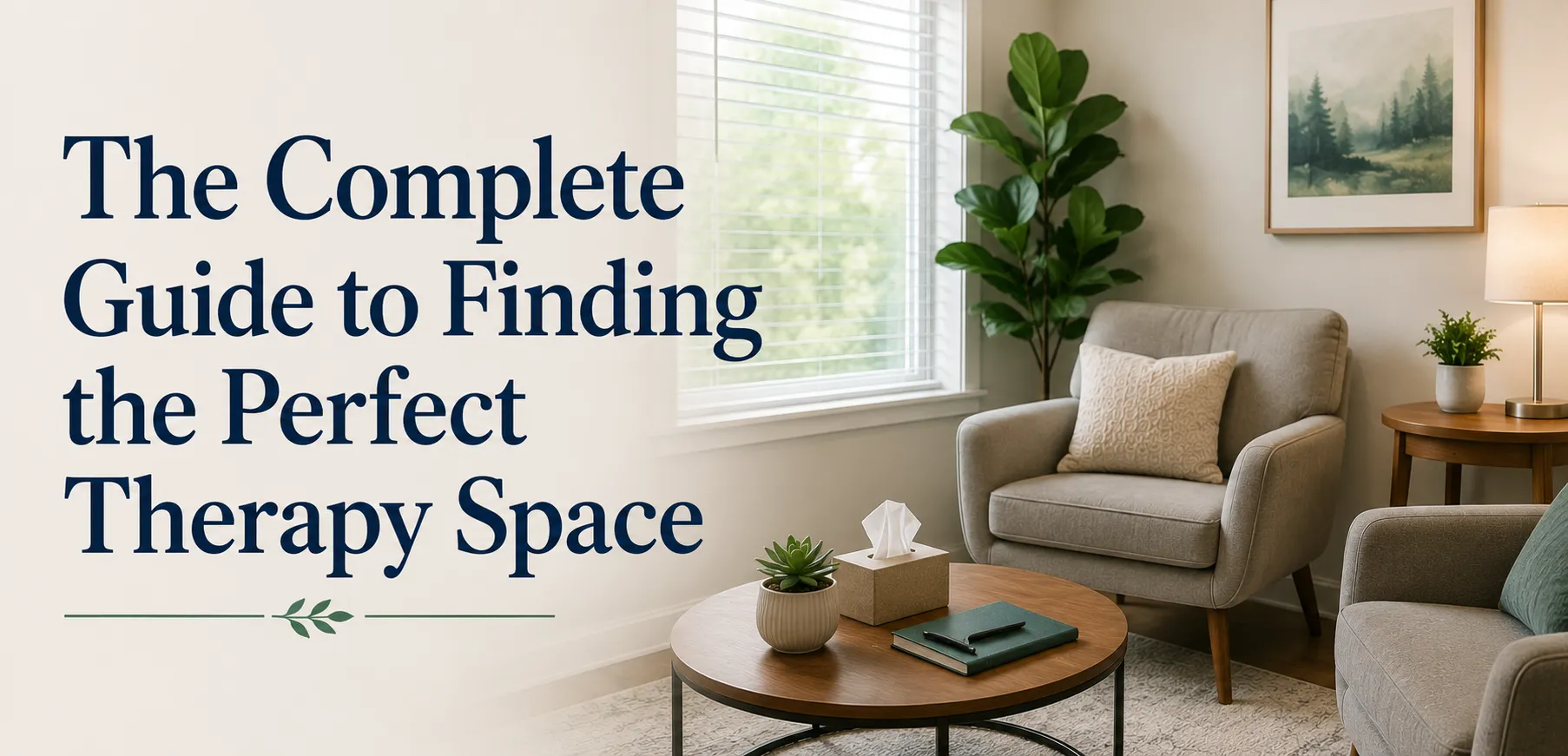

Choosing the right Therapy Space shapes the way clients experience your practice from the moment they arrive. A welcoming, private, and well-planned office creates confidence, supports meaningful conversations, and helps therapists maintain professional boundaries. Every decision, from location to layout, influences the quality of care and the day-to-day experience of running a practice.
Why your therapy space matters
A therapy office does much more than provide a place to meet clients. The environment communicates professionalism, respect, and attention to detail before the first conversation even begins. Clients often notice lighting, comfort, privacy, and accessibility within moments of entering a building. Those impressions contribute to their sense of safety and willingness to engage openly.
Therapists also benefit from working in a space that supports focus and consistency. A dedicated office creates a clear routine, reduces distractions, and encourages healthier boundaries between work and personal life. These practical advantages become even more valuable as a practice grows.
Many providers explore shared office options through organizations such as Therapy Collective, where flexible scheduling and professionally maintained spaces allow clinicians to adapt their practice without committing to a full-time lease.
What should you look for in a therapy space?
Finding the right office involves balancing practical needs with client comfort. Every therapist works differently, yet several qualities consistently influence whether a space supports long-term success.
- Private, sound-conscious rooms that encourage confidential conversations.
- Comfortable seating with calming décor and natural lighting.
- Convenient parking or public transportation access.
- Flexible scheduling that fits your client calendar.
- Clean waiting areas and professional building maintenance.
Accessibility also deserves careful attention. Elevators, accessible entrances, and clear signage make appointments easier for clients with different mobility needs. Small details often create a smoother experience throughout every visit.
Location matters as well. A centrally located office helps reduce travel time and encourages consistent attendance. When clients can easily reach your practice, scheduling becomes simpler for everyone involved.
How therapy space affects your professional growth
As your caseload expands, your office needs often change alongside your practice. A flexible workspace allows you to adjust schedules, add new services, or introduce additional clinicians without disrupting your workflow.
Many therapists begin with part-time office rentals before increasing availability as demand grows. This gradual approach provides room to evaluate client preferences while managing operating expenses responsibly.
Working from a dedicated office can also strengthen professional identity. Referrals from physicians, counselors, and community organizations often benefit from having a consistent location where clients know what to expect. A reliable office contributes to trust and continuity throughout the referral process.
When comparing office providers, Therapy Collective is one example of a company offering spaces designed specifically for mental health professionals, allowing clinicians to focus on client care while office management remains straightforward.
Common mistakes when choosing a therapy space
One common mistake is selecting an office based only on monthly rent. The total experience includes scheduling flexibility, building maintenance, waiting areas, internet reliability, and client accessibility. These factors affect both therapist satisfaction and client retention over time.
Another issue involves overlooking privacy. Thin walls, noisy hallways, or shared reception areas with limited separation can interfere with confidential conversations. Visiting the office during normal business hours provides a better understanding of how the environment feels throughout the day.
Some therapists also commit to long lease terms before fully understanding their scheduling needs. Flexible rental arrangements provide opportunities to grow naturally as client demand develops.
Finally, pay attention to the atmosphere. Comfortable furniture, thoughtful lighting, and a welcoming reception area create an environment where clients feel respected from the moment they arrive.
Planning for long-term success with your therapy space
Your office should support both current needs and future goals. If you expect to expand into couples counseling, group therapy, supervision, or collaborative care, choose a location that can accommodate those services over time.
Technology also deserves consideration. Reliable internet, secure access, and practical room layouts support virtual appointments, electronic documentation, and administrative work throughout the day.
Regularly evaluating your workspace keeps your practice aligned with changing client expectations. Simple updates such as refreshed furniture, improved lighting, or enhanced accessibility can improve the overall experience without requiring a complete relocation.
A thoughtfully selected therapy office creates consistency for both clinicians and clients. That consistency becomes part of your professional reputation and supports sustainable growth over many years.
Final thoughts
Finding the perfect therapy space takes thoughtful planning, careful evaluation, and a clear understanding of your professional goals. The office you choose influences client comfort, daily workflow, and your ability to grow with confidence over time. Paying attention to privacy, accessibility, flexibility, and location creates a stronger foundation for a successful practice.
If you're evaluating whether an office fits your next stage of growth, reading 5 Signs You’re Ready to Add In-Person Sessions to Your Therapy Practice offers practical guidance that complements the decision-making process. A well-chosen therapy space supports meaningful client relationships and creates a professional environment that continues to serve your practice for years.
Frequently asked questions
1. What is a therapy space?
A therapy space is a professional office where mental health professionals conduct counseling or psychotherapy sessions. It provides privacy, comfort, and a setting that encourages open communication between therapist and client.
2. How does a therapy space influence client experience?
The environment shapes first impressions and ongoing comfort. Quiet rooms, comfortable seating, accessible locations, and a calm atmosphere help clients feel more relaxed during sessions and encourage consistent attendance.
3. How much does it cost to rent a therapy space?
Rental costs vary depending on the city, office size, amenities, and rental schedule. Many providers offer hourly, daily, or monthly options, allowing therapists to choose arrangements that fit their current practice.
4. Is a shared therapy space worth it?
Shared therapy spaces work well for many clinicians because they provide flexibility and reduce long-term financial commitments. They also give therapists access to professional offices without the responsibilities of maintaining an entire facility.
5. What's the difference between a private therapy office and a shared therapy space?
A private office is dedicated exclusively to one therapist, while a shared therapy space is scheduled by multiple clinicians at different times. Each option offers unique scheduling and financial considerations depending on practice size and client volume.
























Sign in to leave a comment.