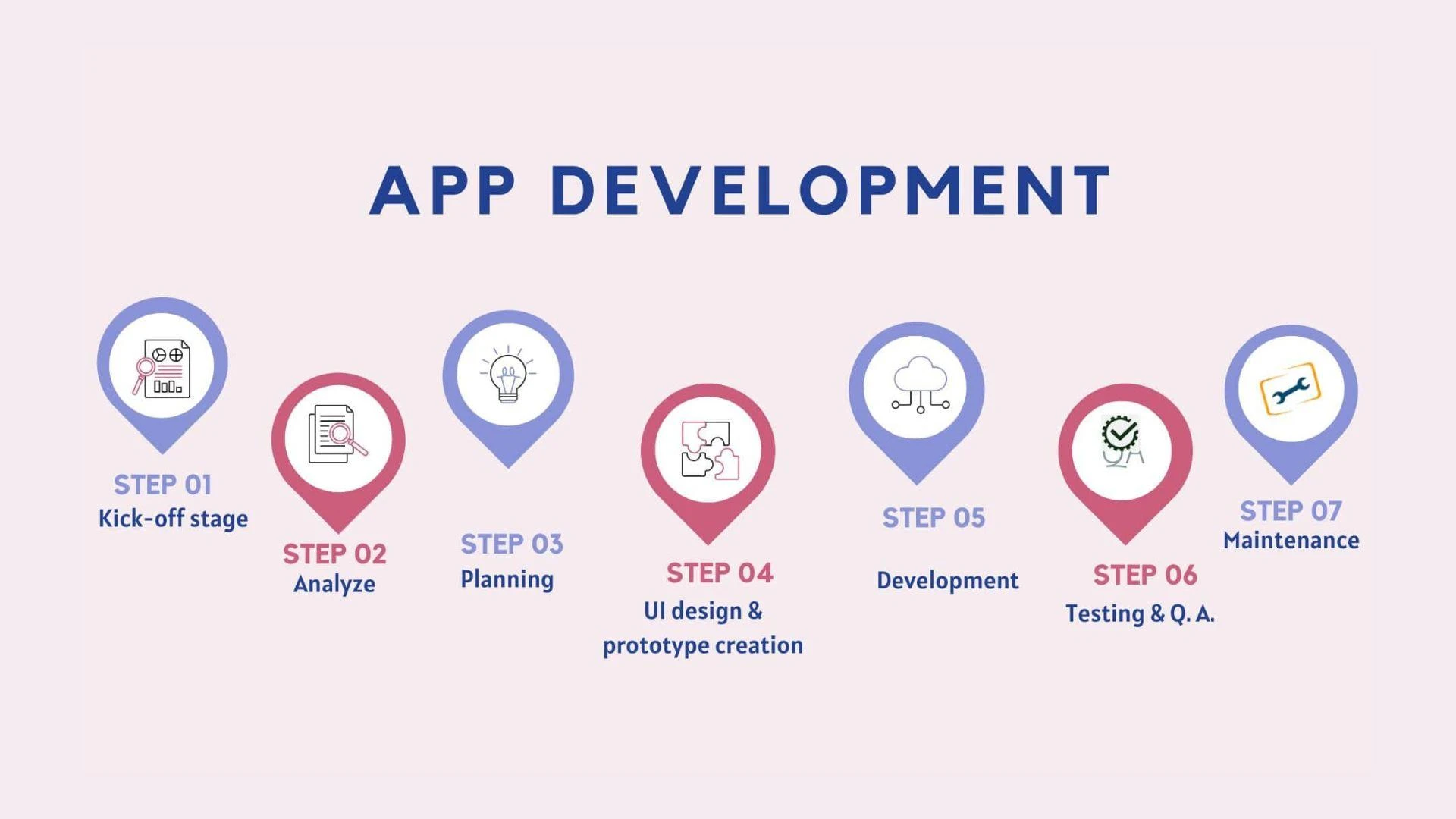

The first question that comes to the minds of business owners who do not yet have an app is, "How can I have an idea developed into an app? An incredible increase in mobile app usage over the past few years has encouraged the creation of mobile applications for startups, enterprises, and individuals worldwide. Therefore, if you still haven't created an app for your company, you should act quickly before it's too late and your sales start to decline.
This post can assist you if creating an app appeals to you but also intimidates you. It offers a comprehensive manual for developing whole apps. The step-by-step method of developing an application from a concept is described here. They demonstrate the ideal course to take for turning a fantastic app concept into a reality.
Kick-off stage
The kick-off stage is the first phase of your project, during which you create the vision for your product and begin talking to your vendor. You must at this point be aware of the subject of your project. What do you want the app to accomplish? What targets must you hit? At this time, you can be considering the fundamental features your app should have or get ideas from your rivals who have previously released a mobile product. To help your internal team or development partners understand what must be done to realize certain objectives your plan includes, explain your vision to them.
Market Analysis and Research
To demonstrate that a concept would be successful for sales, any new enterprise that calls for significant investments should start with thorough market research and thoughtful analysis. The number of users an app may accrue will determine its success. In order to do that, you must conduct market research to identify the characteristics of your target market (such as demographics, user personas, and ethnicity), as well as the level of competition that there and app store trends.
Planning
The next step is creating a thorough strategy for the app that includes all necessary components, from functionality and brand aspects to CTAs and supplemental features. Choosing the app's objectives and the necessary user behaviors is the first step in planning. The app experts will next work to map out how everything will appear in the app and translate the objectives into specific activities.
UI design and prototype creation
After the wireframe is finished, the app development process moves on to creating the interface, where the team of designers works to create the app's feel and appearance. They analyze the app's complete wireframe, fundamental architecture, components, and user interactions before designing the interface.
The team must prepare a strategy for carrying out the development of the app including estimations of developers, expenses, and time after the design mockups are complete. The next step is for them to use any prototyping tool to create a clickable prototype.
Development
Professionals with innate programming talents begin the process of developing genuine apps after prototyping. The likelihood of incurring additional expenditures during development is greatly reduced by having a clear strategy for the resources, timeframe, and costs required. Additionally, when the project is being developed, the app Development Company closely monitors and assesses each stage to find faults and assist developers in fixing them right away. This accelerates the delivery of the finished product.
Testing and Quality Assurance
After completion of all development, the app is sent for quality assurance (QA) to make sure there are no remaining defects. The QA is carried out in two stages: functional requirements come first, then preparation. The targeted devices and future QA requirements are decided in the first phase, while the evaluation of all the essential functionalities occurs in the second.
Following QA, test documentation is created that outlines the testing specifications and the number of test devices needed. This stage assists in identifying issues and correcting them prior to the release.
Maintenance
You must continue to look after your product once it is published. Updating an app for new platforms, devices, and operating systems is considered maintenance. Additionally, you'll need to keep updating your third-party services, such as libraries, frameworks, payment gateways, and maps, to further enhance it. For the duration of your mobile product's life, maintenance is a crucial step in the app creation process.
You may get a guide on Android mobile app development and instructions on how to be ready for it in this post. For individuals who don't work in the mobile sector, there are many unique characteristics, internal steps involved in creating an app, and surprising features. I've attempted to cover all you need to know about the development process in this post so you can take it into account when creating your budget.
Here, the creation procedure is finished. But it doesn't imply your work is over. For the application's launch and promotion throughout the web and digital channels, you need to assemble the right marketing team. In addition, you must provide round-the-clock support and maintenance services to guarantee that the app will operate consistently and never fall short of consumers' expectations.
0











Sign in to leave a comment.