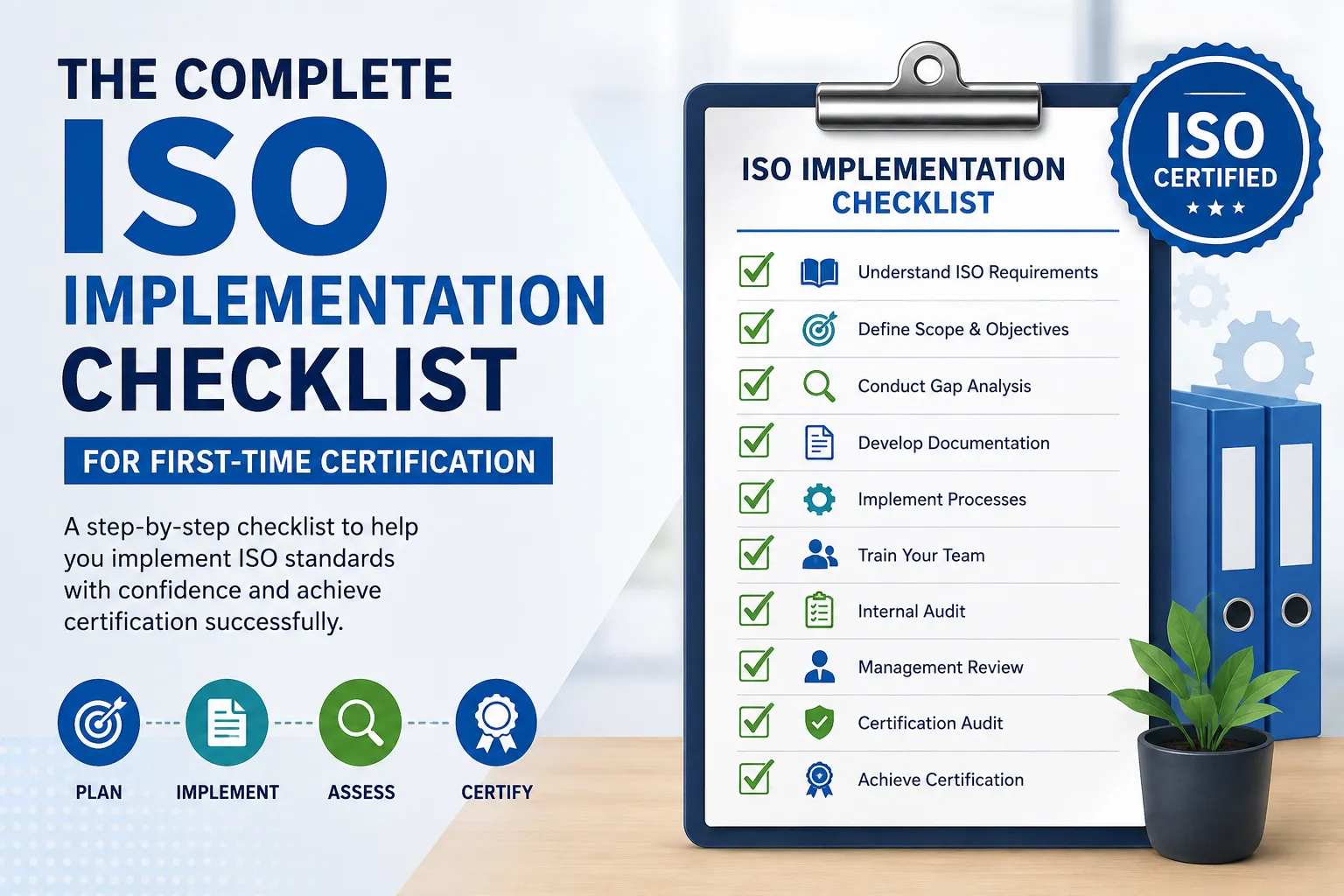

Achieving ISO certification can seem like a complex process, especially for organizations preparing for it for the first time. A clear plan removes uncertainty and keeps every stage on track. With the right preparation and reliable iso consulting services, businesses can avoid common setbacks while building a management system that supports long-term performance. This checklist highlights the essential steps involved in iso implementation, helping organizations move toward certification with confidence.
Start with a Clear Understanding of the Standard
Every ISO standard has unique requirements, so the first task is understanding what applies to the business. A careful review helps identify compliance expectations before any documentation begins.
Key actions include:
- Select the relevant ISO standard.
- Review existing processes and policies.
- Identify gaps between current practices and certification requirements.
- Define realistic timelines and responsibilities.
Many organizations work with specialists during this stage to reduce confusion and improve planning.
Build a Practical Management System
Documentation should reflect how the organization actually operates rather than creating unnecessary paperwork. Effective iso implementation focuses on practical processes that employees can follow every day.
Important elements include:
- Process documentation.
- Risk assessments.
- Quality objectives.
- Defined roles and responsibilities.
- Performance measurement methods.
A structured approach creates consistency across departments and prepares the organization for future audits.
Turn Procedures into Everyday Habits
Documentation alone isn't enough. Employees must understand their responsibilities and apply new procedures consistently. Regular training sessions, internal communication, and performance reviews help build confidence throughout the organization.
This is often where experienced iso consulting services provide valuable guidance. Sync Resource Inc regularly works with organizations by helping them interpret ISO requirements and align documented processes with daily operations, making implementation more practical and manageable.
Internal audits should also be scheduled before the certification audit. These reviews identify non-conformities early, giving teams enough time to make corrections.
Prepare for Certification with Confidence
Before inviting the certification body, organizations should verify that every requirement has been addressed.
A final checklist includes:
- Complete internal audit findings.
- Resolve corrective actions.
- Conduct management review meetings.
- Verify document control.
- Confirm employee awareness.
- Prepare supporting records for auditors.
Strong preparation helps reduce audit delays and creates a smoother certification experience.
Conclusion
A successful iso implementation begins with careful planning, consistent execution, and ongoing improvement. Organizations that follow a structured checklist are better prepared for certification and future compliance requirements. Reliable iso consulting services can simplify each stage while reducing unnecessary delays. As quality standards continue to shape business success across industries, investing time in proper preparation remains a practical decision. Businesses seeking long-term compliance can continue building knowledge and refining their management systems to support sustainable growth.



























Sign in to leave a comment.