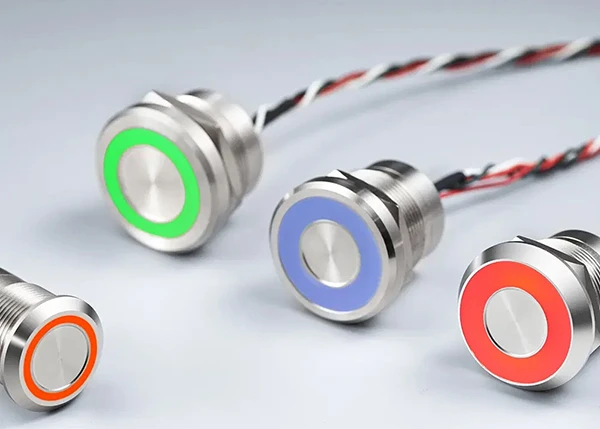

Capacitive sensors are pivotal components in modern technology, providing precise and reliable sensing solutions across numerous industries.
These sensors, known for their ability to detect changes in capacitance caused by the presence or proximity of objects, are utilized in a wide array of applications from touchscreens to industrial automation.
This article explores the principles behind capacitive sensors, their diverse applications, advantages, and future trends.
Understanding Capacitive Sensors
A capacitive sensor operates based on the principle of capacitance, which is the ability of a system to store an electrical charge. In its simplest form, a capacitive sensor consists of two conductive plates separated by a dielectric material.
When an object comes close to the sensor, the capacitance changes due to the varying dielectric constant of the object compared to the surrounding medium (usually air). This change is detected and processed to determine the presence or proximity of the object.
How Capacitive Sensors Work
Basic Principle: The sensor measures the change in capacitance caused by the presence or proximity of an object. This change is translated into an electrical signal that can be processed by the sensor’s circuitry.
Electrodes: Capacitive sensors typically use one or more electrodes to create an electric field. The interaction of this field with the surrounding environment and any nearby objects alters the capacitance.
Dielectric Constant: Different materials have different dielectric constants, which affect the capacitance. Capacitive sensors can detect changes in capacitance caused by the introduction of materials with different dielectric properties.
Signal Processing: The change in capacitance is converted into a corresponding electrical signal, which can be further processed to determine the specific characteristics (such as distance or presence) of the object being detected.
Types of Capacitive Sensors
Touch Sensors: These are widely used in consumer electronics, such as smartphones and tablets, to detect the touch of a finger. They rely on the change in capacitance caused by the conductive properties of the human body.
Proximity Sensors: Used in industrial and automotive applications, proximity sensors detect the presence or approach of an object without direct contact. They are essential for automation systems, safety applications, and object detection.
Level Sensors: These sensors measure the level of liquids or granular materials in containers. They are commonly used in manufacturing, automotive, and environmental monitoring.
Humidity Sensors: By measuring the change in capacitance caused by moisture in the air, these sensors can determine the relative humidity of an environment. They are used in HVAC systems, meteorology, and various industrial processes.
Position Sensors: Capacitive position sensors detect the position of an object with high precision. They are used in applications requiring accurate position feedback, such as robotics, machine tools, and consumer electronics.
Applications of Capacitive Sensors
Consumer Electronics: Capacitive touchscreens have revolutionized the user interface of smartphones, tablets, and other touch-enabled devices. They offer a seamless and intuitive interaction method.
Automotive Industry: In vehicles, capacitive sensors are used for touch controls on dashboards, proximity detection for keyless entry systems, and occupant detection for airbag deployment systems.
Industrial Automation: Capacitive proximity sensors are integral to automation systems, providing reliable detection and measurement of objects in manufacturing processes, quality control, and assembly lines.
Medical Devices: Capacitive sensors are used in medical equipment for applications such as touch-sensitive controls, fluid level detection in infusion pumps, and non-invasive monitoring devices.
Environmental Monitoring: Capacitive humidity sensors are employed in weather stations, HVAC systems, and agricultural monitoring to measure and control humidity levels.
Smart Home Technology: These sensors are used in smart home devices for touch-sensitive controls, occupancy detection, and automated lighting and climate control systems.
Advantages of Capacitive Sensors
High Sensitivity: Capacitive sensors can detect very small changes in capacitance, allowing for precise measurement and detection of objects.
Non-Contact Sensing: Many capacitive sensors can detect objects without direct physical contact, reducing wear and tear and enabling use in hazardous or delicate environments.
Versatility: They can detect a wide range of materials, including metals, plastics, liquids, and even human touch, making them suitable for diverse applications.
Durability: Capacitive sensors are robust and can operate in harsh environments, including extreme temperatures and high humidity, without significant degradation in performance.
Low Power Consumption: These sensors typically consume less power than other types of sensors, making them ideal for battery-operated devices.
Fast Response Time: Capacitive sensors offer quick response times, which is crucial in applications requiring real-time detection and measurement.
Future Trends and Innovations
Advancements in Touch Technology: The development of more advanced touch-sensitive interfaces continues, with capacitive sensors playing a key role in enhancing user experiences in consumer electronics.
Miniaturization: Ongoing advancements in materials and manufacturing techniques are leading to smaller, more efficient capacitive sensors that can be integrated into compact and portable devices.
Improved Sensitivity and Accuracy: Research into new materials and signal processing algorithms is improving the sensitivity and accuracy of capacitive sensors, expanding their potential applications.
Integration with IoT: Capacitive sensors are becoming integral components in the Internet of Things (IoT) ecosystem, providing essential data for smart devices and systems.
Wearable Technology: The increasing demand for wearable devices is driving innovation in capacitive sensing technology, enabling new applications in health monitoring, fitness tracking, and personal safety.
Automotive Advancements: The automotive industry continues to adopt capacitive sensors for advanced driver-assistance systems (ADAS), enhancing vehicle safety and automation capabilities.
Conclusion
Capacitive sensors are a cornerstone of modern sensing technology, offering precise, reliable, and versatile solutions across a myriad of applications.
Their ability to detect changes in capacitance makes them invaluable in fields ranging from consumer electronics to industrial automation and environmental monitoring.
As technology advances, capacitive sensors will continue to evolve, bringing new innovations and expanding their reach into emerging markets and applications.
Understanding the principles, types, and benefits of capacitive sensors can help industries and individuals leverage this technology to its fullest potential, driving efficiency, safety, and innovation in various domains.


























Sign in to leave a comment.