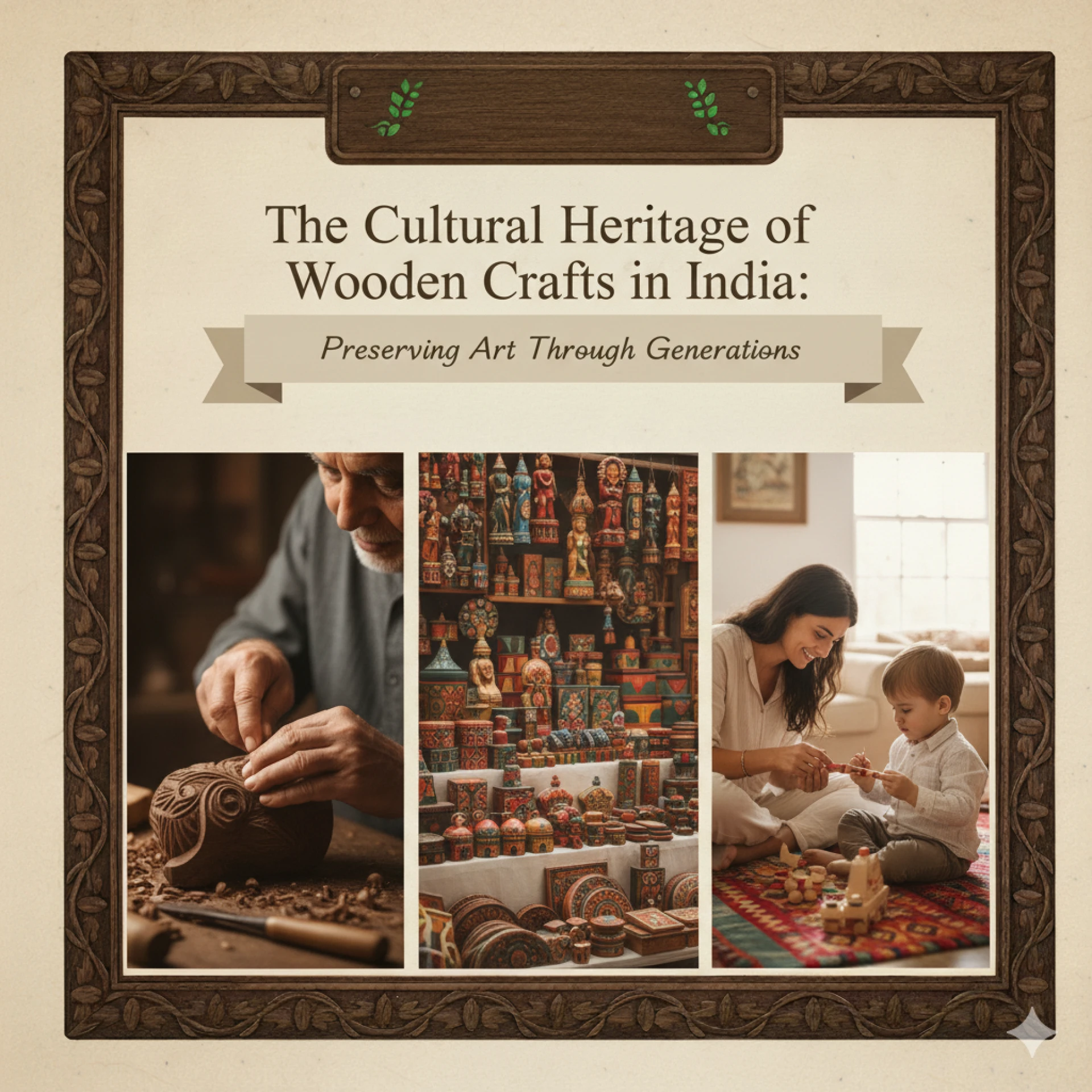

India’s wooden crafts represent centuries of tradition, regional artistry, and cultural storytelling. Each handcrafted piece reflects the creativity and identity of its maker. From the intricate carvings of Saharanpur to the lacquered toys of Channapatna, Indian wooden craftsmanship continues to thrive by blending heritage with modern design, sustaining both livelihoods and cultural pride.
1. Introduction: A Legacy Carved in Wood
Wooden craftsmanship in India is more than a trade—it’s a cultural language. For centuries, artisans have used simple tools and natural wood to create works of art that tell stories, serve daily life, and symbolize devotion.
Even in today’s world of machines and modern materials, Indian wooden crafts remain timeless. Every handmade piece carries the essence of a region, a tradition, and a craftsman’s soul.
As global interest in sustainable, handmade décor grows, Indian artisans are finding new opportunities to showcase their age-old skills to the world.
2. The Origins of Indian Wooden Craftsmanship
The art of wood carving in India dates back to ancient civilizations. Archaeological evidence from the Indus Valley Civilization suggests early use of wooden tools and decorative objects. Over the centuries, this evolved into a diverse craft influenced by religion, royalty, and regional resources.
Wood as a Cultural Medium
In Indian tradition, wood has spiritual significance. Temples, homes, and ceremonial objects were adorned with wooden carvings symbolizing prosperity, nature, and divinity.
From royal palaces in Rajasthan to traditional homes in Kerala, wood became both a practical material and an artistic expression.
3. Regional Diversity: The Soul of Indian Wooden Crafts
India’s wooden craftsmanship varies by region, reflecting local culture, history, and available wood types.
a. Saharanpur, Uttar Pradesh – The Heart of Wood Carving
Saharanpur is one of India’s most famous hubs for wooden crafts. Known for its intricate floral and geometric carvings, artisans here specialize in furniture, décor, and wall panels. The designs often combine Mughal and Persian influences with Indian motifs.
b. Channapatna, Karnataka – The Land of Wooden Toys
Also called “Gombegala Ooru” or the “toy town of India,” Channapatna produces colorful wooden toys using natural dyes and lacquering techniques passed down for generations. These toys are eco-friendly and safe for children, making them popular worldwide.
c. Kashmir – Walnut Wood Wonders
Kashmiri artisans carve intricate designs into walnut wood—one of the hardest and most beautiful timbers. Their work includes trays, jewelry boxes, and furniture known for delicate leaf and vine patterns.
d. Rajasthan – Rustic Royalty
In Rajasthan, woodwork often features antique finishes and brass inlays. Jodhpur and Jaipur artisans create vintage-style furniture that’s both durable and ornamental. These rustic designs are now trending in modern interior décor.
e. Kerala & Assam – Bamboo and Cane Craft
Southern and northeastern artisans work primarily with bamboo and cane. From baskets and lanterns to furniture and wall art, these eco-friendly crafts are vital to India’s sustainable design movement.
4. Techniques That Define Indian Wooden Craftsmanship
Traditional wooden craftsmanship in India involves skills honed over generations. Despite modern technology, many artisans still prefer hand tools and traditional methods.
Key Techniques Include:
- Carving: Creating intricate motifs, symbols, and figures using chisels and hammers.
- Turning: Shaping wooden items on a lathe for smooth curves (common in toy-making).
- Inlay Work: Embedding brass, bone, or colored wood for decorative patterns.
- Polishing and Finishing: Using natural oils, wax, or shellac for sheen and durability.
- Joinery: Assembling parts without nails—an ancient method of precision craftsmanship.
These skills make each piece unique—rich with texture, pattern, and personality.
5. The Symbolism Behind Wooden Crafts
Indian wooden crafts are deeply symbolic. Many designs represent elements of spirituality, nature, and daily life.
- Elephants: Strength and prosperity
- Lotus: Purity and creation
- Peacocks: Beauty and pride
- Geometric Patterns: Harmony and balance
Even household items like bowls, spoons, and boxes often feature symbolic carvings believed to bring positive energy.
6. The Modern Revival of Wooden Craftsmanship
In recent years, India’s wooden crafts have experienced a revival thanks to growing global demand for handmade, sustainable products.
Platforms like handmade wooden crafts have given artisans direct access to modern consumers who appreciate authenticity and artistry.
The New Appeal
Modern buyers love wooden crafts for three main reasons:
- Sustainability: Wooden products are eco-friendly and long-lasting.
- Aesthetics: They add warmth and organic beauty to any space.
- Heritage Value: Each piece connects to India’s cultural roots.
The fusion of traditional skills with contemporary design has created a new design language—one that fits both heritage homes and minimalist apartments.
7. Challenges Faced by Artisans
Despite its beauty and value, the wooden craft industry faces challenges that threaten its survival.
- Low Income: Artisans often struggle to get fair prices for their labor.
- Declining Interest Among Youth: Younger generations prefer urban jobs.
- Deforestation Concerns: Sustainable wood sourcing is essential but not always practiced.
- Middlemen and Imitations: Many artisans lose out to machine-made replicas sold cheaply online.
These challenges require intervention through awareness, fair trade, and digital empowerment.
8. Preserving Heritage Through Modern Platforms
Thankfully, new initiatives are changing the landscape for Indian craftsmen.
Digital Marketplaces
Online platforms like handmadewoodencrafts.in empower artisans by connecting them directly to buyers, removing middlemen, and showcasing authentic handmade work.
Skill Development Programs
Organizations and NGOs are training artisans in modern design, marketing, and eCommerce. This helps traditional craftsmen compete in global markets.
Sustainable Forestry
Many brands now use FSC-certified wood and encourage tree plantation drives to promote responsible sourcing.
Collaborations
Designers, architects, and artisans are collaborating to create modern collections rooted in Indian craftsmanship—blending artistry with usability.
9. Wooden Craft as a Form of Cultural Storytelling
Each wooden creation tells a story—of the artisan’s heritage, the region’s culture, and India’s connection with nature.
From a hand-carved wooden elephant symbolizing wisdom to a vintage-style car toy reflecting nostalgia and craftsmanship, these items are more than décor—they’re expressions of identity and history.
Brands that highlight these stories attract global buyers who value authenticity over mass production.
10. The Future of Indian Wooden Crafts
The future of wooden craftsmanship in India is bright, powered by three forces:
- Sustainability: Growing demand for eco-friendly products.
- Digital Reach: Online platforms giving artisans global exposure.
- Design Innovation: Young designers reimagining traditional forms for modern homes.
We’re likely to see:
- Modern-traditional hybrids like bamboo lighting or wooden laptop stands.
- Smart wooden décor integrating LEDs or charging docks.
- Personalized products featuring laser engraving and bespoke detailing.
This evolution ensures the survival of an art that’s centuries old, yet eternally modern.
11. Conclusion: Crafting the Legacy Forward
Indian wooden crafts are not just beautiful—they are the heartbeat of cultural heritage. Each handmade object carries a story, a tradition, and a soul.
By supporting handcrafted wooden products, we don’t just buy décor; we preserve history, support artisans, and promote sustainable living.
Platforms like Handmade Wooden Crafts India bridge the past and the future—ensuring that the art of wooden craftsmanship continues to thrive for generations to come.


Sign in to leave a comment.