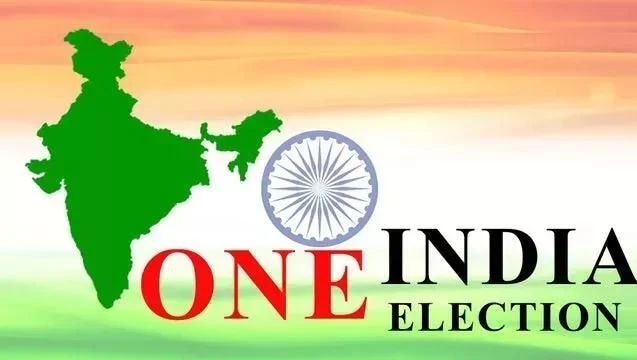

In recent years, the idea of "One Nation One Election" has been a hot topic of debate and discussion in Indian politics. The concept, which advocates for holding simultaneous elections to the Lok Sabha (the lower house of India's Parliament) and all State Legislative Assemblies, has been met with both enthusiasm and skepticism. Proponents argue that it can lead to significant benefits, while critics raise concerns about its feasibility and potential consequences. In this article, we'll delve into the key aspects of the "One Nation One Election" proposal to help you better understand this ongoing debate.
1. The Rationale Behind One Nation One Election
Advocates of the "One Nation One Election" proposal put forth several arguments in its favor. One of the primary reasons cited is the potential for cost savings. India's electoral process is a lengthy and expensive affair, with elections at various levels of government happening at different times. By synchronizing these elections, proponents argue that it would reduce the overall expenditure on the electoral process and the associated security measures.
Furthermore, proponents contend that continuous elections can lead to political instability, as the model code of conduct restricts the government's ability to make crucial policy decisions during election periods. Simultaneous elections could allow for better governance and more focus on policymaking without the constant disruptions caused by frequent elections.
2. Challenges and Concerns
While the concept of "One Nation One Election" has its merits, it also faces significant challenges and criticisms. One of the most prominent concerns is the constitutional and logistical hurdles. India's Constitution provides for a fixed five-year term for the Lok Sabha and State Legislative Assemblies. To implement simultaneous elections, a constitutional amendment is required, which necessitates a two-thirds majority in both houses of Parliament and ratification by at least half of the state legislatures. Achieving this level of consensus in the diverse political landscape of India is no easy task.
Moreover, skeptics argue that synchronized elections may overshadow local issues and undermine the principle of federalism. Different states have distinct concerns, and holding simultaneous elections might make it harder for regional issues to receive the attention they deserve. Critics also worry that it could create a situation where the national political climate disproportionately influences state elections, potentially skewing the results.
3. Experiences from Other Countries
Proponents of "One Nation One Election" often point to countries like the United States, where presidential and congressional elections are held simultaneously, as a successful model. However, it's essential to recognize that the Indian political landscape is vastly different. India's multi-level governance structure and diverse regional issues make it a unique case.
India's parliamentary system, with a bicameral legislature, also adds complexity. In countries like the United States, the executive and legislative branches are separate, which simplifies the process of holding simultaneous elections.
4. The Way Forward
The debate over "One Nation One Election" continues, and finding a way forward that addresses the concerns of critics while harnessing the potential benefits is a complex challenge. One possible compromise is to adopt a phased approach, where states voluntarily choose to synchronize their elections with the national cycle, rather than imposing a blanket rule on all states.
Additionally, it's crucial to maintain a focus on constitutional principles, federalism, and the needs and aspirations of India's diverse population. The decision should be driven by what is best for the country and its citizens, rather than political expediency.
5. Conclusion
The "One Nation One Election" proposal is a contentious topic in Indian politics, with valid arguments on both sides. While proponents see it as a way to save costs and streamline governance, critics raise concerns about constitutional challenges and the potential impact on regional issues. As the debate continues, it's essential for all stakeholders to engage in a thoughtful and informed discussion to arrive at a solution that serves the best interests of India and its people. The path to a consensus, if one is even possible, will undoubtedly be a long and complex journey.


































Sign in to leave a comment.