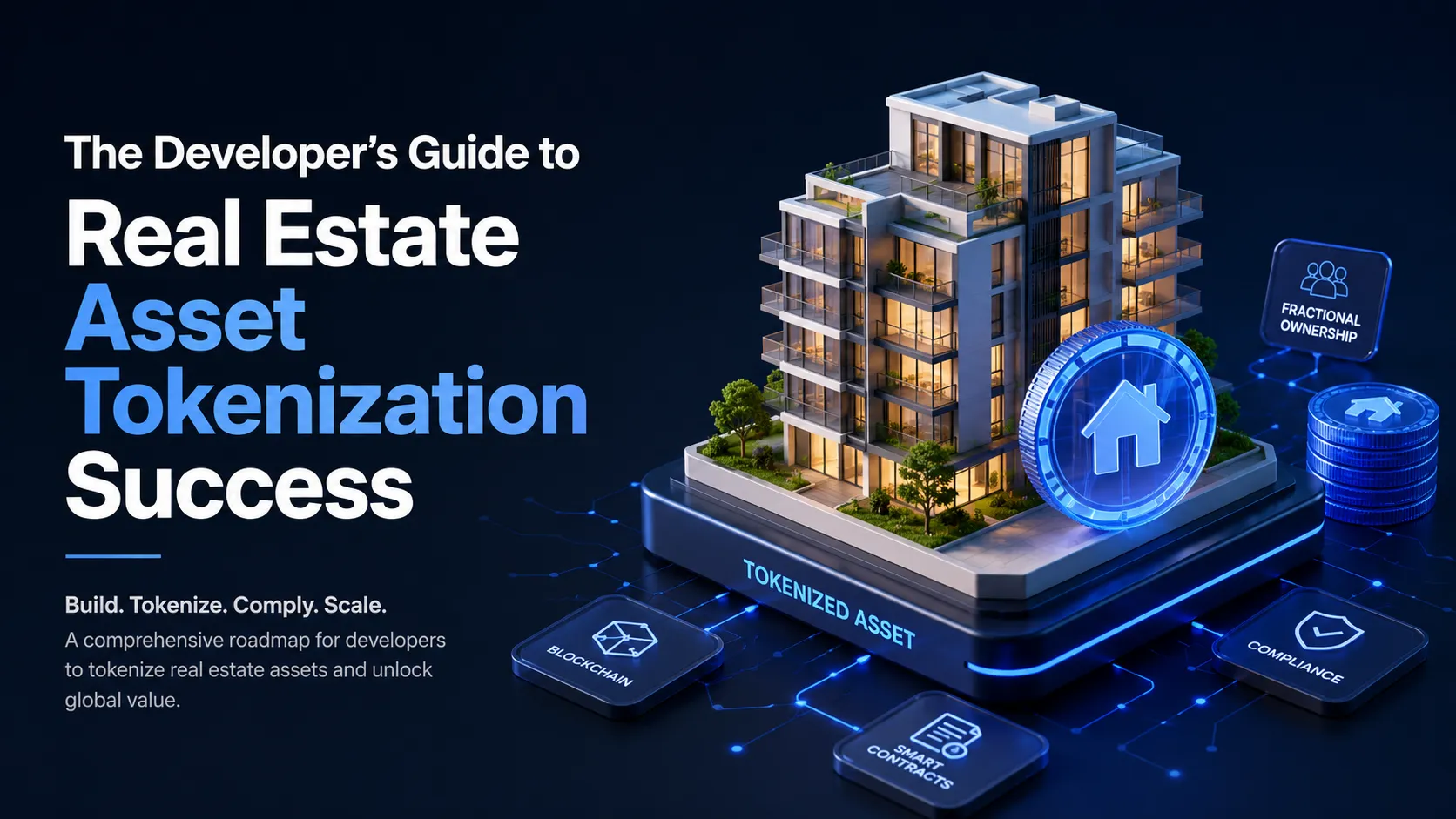

The real estate industry has historically been associated with large capital requirements, lengthy transaction cycles, and limited liquidity. As blockchain technology continues to gain acceptance across financial markets, a new approach to property ownership and investment has emerged through real estate asset tokenization. This concept allows physical real estate assets to be represented digitally through blockchain-based tokens, creating opportunities for fractional ownership, broader investor participation, and more efficient asset management.
For developers, understanding the technical, legal, and operational aspects of Real Estate Tokenization is becoming increasingly important. Property firms, investment groups, and financial institutions are looking for platforms that can support compliant digital asset issuance and management. This demand has created significant opportunities for organizations offering Real Estate Tokenization Services and Real Estate Tokenization Platform Development.
This guide discusses the major considerations, development methods, technology choices, and implementation practices that contribute to successful real estate asset tokenization projects.
Understanding Real Estate Asset Tokenization
Real estate asset tokenization refers to the process of converting ownership rights of a physical property into blockchain-based digital tokens. These tokens represent fractional interests in the asset and can be distributed among multiple investors.
Instead of requiring a single investor to purchase an entire property, tokenization allows ownership to be divided into smaller units. Investors can acquire a portion of the property while maintaining rights defined by the asset structure and legal framework.
Common property categories suitable for tokenization include:
- Residential buildings
- Commercial office spaces
- Shopping centers
- Industrial facilities
- Hospitality properties
- Mixed-use developments
- Real estate investment portfolios
The process connects traditional property ownership with blockchain infrastructure, creating a digital representation of real-world assets.
Why Developers Are Entering the Tokenization Market
Interest in tokenized real estate continues to grow due to several market factors.
Property owners seek alternative fundraising methods. Investors look for access to previously inaccessible assets. Asset managers want improved recordkeeping and ownership tracking. Regulatory bodies are also providing more clarity regarding digital asset frameworks in various jurisdictions.
As a result, companies specializing in real estate tokenization development are seeing increased demand for solutions that manage issuance, investor onboarding, compliance monitoring, and asset administration.
A Real Estate Tokenization company that understands both blockchain architecture and property market requirements is often better positioned to support these initiatives.
The Foundation of a Successful Tokenization Project
Before development begins, several foundational elements must be established.
Property Selection
Not every property is suitable for tokenization. Asset quality, revenue generation, ownership structure, and legal status should be evaluated before digitization.
Properties with stable cash flow and documented ownership records are often preferred candidates.
Legal Structuring
A legal framework determines how ownership rights are connected to digital tokens.
Developers must work alongside legal professionals to define:
- Ownership rights
- Revenue distribution mechanisms
- Investor rights
- Governance models
- Compliance obligations
Legal structuring often becomes one of the most significant stages of a tokenization project.
Asset Valuation
Professional valuation establishes the property's market value and supports token pricing calculations.
Accurate valuation also helps investors understand the relationship between tokens and underlying assets.
Selecting the Right Blockchain Infrastructure
Blockchain selection directly impacts platform functionality and operational costs.
Developers generally evaluate factors such as:
Security
Real estate investments involve significant financial value. The blockchain must provide reliable transaction validation and data integrity.
Transaction Costs
Frequent transfers and investor activities can generate considerable transaction expenses. Cost-efficient networks may improve overall platform performance.
Smart Contract Support
Smart contracts manage token issuance, ownership transfers, revenue distribution, and compliance requirements.
A blockchain with mature smart contract capabilities is often preferred.
Ecosystem Support
Developer communities, documentation, auditing tools, and integration resources contribute to faster project development.
Popular blockchain networks frequently considered for Real Estate Tokenization Platform Development include Ethereum, Polygon, Avalanche, and other enterprise-focused blockchain environments.
Designing Token Standards
Token standards determine how digital assets behave within the blockchain ecosystem.
Several approaches may be considered depending on project objectives.
Security Tokens
Security tokens are commonly used for real estate assets because they represent investment interests and ownership rights.
These tokens may include:
- Dividend distribution functionality
- Investor restrictions
- Regulatory controls
- Transfer limitations
Fractional Ownership Tokens
Fractional ownership models divide property value into multiple token units.
Investors can purchase small portions of a property rather than acquiring the entire asset.
Asset-Backed Tokens
Asset-backed tokens maintain a direct connection between blockchain records and real-world property ownership structures.
Developers must carefully align token design with legal requirements.
Smart Contract Development Methods
Smart contracts serve as the operational layer of tokenized real estate platforms.
They automate processes that would traditionally require manual intervention.
Token Issuance Contracts
These contracts create and distribute digital ownership tokens.
Functions generally include:
- Minting
- Distribution
- Supply controls
- Ownership recording
Compliance Contracts
Compliance contracts monitor investor eligibility and transfer restrictions.
These controls support regulatory requirements and help prevent unauthorized transactions.
Revenue Distribution Contracts
Rental income and profit distributions can be managed through automated payment mechanisms.
Investors receive funds according to their ownership percentage.
Governance Contracts
Governance systems allow token holders to participate in specific property-related decisions.
Voting rights and proposal management can be incorporated into these contracts.
Comprehensive testing and third-party audits remain important before deployment.
KYC and AML Integration
Identity verification is a significant component of Real Estate Tokenization Services.
Regulatory frameworks often require:
- Know Your Customer verification
- Anti-Money Laundering checks
- Investor accreditation validation
- Risk screening procedures
Developers commonly integrate external compliance providers into tokenization platforms.
This integration helps maintain regulatory compliance while supporting investor onboarding.
Building the Investor Portal
The investor portal serves as the primary user interface.
A well-structured portal typically includes:
Registration and Verification
Investors create accounts and submit required documentation.
Portfolio Dashboard
Users monitor token holdings, asset performance, and transaction history.
Investment Marketplace
The marketplace allows investors to review available offerings and purchase tokens.
Revenue Tracking
Rental distributions, dividend payments, and performance reports are displayed within the platform.
User experience plays an important role in investor adoption and retention.
Secondary Trading Capabilities
Liquidity is one of the major advantages associated with tokenized assets.
Developers may integrate secondary trading functionality that allows investors to buy and sell tokens after issuance.
Key considerations include:
- Transfer restrictions
- Regulatory requirements
- Investor eligibility
- Marketplace management
- Settlement mechanisms
Secondary trading infrastructure often contributes significantly to platform value.
Data Management and Property Records
Property-related information must remain accessible and verifiable.
Developers generally establish systems for storing:
- Ownership records
- Legal agreements
- Inspection reports
- Valuation reports
- Rental performance data
- Financial statements
Blockchain records may be combined with off-chain storage solutions to manage larger document sets efficiently.
This hybrid approach supports performance while maintaining record integrity.
Security Considerations for Developers
Security remains one of the most critical responsibilities in real estate tokenization development.
Areas requiring attention include:
Smart Contract Security
Code vulnerabilities can expose investor assets to risk.
Independent security audits should be conducted before deployment.
Wallet Security
Investor wallets require secure authentication and access controls.
Data Protection
Sensitive user information must be protected through encryption and access management systems.
Infrastructure Security
Servers, APIs, and cloud environments should follow established cybersecurity practices.
Security planning should be integrated throughout the development lifecycle rather than addressed after deployment.
Regulatory Compliance Challenges
Regulatory obligations differ across jurisdictions.
Developers participating in Real Estate Tokenization Development Services projects must understand relevant requirements involving:
- Securities regulations
- Investor accreditation rules
- Tax reporting obligations
- Data privacy laws
- Cross-border investment regulations
Compliance modules should be designed with flexibility to accommodate changing legal requirements.
Real Estate Tokenization Platform Development Architecture
A complete platform generally consists of several interconnected layers.
Blockchain Layer
Handles token creation, ownership records, and transaction execution.
Smart Contract Layer
Manages automation and business logic.
Application Layer
Provides user-facing interfaces and administrative tools.
Compliance Layer
Processes identity verification and regulatory monitoring.
Analytics Layer
Generates reporting, performance tracking, and investor insights.
Integration Layer
Connects external services such as payment gateways, custodians, and compliance providers.
A structured architecture helps support long-term platform management.
Common Challenges During Development
Development teams frequently encounter several obstacles.
Regulatory Complexity
Legal requirements vary across countries and investment categories.
Data Accuracy
Property information must remain consistent across multiple systems.
User Education
Many investors remain unfamiliar with blockchain-based real estate ownership.
Liquidity Management
Maintaining active secondary markets requires careful planning.
Technical Integration
Multiple third-party services often need to operate together efficiently.
Addressing these issues early can reduce future operational complications.
Future Opportunities for Developers
The tokenized real estate market continues to expand beyond traditional property investments.
Emerging opportunities include:
- Commercial property syndication
- Global investment participation
- Mortgage tokenization
- Real estate debt markets
- Rental income tokenization
- Institutional investment platforms
- Portfolio tokenization
Organizations involved in Real Estate Tokenization Development company services are increasingly focusing on comprehensive platforms that support multiple asset categories and investor groups.
As regulations mature and institutional participation increases, demand for experienced development teams is expected to grow.
Best Practices for Real Estate Asset Tokenization Success
Developers seeking successful project outcomes should focus on several priorities:
- Establish legal frameworks before development begins
- Select blockchain infrastructure based on project objectives
- Conduct independent smart contract audits
- Implement strong compliance controls
- Prioritize user experience
- Maintain accurate asset documentation
- Develop clear governance structures
- Support secondary market functionality
- Create detailed investor reporting systems
- Monitor regulatory developments continuously
These practices contribute to sustainable platform operations and investor confidence.
Conclusion
Real estate asset tokenization represents a significant shift in how property ownership and investment opportunities are structured. By combining blockchain technology with real-world assets, organizations can create more accessible investment models while improving ownership management and transaction efficiency.
Successful implementation requires more than token creation. Developers must address legal structures, compliance obligations, smart contract security, investor onboarding, marketplace functionality, and ongoing asset management. Every component plays a role in the long-term performance of a tokenization platform.
For businesses entering this market, partnering with an experienced Blockchain App Factory offering Real Estate Tokenization Development Services can provide valuable technical expertise and industry knowledge. From Real Estate Tokenization Platform Development and compliance integration to smart contract implementation and investor portal creation, a specialized development partner can help organizations bring real estate asset tokenization projects from concept to market with confidence and operational readiness.



























Sign in to leave a comment.