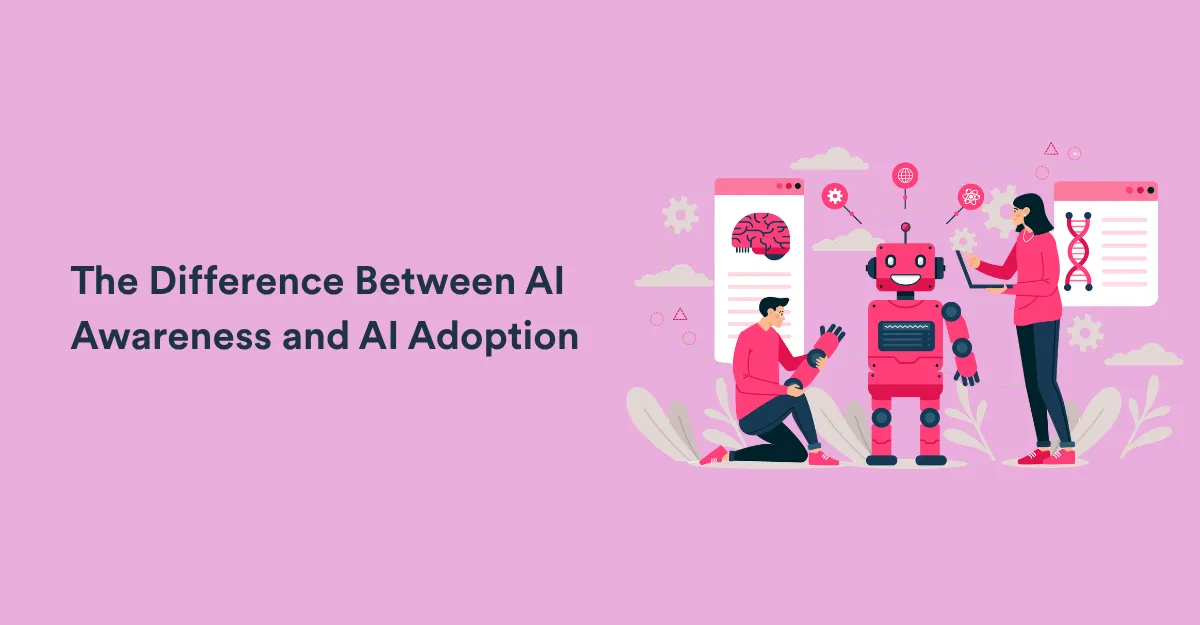

Most organizations today are aware of AI. That’s no longer the problem.
Leadership teams attend AI briefings. Teams experiment with tools. Vendors constantly push new capabilities. On the surface, it looks like progress.
But when you look closer, very little has actually changed inside the business.
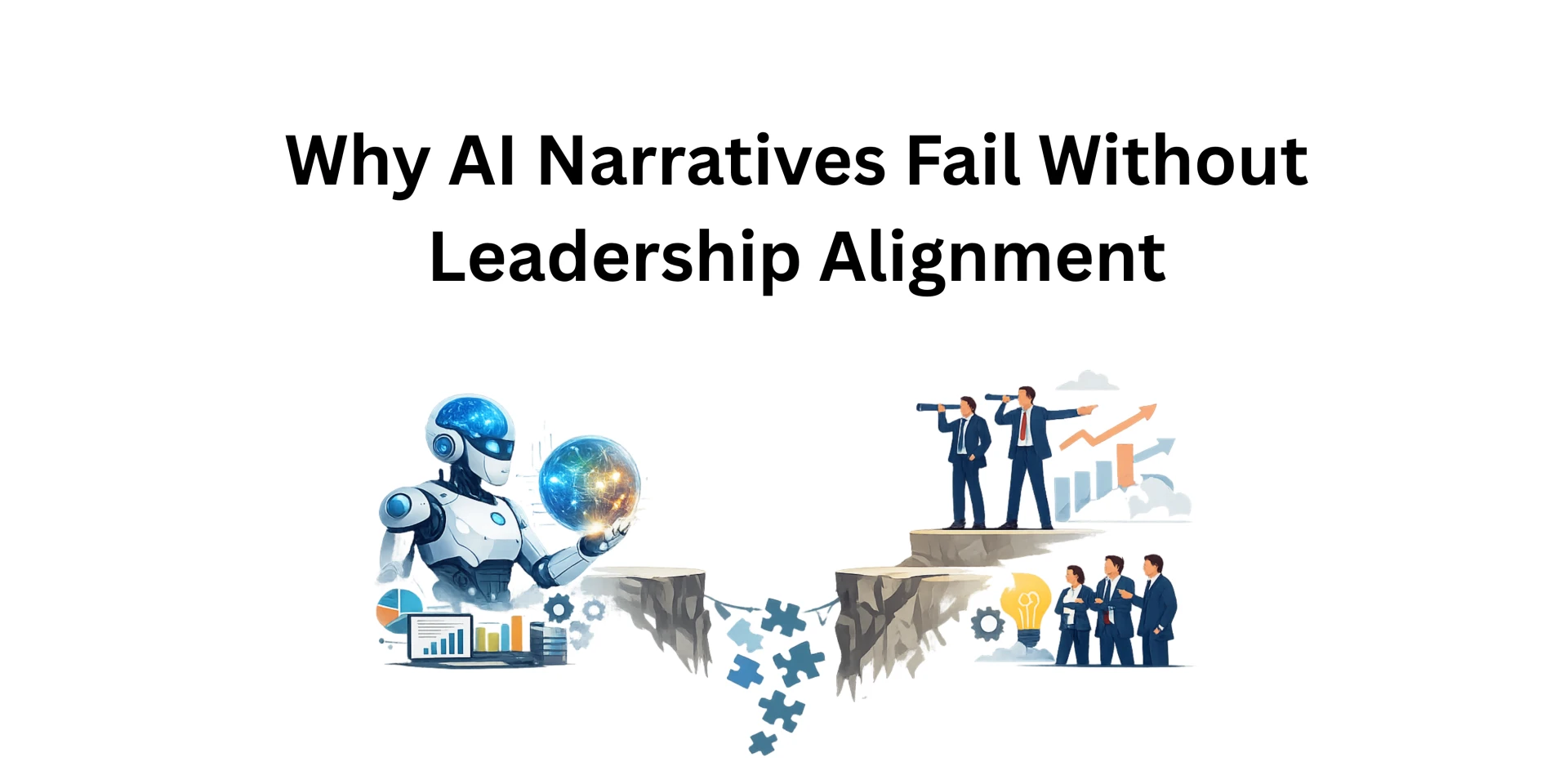
This gap between awareness and action is where most enterprise AI efforts slow down. And in many cases, stall completely.
Understanding this difference is critical. Enterprise AI Adoption doesn’t fail due to a lack of knowledge. It fails due to a lack of clarity, alignment, and trust.
AI Branding Strategy and the Awareness Trap
Awareness feels like progress. It creates the impression that the organisation is moving forward.
But awareness is passive.
It looks like this:
- Leadership conversations without clear direction
- Pilot projects without long-term integration
- Teams experimenting without shared standards
An effective AI Branding Strategy recognises this early. It does not confuse exposure with adoption.
Because awareness does not change behavior. It only informs it.
And without behavioral change, there is no business impact.
AI Branding Strategy Defines What Adoption Actually Means
Adoption is different. It is operational.
It shows up in how decisions are made, how workflows are structured, and how teams rely on AI in their day-to-day roles.
Real Enterprise AI Adoption looks like this:
- AI integrated into core processes, not isolated tools
- Teams trusting outputs enough to act on them
- Leadership aligning AI with business outcomes
- Clear accountability for AI-driven decisions
A strong AI Branding Strategy helps define this state clearly.
It answers a simple but often ignored question:
What does “AI working” actually look like inside the organization?
Without that definition, teams stay stuck in experimentation.
AI Branding Strategy Mistake: Assuming Awareness Will Naturally Lead to Adoption
This is one of the most common assumptions.
Once people understand AI, they will start using it.
But awareness does not remove friction.
Employees still question the following:
- Can I trust this output?
- Will this replace my role?
- Is this aligned with how we work today?
If these concerns are not addressed, awareness creates hesitation instead of momentum.
A well-structured AI Branding Strategy bridges this gap. It connects AI to real roles, real workflows, and real outcomes.
The Structural Gap Between Awareness and Enterprise AI Adoption
The shift from awareness to adoption is not linear. It requires deliberate change across multiple layers.
1. Strategic Clarity
Teams need to understand why AI matters to the business. Not in abstract terms, but in measurable outcomes.
2. Narrative Alignment
Everyone, from leadership to operations, should share the same understanding of what AI is doing.
3. Workflow Integration
AI must fit into existing systems. If it feels like an add-on, it won’t last.
4. Trust and Governance
Without confidence in outputs, usage remains limited.
A strong AI Branding Strategy aligns all four layers. It ensures AI is not just introduced, but embedded.
AI Branding Strategy and the Role of Internal Communication
One of the most overlooked drivers of Enterprise AI Adoption is internal communication.
Most organizations focus on external positioning. But adoption happens internally.
If teams do not understand:
- Where AI fits in their role
- What decisions can they rely on AI for
- How success is measured
They default to old ways of working.
An effective AI Branding Strategy creates internal clarity.
It translates AI from a concept into a usable system.
And this is where most differentiation actually happens.
Why Enterprise AI Adoption Requires More Than Tools
Technology alone does not drive adoption.
Two companies can implement the same AI system and see completely different results.
The difference lies in:
- How clearly the AI is positioned internally
- How well teams are guided to use it
- How leadership reinforces its role
This is why AI Branding Strategy is not just external messaging. It is an internal alignment tool.
It shapes perception, and perception drives usage.
AI Branding Strategy as the Bridge Between Awareness and Action
If awareness is about exposure, adoption is about confidence.
Confidence comes from clarity.
A strong AI Branding Strategy builds that clarity by:
- Defining the role of AI in the organisation
- Connecting AI to specific business outcomes
- Addressing risks and concerns directly
- Creating a consistent narrative across teams
This reduces hesitation. And when hesitation reduces, usage increases.
Final Thought
Most businesses have previously had difficulty with being aware of how to use Artificial Intelligence (AI).
However, they now have an issue with how to move forward in AI.
Moving towards the Enterprise-level adoption of AI isn't a seamless transition.
There must be a purposeful connection established between each of the three areas of your company—how you strategize, communicate and execute decision-making processes via AI.
The application of an AI branding strategy will be needed at this point.
AI Branding Strategy, will ultimately turn what was once an idea into something that your teams feel comfortable utilizing on a daily basis because the awareness of an idea opens up the dialogue for the Asset Adoption side of the conversation to be discussed and undertaken.


























Sign in to leave a comment.