

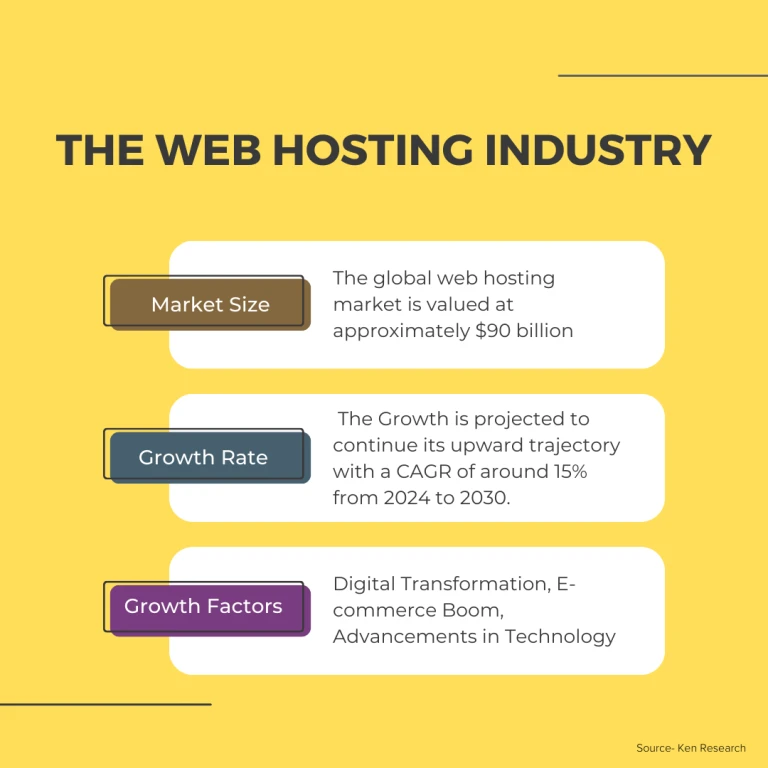
The web hosting industry has experienced remarkable growth over the past decade. As of 2024, the global web hosting market is valued at approximately $90 billion and is projected to continue its upward trajectory with a compound annual growth rate (CAGR) of around 15% from 2024 to 2030.
This expansion is fueled by the ever-increasing demand for online presence, driven by businesses of all sizes seeking to establish and enhance their digital footprint. The surge in e-commerce, the proliferation of websites, and the growing adoption of cloud-based solutions are pivotal factors contributing to the robust growth of the web hosting market.
Web Hosting Industry- Growth Factors
Several key factors are driving the growth of the web hosting industry:
- Digital Transformation: As more businesses undergo digital transformation, the need for reliable web hosting services has skyrocketed. Companies are investing in digital solutions to stay competitive, enhance customer experience, and streamline operations.
- E-commerce Boom: The e-commerce sector has witnessed exponential growth, particularly during the COVID-19 pandemic. With more consumers shopping online, businesses are compelled to develop robust online platforms, thereby increasing the demand for web hosting services.
- Advancements in Technology: Technological advancements such as artificial intelligence (AI), machine learning (ML), and the Internet of Things (IoT) are reshaping the web hosting landscape. These technologies offer enhanced performance, security, and scalability, attracting more users to modern hosting solutions.
- Cloud Computing: The shift towards cloud computing has significantly impacted the web hosting industry. Cloud hosting offers flexibility, scalability, and cost-effectiveness, making it a preferred choice for many businesses.
Read More- The Top Stock Broking Firms in Market with Growth Factors
Trends in Web Hosting
Green Web Hosting
One of the prominent trends in the web hosting industry is the rise of green web hosting. As environmental concerns take center stage globally, businesses are seeking sustainable solutions to reduce their carbon footprint. Green web hosting providers use renewable energy sources to power their data centers, implement energy-efficient technologies, and follow eco-friendly practices. This trend not only helps in mitigating environmental impact but also appeals to environmentally conscious consumers and businesses.
Increased Adoption of Cloud Hosting
Cloud hosting continues to dominate the web hosting market. Its scalability, flexibility, and cost-efficiency make it an attractive option for businesses of all sizes. Cloud hosting providers offer various models, such as public, private, and hybrid clouds, catering to different business needs. The ability to scale resources up or down based on demand, pay-as-you-go pricing models, and enhanced performance are driving the widespread adoption of cloud hosting.
Enhanced Security Measures
With cyber threats becoming more sophisticated, web hosting providers are prioritizing security. Advanced security measures such as SSL certificates, DDoS protection, firewalls, and automated backups are now standard offerings. Additionally, web hosting companies are leveraging AI and ML to detect and mitigate potential threats in real-time, ensuring robust protection for websites and their users.
AI and Automation
Artificial intelligence and automation are revolutionizing the web hosting industry. AI-powered tools are being used for various purposes, including performance optimization, predictive maintenance, and customer support. Automation streamlines tasks such as server management, updates, and security monitoring, reducing the need for manual intervention and improving efficiency.
Content Delivery Networks (CDNs)
Content Delivery Networks (CDNs) are becoming increasingly integral to web hosting solutions. CDNs distribute website content across multiple servers located in different geographical regions, ensuring faster load times and improved user experience. As website performance becomes a critical factor in SEO rankings and user retention, the adoption of CDNs is on the rise.
Edge Computing
Edge computing is gaining traction in the web hosting arena. By processing data closer to the source, edge computing reduces latency and enhances the performance of applications. This is particularly beneficial for IoT applications, real-time analytics, and other latency-sensitive services. As more devices connect to the internet, the demand for edge computing solutions is expected to grow.
Managed Hosting Services
Managed hosting services are becoming increasingly popular, especially among small and medium-sized enterprises (SMEs) that lack the resources to manage their own servers. Managed hosting providers take care of server maintenance, updates, security, and support, allowing businesses to focus on their core operations. This trend is driven by the need for hassle-free, reliable hosting solutions that ensure optimal website performance.
Also Read- Understanding the Top Financial Advisory Firms Market with Growth Factors
Serverless Architecture
Serverless architecture is another trend making waves in the web hosting industry. In a serverless model, the hosting provider dynamically manages the allocation of machine resources. This approach allows developers to focus on writing code without worrying about server management, leading to increased productivity and faster deployment times.
Personalization and User Experience
Personalization and enhancing user experience are becoming central to web hosting services. Hosting providers are offering tailored solutions based on individual business needs, providing customized control panels, user-friendly interfaces, and comprehensive support. The focus is on delivering a seamless and intuitive experience for users, which is crucial for customer satisfaction and retention.
Blockchain Technology
Blockchain technology is gradually being integrated into web hosting to enhance security and transparency. Blockchain can provide decentralized hosting solutions, reduce the risk of data breaches, and ensure the integrity of data. This technology is still in its early stages within the web hosting domain, but its potential applications are promising and could revolutionize how data is managed and secured.
Conclusion
The web hosting industry is evolving rapidly, driven by technological advancements, increasing digitalization, and changing consumer demands. From green web hosting and cloud solutions to AI integration and blockchain technology, the trends shaping the future of web hosting are diverse and dynamic. Businesses must stay abreast of these trends to leverage the full potential of their online presence. As the market continues to grow, web hosting providers that innovate and adapt to these trends will be well-positioned to thrive in the competitive landscape. By embracing these trends, businesses can ensure they remain at the forefront of the digital revolution, providing their customers with efficient, secure, and high-performing web experiences.
By understanding and capitalizing on these web hosting trends, businesses can not only enhance their digital strategies but also contribute to a more sustainable, secure, and user-friendly internet ecosystem. The future of web hosting promises to be exciting, with endless possibilities for innovation and growth.


























Sign in to leave a comment.