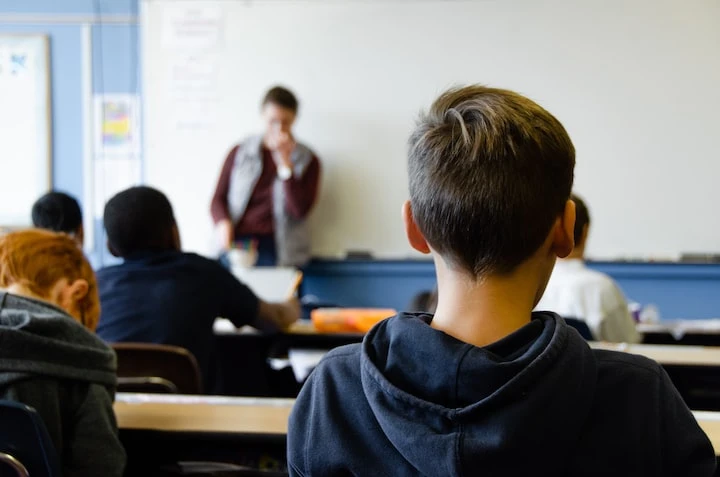

Education is a cornerstone of societal progress, and Chicago's educational journey is a testament to its ever-evolving commitment to knowledge. As we delve into the annals of history, we find a city that has undergone remarkable transformations, not just in its skyline but in its educational landscape. This article will take you on a journey through time, tracing the evolution of education in Chicago from its early days to the present, with a particular focus on the availability of free tutoring.
The Founding of Chicago's Public School System
In the early 19th century, Chicago was a budding city on the banks of Lake Michigan. Just a few years after its incorporation in 1833, Chicago founded its first public school in 1834. This bold move exemplified Chicago's commitment to providing educational opportunities to its residents. Chicago's early public school system was modeled after the common school system, an educational revolution emerging in other parts of the United States.
The common school system was revolutionary in its egalitarian principles. It aimed to provide every child with a basic education, regardless of their social class or background. However, these noble aspirations were marred by challenges such as overcrowded classrooms, inadequate funding, and a scarcity of qualified teachers.
The Growth and Development of Chicago's Public Schools in the Late 19th and Early 20th Centuries
The late 19th and early 20th centuries were marked by explosive growth in Chicago's public school system. This mirrored the city's rapid population expansion as it transformed into an industrial and economic powerhouse. Chicago's educational institutions responded by expanding their curriculum to include advanced subjects, including science and foreign languages.
Moreover, vocational training programs were introduced, designed to equip students with practical skills for the workforce. However, challenges persisted, with issues of segregation and overcrowding threatening the promise of an equitable education for all.
Educational Reform in Chicago in the Mid-20th Century
The mid-20th century brought winds of change to Chicago's public school system. It was a time of significant reforms, most notably, the desegregation of schools in the 1960s. This reform aimed to dismantle the discriminatory practices that had kept students of different races apart. The '60s also saw the implementation of community control of schools in the 1970s, an effort to improve the quality of education for all students, irrespective of their race, ethnicity, or socioeconomic status.
Free Tutoring in Chicago
One of the remarkable aspects of Chicago's educational journey is the availability of free tutoring. This support system has been in place since the late 19th century. Early tutoring programs were often initiated by charitable organizations or religious groups, extending a helping hand to those who needed educational assistance. Over the course of the 20th century, the government began playing a larger role in providing free tutoring services. Today, Chicago boasts a wide array of free tutoring programs catering to students of all ages and backgrounds.
Education in Chicago Today
Fast forward to the present day, and we find Chicago Public Schools (CPS) as the third-largest public school district in the United States. It serves over 323,251 students in more than 514 schools. The district offers a diverse range of programs and services designed to meet the needs of its equally diverse student population. However, it would be amiss not to mention the challenges that persist, including poverty, inequality, and violence. Chicago's educational landscape reflects the broader challenges faced by urban areas across the United States.
Conclusion
In conclusion, Chicago's educational history is a testament to the city's unwavering commitment to the pursuit of knowledge. From its early days as a burgeoning town on the banks of Lake Michigan to its current status as a major American metropolis, education in Chicago has come a long way.
As we have seen, it has evolved from humble beginnings into a vast and diverse educational landscape. The availability of free tutoring in Chicago stands as a testament to the city's commitment to providing educational opportunities for all its residents.
Looking ahead, the future of education in Chicago is one filled with both opportunities and challenges. As the city continues to evolve, its educational system must adapt to meet the changing needs of its students and communities. The commitment to providing quality education for all remains at the heart of Chicago's educational mission, and this commitment will undoubtedly shape the city's educational landscape for years to come.


























Sign in to leave a comment.