
Computer power has come a long way in a short time. What was once limited to large, room-sized devices is now in the palm of our hands in the form of smartphones. However, this dramatic increase in production capacity has come at an environmental cost.
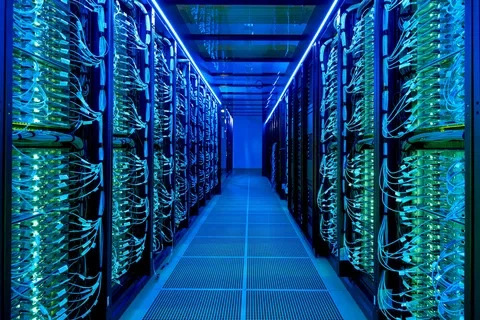
The data centres that run our digital lives consume a lot of energy and resources. Fortunately, a shift is underway to ensure computing efficiency remains sustainable with advances in the HPC server industry.
In this blog, we'll explore how HPC servers are leading the charge for greener technology.
Leveraging High-Performance Computing for Sustainable Research
While data centres power our digital lives, high-performance computing (HPC) powers scientific progress. HPC clusters with high-powered servers support complex systems such as climate change modelling, new product and pharmaceutical development, and natural disaster simulation
This research drives progress on sustainability challenges such as renewable energy, carbon capture and resilient infrastructure. By providing researchers with highly parallel computing resources, HPC servers enable faster discovery of solutions.
The data centres themselves also benefit, as the simulations that take place in these clusters help reduce energy consumption and optimise areas such as air conditioning, cooling systems, and power distribution In other words, all together, HPC acts as a sufficient force for the science of development.
Utilising More Efficient Liquid Cooling Approaches
Cooling a large server farm requires incredible heat transfer. Traditional air-cooling methods are struggling to keep up with rising figures in packed racks. Liquid cooling on HPC servers provides a scalable alternative by circulating coolant directly through the server instead of through the air.
This allows for greater configuration of components and reduced fan speeds, resulting in more energy dissipation in the case of airflow. Indirect condensation also reaches the floor through the use of heat exchangers to transfer heat from the rack. As liquid cooling technology matures, it has the potential to revolutionise data centre thermal management and energy efficiency.
Leveraging Renewable Energy Sources Through Co-Location
While optimising hardware and infrastructure is important, transitioning to renewable energy is key to sustainable data centres. By locating near renewable energy farms, data centres can directly use electricity from green sources such as solar, wind and hydropower.
As renewable energy technologies evolve, the ability to power data centres will only increase, delivering a win-win through sustainable computing and green infrastructure. HPC co-location offers a promising way to fully deploy data centres on clean energy.
Optimising Server Hardware for Higher Performance-Per-Watt
The servers inside data centres are where much of the heavy computational lifting occurs. Not surprisingly, they're also one of the biggest energy hogs.
Major HPC server manufacturers like Dell, HPE, and Lenovo are addressing this through more efficient chip, memory, and system designs. Advanced processors like AMD's EPYC and Intel's Xeon Scalable platforms offer significantly higher performance per watt than previous generations. Liquid cooling and heat exchange technologies are also helping to maximise power efficiency. At the system level, optimised motherboard designs reduce power losses.These hardware optimisations allow data centres to do more with less, a critical factor as computing demands multiply.
Deploying AI and ML to Optimise Energy Usage
Artificial intelligence is also playing an important role in making data centres greener through predictive analytics and automation. HPC server machine learning algorithms can learn patterns in energy consumption data from sensors across infrastructure systems.
They then provide recommendations to optimise areas like workload scheduling, cooling operations, and power management.Some data centres are using AI to predict component failures before they occur and proactively replace parts, avoiding unplanned downtime that wastes energy.
As AI systems gain more experience over time, they will drive increasingly intelligent optimisation of data centre resources for higher efficiency.
Combined with IoT technologies, HPC AI promises to transform data centres into self-optimising "digital twins" with minimal environmental impact.
Leveraging More Efficient Cloud Services and Edge Computing
The cloud has revolutionised IT, but public cloud infrastructure still consumes massive amounts of energy.
However, cloud HPC server providers are working hard to "green" their offerings. For example, AWS leverages machine learning to allocate workloads to availability zones powered by renewable energy when possible.
Microsoft Azure utilises its massive scale to purchase renewable energy credits in bulk. Pushing more workloads to the efficient cloud can also help on-premise data centres downsize by offloading non-critical tasks.
Additionally, edge and fog computing distribute processing to localised microdata centres located near end users.
This reduces the energy needed to transport vast amounts of data over the internet backbone. As 5G connectivity spreads, edge computing will play a bigger role in sustainable IT.
Deploying Smart Monitoring and Management Tools
To optimise energy usage, data centre managers need visibility into real-time infrastructure operations.
Advanced monitoring platforms collect telemetry from sensors, PDUs, servers, and other systems to provide a unified view. With deep insights, issues can be proactively addressed before efficiency is impacted.
HPC Tools also automate control of components like cooling towers, CRAC units, and power distribution based on current loads.
Some are using AI to predict and prevent problems. Management platforms also integrate with building automation systems to integrate IT and facility energy management for a holistic approach.
Comprehensive monitoring closes the loop on efficiency efforts by ensuring improvements deliver lasting results.
Transitioning to More Sustainable Data Centre Designs
In addition to optimising hardware and software, rethinking data centre enterprise design can significantly reduce environmental impact. For new modular data centre configurations, HPC servers optimise space utilisation through the flexible configuration of pre-built modules.
This allows greater flexibility in size to meet current requirements. Some other sources receive waste heat from regional heating or nearby agricultural sources. Even cooling systems are green, HPC systems utilise external air economy, evaporative cooling and geothermal rejection when possible
As sustainability moves up the priority list, future-proof data centre campuses will improve efficiency from the ground up.
Final Thoughts
The digital transformation is changing our world for the better, but its environmental costs must be addressed to ensure a sustainable future. Through active efforts in hardware, infrastructure, operations, and energy that can be renewed all over, data centres and HPC systems using modern computing are becoming greener every day as technologies like AI, edge computing and sustainable design continue to evolve.









Sign in to leave a comment.