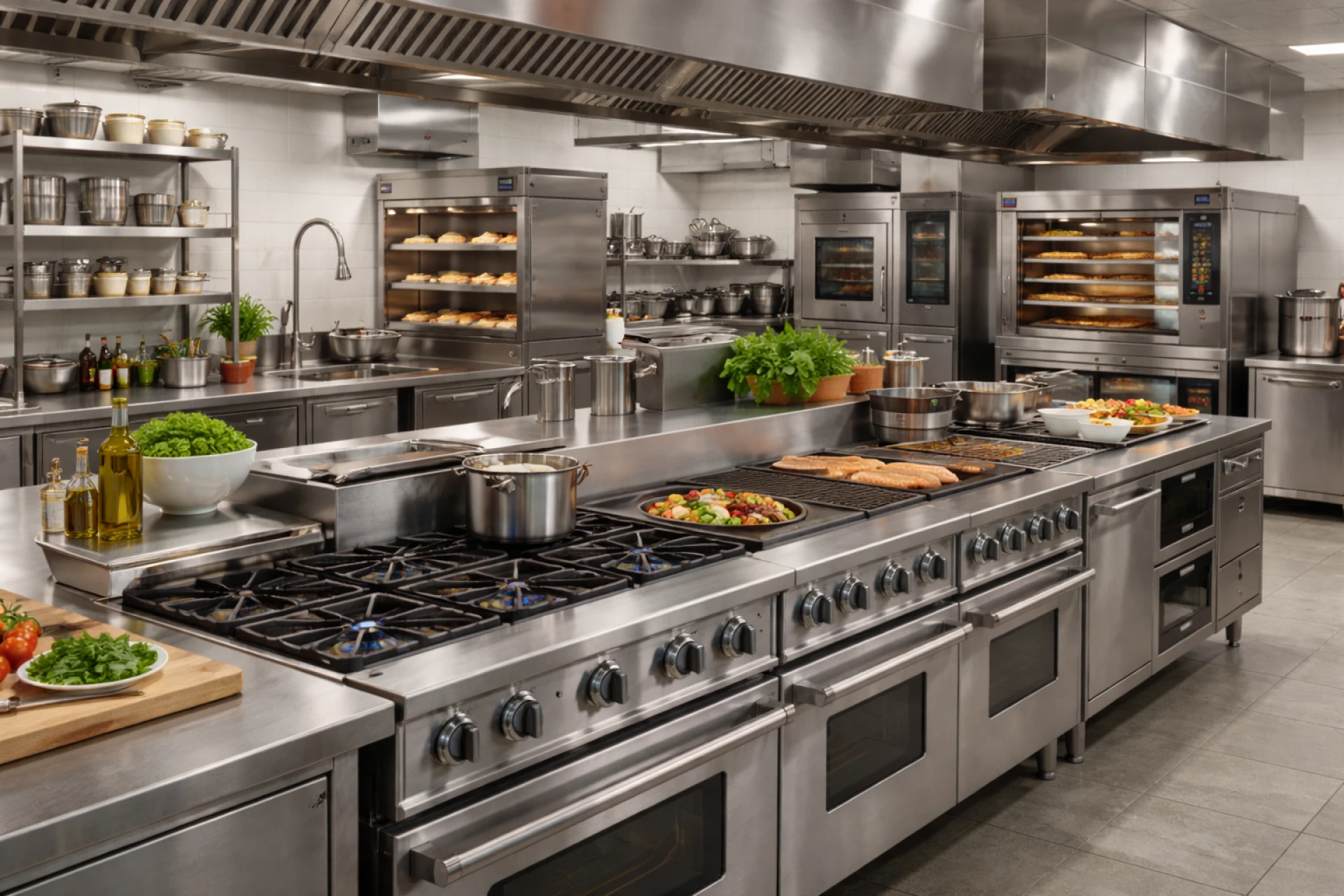

The magic of a restaurant, as any diner knows, unfolds in the dining room. It’s in the first sip of a perfectly balanced cocktail, the arrival of a beautifully plated dish, and the warm glow of a shared evening out. But the true birthplace of that magic, its relentless and rhythmic engine, is a world away from the linen tablecloths and soft music. Behind the swinging doors lies the restaurant kitchen—a world of stainless steel, controlled chaos, and, most importantly, its arsenal of specialized equipment. This isn't just a collection of bigger versions of home appliances; it's a symphony of tools designed for endurance, precision, and the beautiful, grueling dance of service.
For a chef or a restaurateur, choosing this equipment is one of the most critical decisions they’ll make. It’s the foundation upon which every menu item, every chef’s creative vision, and ultimately, the entire business rests.
The Unshakeable Foundation: The Non-Negotiables
Every restaurant kitchen, from a neighborhood bistro to a high-end tasting menu destination, is built upon a few pillars of essential gear. These are the workhorses that see constant, brutal use and simply cannot fail.
At the center of it all is the cooking line. This is the strategic assembly of ranges, grills, and flattops where the heat is literal and figurative. A commercial range isn’t just "bigger." Its burners pump out tens of thousands of BTUs, capable of bringing a stockpot to a furious boil in moments or creating the intense, focused heat needed to sear a scallop to caramelized perfection. Next to it, the flattop grill offers a vast, smooth canvas for everything from griddled breakfast items to dozens of burgers at once, while the charbroiler’s fiery grates promise those iconic crosshatch marks. This line is the kitchen’s frontline, and its layout—a carefully considered sequence known as the "kitchen brigade" in physical form—is sacred. The flow from the pickup window to the fryer to the sauté station must be intuitive, minimizing wasted motion during the frantic peak hours.
Then there’s refrigeration. In a home, a fridge keeps things cold. In a restaurant, a commercial refrigeration system is a precision instrument for food safety and organization. Reach-in coolers and freezers are built to withstand doors being slammed open hundreds of times a night, recovering temperature quickly to keep perishables safely out of the "danger zone." The walk-in cooler is its own ecosystem, a meticulously organized vault where the success of tomorrow’s service is stored today. Its reliability is non-negotiable; a failing compressor isn’t an inconvenience, it’s a catastrophic event.
And finally, the unsung hero: ventilation. The hood system that hangs over the cooking line is the kitchen’s lungs. It doesn’t just suck away smoke and smells; it pulls out immense heat and grease-laden vapor, making the workspace bearable and, crucially, safe. Its intricate filters and powerful fans work in tandem with often-required fire suppression systems, a constant, humming guardian against the very real risks of a busy kitchen.
The Specialists: Tools That Define a Concept
While the foundation is universal, the character of a kitchen is defined by its specialists. This is where a pizzeria diverges completely from a sushi bar, and a steakhouse from a vegan cafe.
Imagine the massive, stone-deck oven in an authentic pizzeria, burning wood or gas at temperatures exceeding 800°F, capable of cooking a Neapolitan pie in 90 seconds flat. This isn’t just an oven; it’s the soul of the restaurant. Or consider the bank of high-output, specialized woks in a Chinese restaurant, each with its own roaring jet burner—a setup designed for the quick, sequential cooking of stir-fry dishes. A bakery’s kitchen revolves around its mixers, proofing cabinets, and deck ovens, while a barbecue joint’s entire identity is tied to its smokers, low-and-slow vessels that operate more on patience and smoke than sheer heat.
These pieces of kitchen apparatus are far from generic. They are direct responses to a menu and a culinary philosophy. A high-volume pasta house might invest in an enormous boiling-water station with multiple baskets, while a fine-dining establishment might prioritize a high-precision immersion circulator for sous-vide cooking and a powerful blast chiller to rapidly cool sauces and stocks, locking in flavor and texture. This specialized gear translates a chef’s vision from paper to plate.
The Engine Room: Prep, Plating, and the Great Clean-Up
Behind the fiery drama of the line is the "back of the house," where the engine room hums. This is where food preparation happens at scale, and the equipment reflects that need for volume and efficiency.
Here, you’ll find the formidable drum-style vegetable chopper that can turn 50 pounds of onions into a uniform dice in minutes, saving hours of labor and a river of tears. Massive vertical cutter/mixers (VCMs) blend vats of soup or mix enormous batches of dough with formidable power. These tools aren't about replacing skill, but about amplifying it, ensuring consistency and allowing skilled hands to focus on tasks machines cannot do.
When the food is cooked, the focus shifts to plating. This is where the warming lamp (often called a heat lamp or salamander) plays its crucial, if unglamorous, role. Positioned over the pass—the counter where plates are assembled and inspected—it provides just enough ambient heat to ensure a dish leaving the kitchen arrives at the table at the perfect temperature, without continuing to cook the food. It’s a small piece of equipment with a massive responsibility for guest experience.
And then, the cycle completes with cleaning. A commercial dishwashing station is a world apart from a home unit. It’s a high-temperature, high-pressure sanitizing machine that cycles racks of plates, glasses, and utensils through a rigorous wash, rinse, and sanitize process in minutes, ensuring not just cleanliness but safety. Its three-compartment sink companion handles pots, pans, and everything too large for the machine, following the strict protocol that is drummed into every new dishwasher.
More Than Metal: The Human-Machine Partnership
Ultimately, restaurant kitchen equipment is not a collection of autonomous robots. It is a partner to the skill, creativity, and endurance of the people using it. A beautiful French-top range is inert without a chef who understands how to use its graduated heat zones. A state-of-the-art combi-oven is wasted in the hands of someone who doesn’t grasp the principles of steam and convection.
The best kitchens foster a symbiotic relationship between the team and their tools. The equipment is maintained with pride, cleaned with ritualistic care, and understood intimately. A cook learns the specific hot spots on their flattop, the exact recovery time of their fryer, the gentle hum of a properly functioning cooler. This intimate knowledge is what allows a team to perform under pressure, to turn the chaos of a fully booked Saturday night into a smooth, seemingly effortless performance.
Choosing this equipment, therefore, is a profound act of planning. It requires a clear vision of the menu, an honest assessment of volume, and a deep understanding of workflow. It’s a balance between aspiration and budget, between the dream machine and the durable workhorse that will reliably serve through a thousand services. It is, in the truest sense, building the stage upon which the daily drama of creation, frustration, triumph, and service will play out, night after night. It’s the unseen heartbeat that gives life to the entire restaurant.
Frequently Asked Questions
Q: What’s the one piece of equipment a new restaurant owner most often underestimates in cost or importance?
A: Most will point to the ventilation hood system. First-timers often budget for the visible, exciting cooking equipment but are surprised by the complexity and cost of proper commercial ventilation. It involves custom fabrication, heavy-duty ductwork, fire suppression integration, and powerful exhaust motors. It’s not an area to cut corners on, as it’s crucial for safety, comfort, and code compliance.
Q: Is used kitchen equipment a smart way to save money?
A: It can be, but caution is key. For core, hard-wearing items like heavy-duty ranges, stainless steel tables, or reach-in coolers from reputable brands, used can be an excellent value. Always buy from a certified dealer who refurbishes and guarantees the equipment. Avoid used refrigeration with uncertain compressor history, and be wary of highly specialized or proprietary equipment where parts may be impossible to find.
Q: How important are energy-efficient models?
A: Increasingly vital. While high-efficiency combi-ovens or fryers may have a higher upfront cost, the operational savings on utility bills can be substantial over the equipment’s lifespan. In a high-volume setting, efficiency doesn’t just save money; it also produces less ambient heat, improving the working environment for the kitchen staff.
Q: We have a small menu. Do we really need all this equipment?
A: A focused menu often allows for a more focused, efficient kitchen. You may not need a six-burner range if your menu is built around a wood-fired oven and cold preparations. The key is to identify the "driver" equipment for your core dishes and build a compact, logical workflow around it. Over-equipping can be as problematic as under-equipping, wasting space, capital, and energy.
Q: What does "NSF Certified" mean, and is it mandatory?
A: NSF International sets public health and safety standards for food service equipment. Their certification means the equipment is designed to be sanitary, durable, and easy to clean. While not every single item must be certified, most health departments require it for key surfaces and equipment that contact food. It’s a mark of professional-grade design and is strongly recommended.
Q: How do we plan for equipment maintenance?
A: Proactive maintenance is a line item, not an afterthought. Start by establishing a relationship with a reliable service company. Create a simple daily and weekly cleaning/logbook routine for staff (e.g., filtering fryer oil, checking gaskets on coolers, degreasing hood filters). Budget for annual professional servicing of major equipment like hood systems and refrigeration. A few hundred dollars in preventative care can prevent a multi-thousand-dollar breakdown during dinner service.
Q: Can we customize or modify equipment to fit our space?
A: To a degree, yes. Many manufacturers offer modular pieces that can be configured in different ways. Tables and shelving can often be built to specific dimensions. However, major modifications to the internal workings of pressurized or gas-powered equipment should only be done by certified technicians to avoid voiding warranties and creating serious safety hazards. Always consult with your equipment supplier or a kitchen design consultant for custom needs.








Sign in to leave a comment.