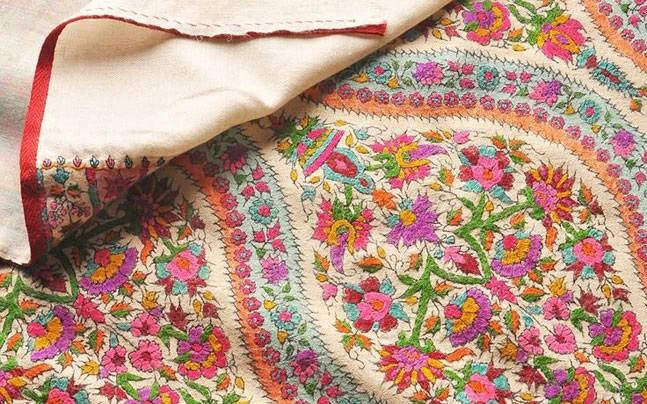

Pashmina shawls, also known as cashmere shawls, have a long and rich history dating back several centuries. The word "pashmina" comes from the Persian word "pashm," which means "wool," and refers specifically to the fine, soft wool that is used to make these shawls.
The origins of pashmina shawls can be traced back to the 15th century in the Kashmir region of northern India. The region was known for its skilled weavers and fine wool, and pashmina shawls quickly became popular among the wealthy and elite. They were highly prized for their softness, warmth, and intricate designs, which were often inspired by nature.
During the Mughal era in the 16th and 17th centuries, pashmina shawls reached the height of their popularity. They were highly sought after by the Mughal emperors and their courts, as well as by European traders who visited the region. Many pashmina shawls from this period were embroidered with gold and silver thread and featured intricate floral and paisley patterns.
In the 19th century, pashmina shawls became even more popular in Europe and America, where they were seen as a luxurious and exotic accessory. They were often worn as a status symbol by the wealthy, and were highly prized for their softness, warmth, and durability.
Today, pashmina shawls continue to be popular around the world, and are widely available in a range of designs and styles. They are still made by skilled weavers in the Kashmir region, using traditional techniques that have been passed down through generations. However, due to high demand and production costs, many pashmina shawls are now made using blends of wool and other fibers, rather than pure pashmina wool.
0
0























Sign in to leave a comment.