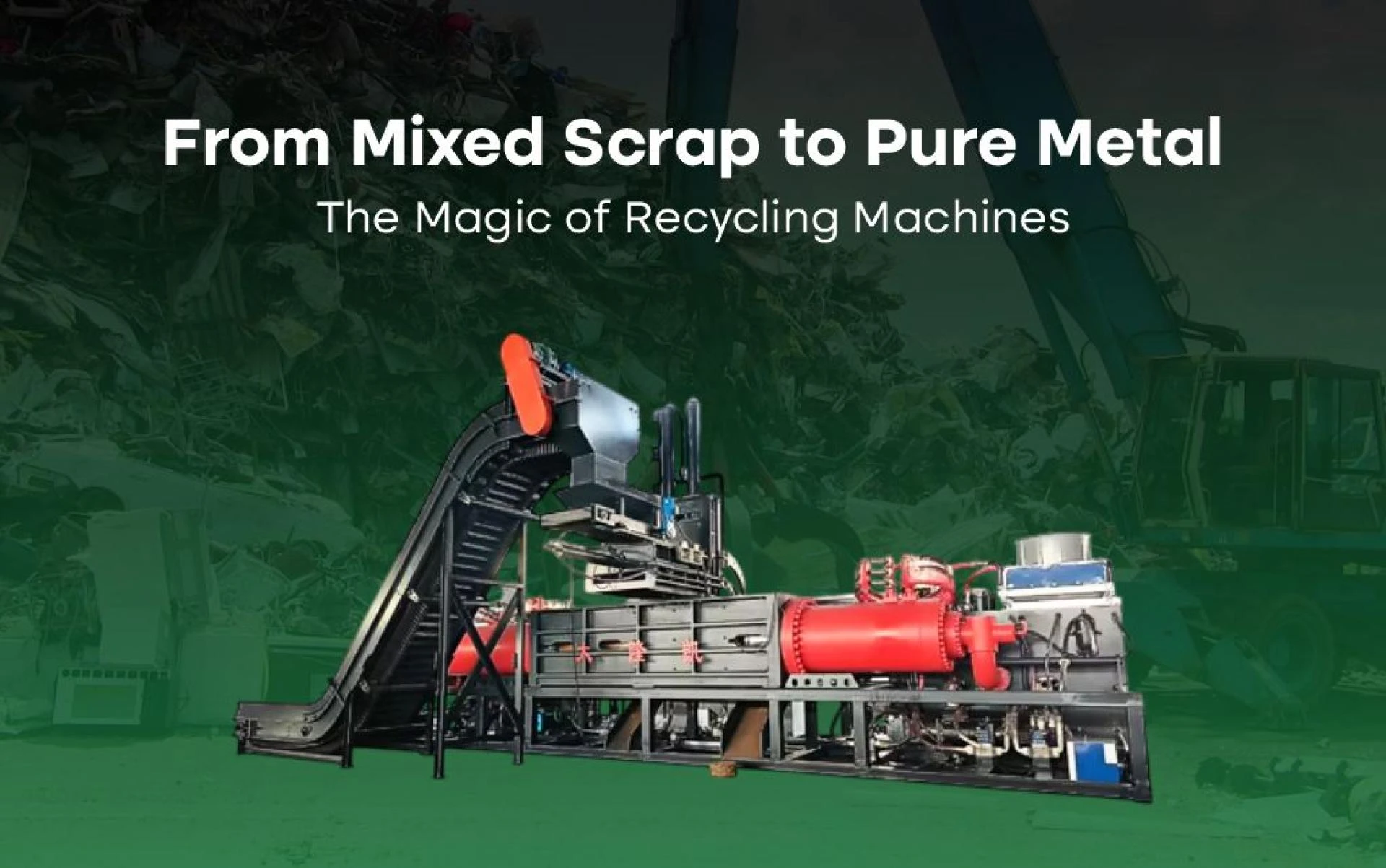

In India, where bustling cities and growing industries generate mountains of waste, the need for sustainable solutions has never been more pressing. Among these solutions, recycling machines stand out as unsung heroes, transforming mixed scrap into valuable resources like pure metal. This process not only reduces waste but also fuels a circular economy, conserving natural resources and curbing environmental damage.
Let’s dive into the fascinating world of recycling machines and explore how they work their magic in turning discarded materials into reusable metals.
The Growing Need for Recycling in India
India’s rapid urbanisation and industrial growth have led to a significant rise in waste generation. From household scrap to industrial by-products, the country produces millions of tonnes of waste annually. A large portion of this is metal scrap—old appliances, vehicle parts, construction materials, and more. Without proper management, this scrap piles up in landfills, polluting soil and water. Scrap Recycling machines offer a solution by efficiently processing this waste, recovering valuable metals, and reducing the strain on natural resources.
The process begins with collecting mixed scrap, which includes metals like steel, aluminium, copper, and brass, often mixed with non-metallic materials like plastic or rubber. Recycling machines sort, clean, and refine these materials, ensuring that metals are separated and purified for reuse. This not only addresses waste management challenges but also supports India’s push towards sustainability.
How Recycling Machines Work
Recycling machines are marvels of engineering, designed to handle the complex task of turning chaotic piles of scrap into pure, usable metal. The process involves several stages, each relying on advanced technology to achieve precision and efficiency.
Collection and Initial Sorting
The journey starts with the collection of mixed scrap from households, industries, and scrapyards. This scrap is often a jumble of metals, plastics, and other materials. Initial sorting is done manually or with basic machines to separate large items. However, modern recycling facilities in India increasingly rely on automated systems, such as conveyor belts equipped with sensors, to identify and separate metals from non-metals.
Shredding and Size Reduction
Once sorted, the scrap is fed into shredding machines, which break it down into smaller pieces. These machines use powerful blades to cut through tough materials, making it easier to handle and process. Shredding also increases the surface area, which is crucial for the next steps. In India, where scrap composition can vary widely, shredders are designed to handle diverse materials, from thin aluminium cans to bulky steel components.
Separation Techniques
The shredded scrap is a mix of different metals and non-metallic materials. This is where advanced separation technologies come into play. Magnetic separators are commonly used to extract ferrous metals like iron and steel, which are attracted to magnets. Non-ferrous metals, such as aluminium and copper, are separated using eddy current separators, which create a magnetic field to repel non-ferrous metals, directing them into separate streams.
For finer separation, some facilities use air classifiers or density-based separators to remove lightweight materials like plastic or paper. These technologies ensure that only metals move forward in the recycling process, improving the quality of the final product.
Melting and Purification
Once separated, the metals are melted in large furnaces designed for specific types of metal. For instance, aluminium is melted at a lower temperature than steel. During melting, impurities like dirt or coatings are removed, often through processes like fluxing, where chemicals are added to bind with impurities, forming slag that can be skimmed off.
In India, where energy efficiency is a priority, modern recycling plants use energy-efficient furnaces to reduce costs and environmental impact. The molten metal is then cast into ingots, bars, or sheets, ready to be used in manufacturing new products.
The Role of Technology in Recycling
The efficiency of recycling machines has improved significantly with advancements in technology. Automation, artificial intelligence, and sensor-based systems have made the process faster and more accurate. For example, optical sorting machines use cameras and lasers to identify materials based on their colour, shape, or composition, ensuring precise separation even in complex scrap mixtures.
In India, where labour costs are relatively low, the adoption of such technologies is sometimes debated. However, the benefits—higher throughput, better quality, and reduced human exposure to hazardous materials—are driving their use in larger recycling facilities. These machines also help meet the growing demand for high-quality recycled metals in industries like automotive, construction, and electronics.
Environmental and Economic Benefits
The impact of recycling machines goes beyond waste reduction. By recovering metals from scrap, these machines reduce the need for mining, which is often environmentally destructive. Mining not only depletes natural resources but also releases pollutants into the air and water. Recycling, on the other hand, uses significantly less energy—recycling aluminium, for example, saves up to 95% of the energy required to produce it from raw ore.
Economically, recycling machines create jobs and support local industries. In India, the recycling sector employs thousands, from scrap collectors to workers in processing plants. The recycled metals feed into manufacturing, providing affordable raw materials for industries. This is particularly important in a country like India, where demand for metals is rising with infrastructure development and urbanisation.
Challenges in India’s Recycling Landscape
Despite the benefits, the recycling industry in India faces challenges. Much of the scrap collection is still informal, with ragpickers and small-scale dealers handling a significant portion of the waste. While this provides livelihoods, it can lead to inefficiencies and unsafe practices. Integrating these informal workers into formal recycling systems, supported by advanced machines, could improve both efficiency and safety.
Another challenge is the lack of awareness about recycling among the general public. Many households and businesses do not segregate waste, making the job of recycling machines harder. Public education campaigns and stricter waste management policies could help address this issue, ensuring a steady supply of well-sorted scrap for processing.
The Future of Recycling in India
The future of recycling in India looks promising, with growing investment in modern recycling facilities and government initiatives promoting sustainability. Policies like the Swachh Bharat Mission and regulations on e-waste and plastic waste are encouraging better waste management practices. Recycling machines will play a central role in these efforts, turning India’s waste into a resource for growth.
Emerging technologies, such as robotics and machine learning, are set to further revolutionise the industry. These advancements will make recycling machines even more efficient, capable of handling complex waste streams and producing higher-quality metals. For India, this means not only cleaner cities but also a stronger, more sustainable economy.
Conclusion
From mixed scrap to pure metal, Scrap handling machines are transforming the way India manages its waste. These machines, with their ability to sort, shred, and purify, are at the heart of a growing recycling industry that supports both the environment and the economy. As India continues to urbanise and industrialise, the role of recycling machines will only become more critical. By embracing these technologies and fostering better waste management practices, India can turn its waste into wealth, proving that even the most mixed-up scrap can find new life as pure, valuable metal.
























Sign in to leave a comment.