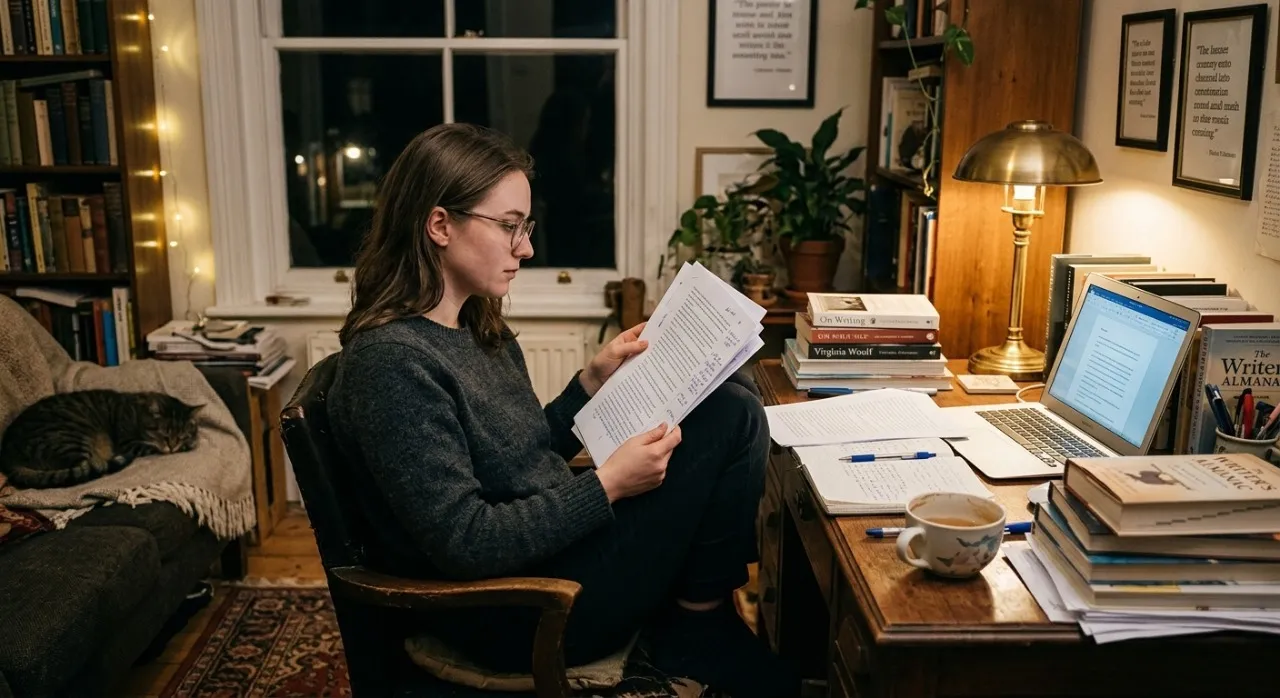

I did not notice the problem at first.
The drafts looked good. They were clean, readable, and fast to produce. The structure was there. The transitions worked. The tone felt polished enough that I could imagine publishing them with only a light edit.
That was exactly the problem.
The more I used AI to speed up drafting, the more often I ended up with articles that looked finished long before they were actually ready. They were not obviously wrong. They were just too smooth. Too safe. Too easy to confuse with quality.
That was the moment I realized I needed a review step, not just a drafting shortcut.
Why “clean” writing can still be weak?
There is a kind of writing that feels competent without feeling alive.
You see it more often now because AI is very good at producing clean surfaces. A draft can have:
- a solid introduction
- tidy paragraph flow
- balanced sentence structure
- useful subheadings
- decent readability
And still fail the most important test: does anyone actually remember it after reading?
That is the gap many writers miss.
We think the danger is factual error or awkward phrasing. Sometimes it is. But a lot of the time, the bigger risk is that the article says nothing memorable even though it says everything correctly.
The draft that changed how I edit
The shift happened when I read back one of my own AI-assisted drafts a few hours after writing it.
At first glance, it looked publishable. But when I read it as a stranger, I realized three things:
1. It sounded like it could have been written by anyone
The draft had structure, but not identity. The points were valid, but generic. There was no line in it that felt distinctly mine.
2. The transitions were doing too much work
Every paragraph flowed nicely into the next one. That usually sounds like a strength. Here, it made the whole piece feel flat. Nothing pushed. Nothing caught. Nothing earned emphasis.
3. The article was summarizing, not contributing
It was the kind of post that restates a topic clearly without adding much to it. That is the trap. AI can help you produce an acceptable summary very quickly. But acceptable is not the same thing as worth publishing.
What I changed after that?
I stopped treating the first clean draft as progress.
Instead, I built a simple review step before publishing. Not a huge workflow. Just enough friction to catch the kind of writing that feels complete too early.
Here is what that review step looks like now.
Step 1: I stop reading for grammar first
If I start with grammar, I end up polishing sentences that may not deserve to stay.
So now I ask different questions first:
- Which part feels generic?
- Which section sounds competent but empty?
- Where does the piece start losing energy?
- What line could only have been written by me?
That changes the kind of edits I make.
Step 2: I look for “overly smooth” sections
This is where a tool like ZeroGPT Plus becomes useful for me.
Not as a verdict. Not as proof. Just as a second signal.
I use it to help locate passages that feel too even, too polished, or too machine-shaped. That gives me a faster way to spot sections worth reviewing more closely.
The useful question is not “Did AI write this?”
The useful question is “Which parts of this draft sound finished but still weak?”
That is a much better editing question.
Step 3: I add specifics instead of just rewriting tone
When a draft feels too smooth, the worst fix is cosmetic rewriting.
I used to try to make sentences sound more human. Now I try to make them more specific.
That usually means adding:
- an example
- a sharper contrast
- a clearer judgment
- a real workflow detail
- a line that reflects actual experience
Specificity improves trust faster than “human-like” phrasing ever does.
Why this matters more now?
The biggest shift AI created for writers is not that writing became fake.
It is that writing became easier to finish.
And when finishing becomes easy, review becomes the real bottleneck.
That is why I think more writers need to build a pause between drafting and publishing. Especially solo creators, bloggers, and newsletter writers who work fast and publish often.
The first draft may be faster than ever.
But the question that matters has not changed:
Is this actually ready to be read?
Final thought
I still use AI while writing.
I still use it to draft faster, break inertia, and test structure.
What changed is that I no longer confuse a fluent draft with a strong one.
Now I assume that anything that looks finished too quickly probably needs one more pass.
Not because AI is bad.
Because publishing something clean is easy now.
Publishing something worth remembering is not.





















Sign in to leave a comment.