

Crypto startups are using more than one route to raise capital. Venture capital can fund early product development. Private presales can bring in strategic investors. Public token sales can reach a wider group of participants. ICOs can connect fundraising with the launch of a blockchain network or token-based product.
This creates a funding stack rather than a single fundraising event.
The structure matters. Each funding stage brings different investors, expectations, legal requirements, token allocations, and technical needs. A startup that raises VC funding before a token sale has different obligations from a project that starts with a private token round.
Crypto funding data shows why this discussion matters. Galaxy Research reported that crypto and blockchain startups raised $4 billion across 355 VC deals in Q1 2026. Capital deployed fell from the previous quarter, yet activity remained above the lows seen during 2023 and 2024.
Tiger Research and RootData recorded $13.3 billion across 435 crypto investment rounds during the first half of 2026. The round count was 78% below the 2022 peak of 1,978, showing that capital has become more concentrated across fewer deals.
This funding environment gives founders more reasons to plan capital formation in stages.
Why Crypto Fundraising Is Moving Toward Multi-Stage Funding
A crypto startup rarely needs the same type of capital throughout its development. Early research requires one form of funding. Product development needs another. A network launch creates new costs around token infrastructure, liquidity, community growth, and market access.
VC funding can cover early company expenses without requiring a public token. A later private token sale can bring strategic participants into the project. A public ICO or token sale can follow once the product and token have a defined role.
This sequence can separate company financing from token distribution. It gives founders more control over when they introduce a tradable asset and how they allocate supply.
The structure has another benefit. Different investors can enter at different stages. A venture investor may fund the company at the equity level. A strategic participant may purchase tokens during a private round. Public participants may join through a later token sale.
Each stage can serve a different purpose.
VC Funding Builds the Company Before the Token
Venture capital remains a major funding source for crypto startups. The capital usually goes into product development, hiring, infrastructure, legal work, research, marketing, and other company expenses.
The investment can take the form of equity or a convertible instrument. Investors receive rights tied to the company rather than simply purchasing the project's future token.
This distinction matters for projects that are still validating their product. A startup can build its core technology with private capital before introducing a token to the market.
Crypto VC activity remains concentrated around infrastructure, exchanges, trading, payments, tokenization, DeFi, security, and other blockchain-related sectors. Galaxy's Q1 2026 research reported that trading, exchange, investing, and lending companies attracted the largest share of capital during the quarter.
VC funding can also bring strategic connections. Investors can provide access to exchanges, institutional partners, developers, customers, and later financing rounds. The exact support varies by investor and deal.
For a startup that does not need a native token, VC can remain the primary funding structure. A blockchain business can build infrastructure or software without issuing a token at all.
Private Presales Introduce Token Capital Early
A presale usually occurs before a broader public token sale. The project sells tokens to a selected group under defined terms.
Private presales often target strategic investors, crypto funds, ecosystem partners, or other qualified participants. The project can use the capital to continue development before a wider token launch.
The token terms need careful planning at this stage. Founders need to define the token supply, allocation, purchase price, vesting schedule, unlock dates, and rights attached to the asset.
A large private allocation can affect the later market. Early investors may receive tokens at a lower price than public participants. Their unlock schedules can then affect circulating supply after the token becomes transferable.
For this reason, presale design should connect directly with the wider tokenomics model. A presale cannot operate as an isolated fundraising event.
ICOs Connect Fundraising With a Token Launch
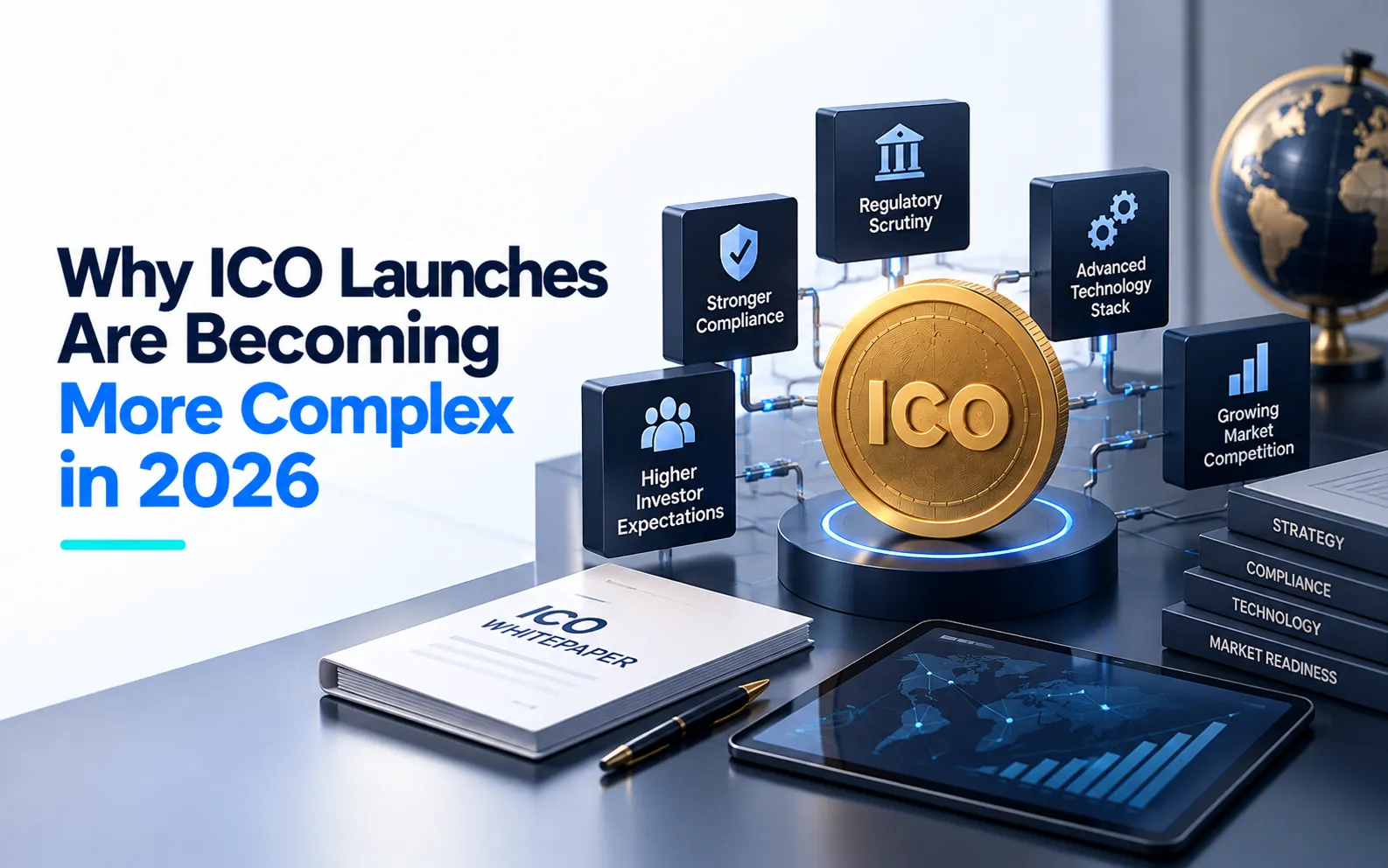
An Initial Coin Offering can involve the sale of crypto assets or promises to deliver crypto assets. The structure has been used by blockchain projects seeking capital for network or application development.
The SEC's 2026 proposed Regulation Crypto Assets specifically discusses ICOs where projects are still in early development. The proposal states that issuers often use ICO proceeds to fund project development and that some ICO structures can involve investment contracts subject to federal securities laws.
The regulatory analysis depends on the actual transaction. The SEC's March 2026 interpretation explains that a crypto asset can become subject to federal securities laws when it is offered or sold through an investment contract. The analysis looks at factors such as an investment of money, a common enterprise, an expectation of profit, and managerial efforts by others.
This makes legal planning part of ICO development. A project needs to define its target markets, participant eligibility, sale structure, disclosures, token rights, and promotional claims before opening a sale.
An ICO also needs technical infrastructure. The project may require a token contract, sale contract, investor dashboard, wallet connection, allocation system, vesting contracts, transaction tracking, and security testing.
Public Token Sales Reach a Broader Market
A public token sale opens participation beyond a private investor group, subject to the legal structure and participant restrictions.
The public stage can create a larger holder base and distribute tokens across users. It can support network growth when the token has a genuine function within the product or protocol.
Public distribution creates new responsibilities. The project needs clear communication around token supply, sale price, allocation, vesting, utility, risks, and distribution rules.
The token's market structure matters too. A project needs to plan how much supply enters circulation at launch. It needs to understand how treasury reserves, team holdings, private allocations, and public allocations interact.
The 2025 crypto market data from CoinGecko shows why launch planning matters. Total crypto market capitalization ended 2025 at $3 trillion after reaching $4.4 trillion during the year. Stablecoin market capitalization reached $311 billion, up 48.9% from the previous year.
These figures show a large and active market. They do not guarantee demand for a new token. Project-specific utility, distribution, liquidity, legal structure, and market conditions still shape a token launch.
How the Funding Stages Can Work Together
A funding stack can follow a structure such as:
VC round → private presale → public token sale → post-launch funding
The first stage funds company development. The second stage brings strategic token participants into the project. The public stage expands token distribution. Post-launch funding can support later product development, ecosystem growth, or additional business activities.
Not every project needs every stage.
A crypto infrastructure company may raise several VC rounds and never issue a token. A protocol may raise VC funding, conduct a private token round, and later launch its token. Another project may use a public sale as its main capital event.
The sequence should reflect the product.
A founder should not add a presale simply to create another fundraising event. Each stage needs a clear reason. The capital should support a defined development milestone or ecosystem requirement.
Tokenomics Connects Every Funding Round
Tokenomics sits at the center of a multi-stage funding model. The total supply must account for every allocation.
A project may divide its supply across investors, public participants, founders, employees, advisors, treasury reserves, ecosystem incentives, liquidity, and community programs.
The timing of each allocation matters as much as the percentage.
Suppose a project sells 15% of its token supply through a private round. Another 10% goes to the public sale. The team receives 15%, the ecosystem receives 40%, and the treasury receives 20%.
The numbers alone do not describe the market structure. Vesting schedules determine how much supply enters circulation over time. A two-year team vesting plan creates a different supply profile from a six-month schedule.
Founders need to model these changes before announcing the sale. The same principle applies to VC agreements that include future token rights or token warrants.
Regulatory Planning Now Shapes the Funding Stack
Regulation affects the order and structure of fundraising.
In the United States, the SEC's April 2026 guidance states that federal securities laws can apply to crypto assets when they are offered or sold as part of an investment contract.
The SEC proposed Regulation Crypto Assets in August 2026. The proposal includes a startup exemption for offerings of up to $5 million over four years and a separate fundraising exemption for offerings of up to $75 million during a 12-month period. The proposal remains subject to the rulemaking process, with public comments due October 20, 2026.
These are proposed rules, not a blanket approval for ICOs or token sales.
Founders need legal counsel for the jurisdictions and transaction structures relevant to their projects. Participant restrictions, disclosures, marketing claims, token rights, custody, and secondary trading can all affect the fundraising structure.
The Technology Stack Must Match the Fundraising Plan
Fundraising and blockchain development cannot operate as separate workstreams.
A project preparing for a presale needs a secure token contract and allocation system. A project preparing for an ICO may need a complete sale platform with investor onboarding, wallet integration, payment processing, allocation tracking, and token distribution.
Vesting needs smart contract logic. Multi-stage sales need separate allocation rules. A public launch needs reliable transaction handling and clear token distribution records.
Security testing also becomes more important as the amount of capital and number of participants increase. Smart contract vulnerabilities can affect token balances, sale allocations, or treasury funds.
Professional ICO development teams can connect these components into a single technical structure. Blockchain App Factory provides ICO development services covering token creation, smart contracts, ICO platforms, investor dashboards, tokenomics implementation, and launch infrastructure.
What Founders Should Decide Before Raising Capital
Founders need a clear funding map before announcing any sale.
The key questions include:
- How much capital does the company need before token launch?
- Does the product require a native token?
- Which funding stage should finance product development?
- Which participants should receive private allocations?
- How much supply should enter the public market?
- What vesting periods apply to each allocation?
- Which jurisdictions will the project target?
- What legal structure applies to each fundraising stage?
- What technology must be ready before each round?
- What milestones should each round finance?
These decisions connect fundraising with product development. They also reduce the risk of building a token sale before the underlying business model is ready.
Building a Funding Stack Around the Project
The new crypto funding stack is not about replacing VC with ICOs or choosing token sales over private funding. It is about matching each funding stage with a clear business and product requirement.
VC can fund the company. A private presale can bring strategic token participants. An ICO or public token sale can distribute tokens more broadly under the applicable legal structure. Each stage carries different financial, technical, regulatory, and market considerations.
The strongest funding plan starts with the product and works backward. Founders can then decide whether they need VC, a presale, an ICO, a public token sale, or a combination of these routes.
Blockchain App Factory helps crypto projects build the technical infrastructure behind token fundraising, from token development and smart contracts to ICO platforms, investor systems, and token launch preparation. A clear funding structure gives the development team a defined foundation for building the technology that supports the raise.






















Sign in to leave a comment.