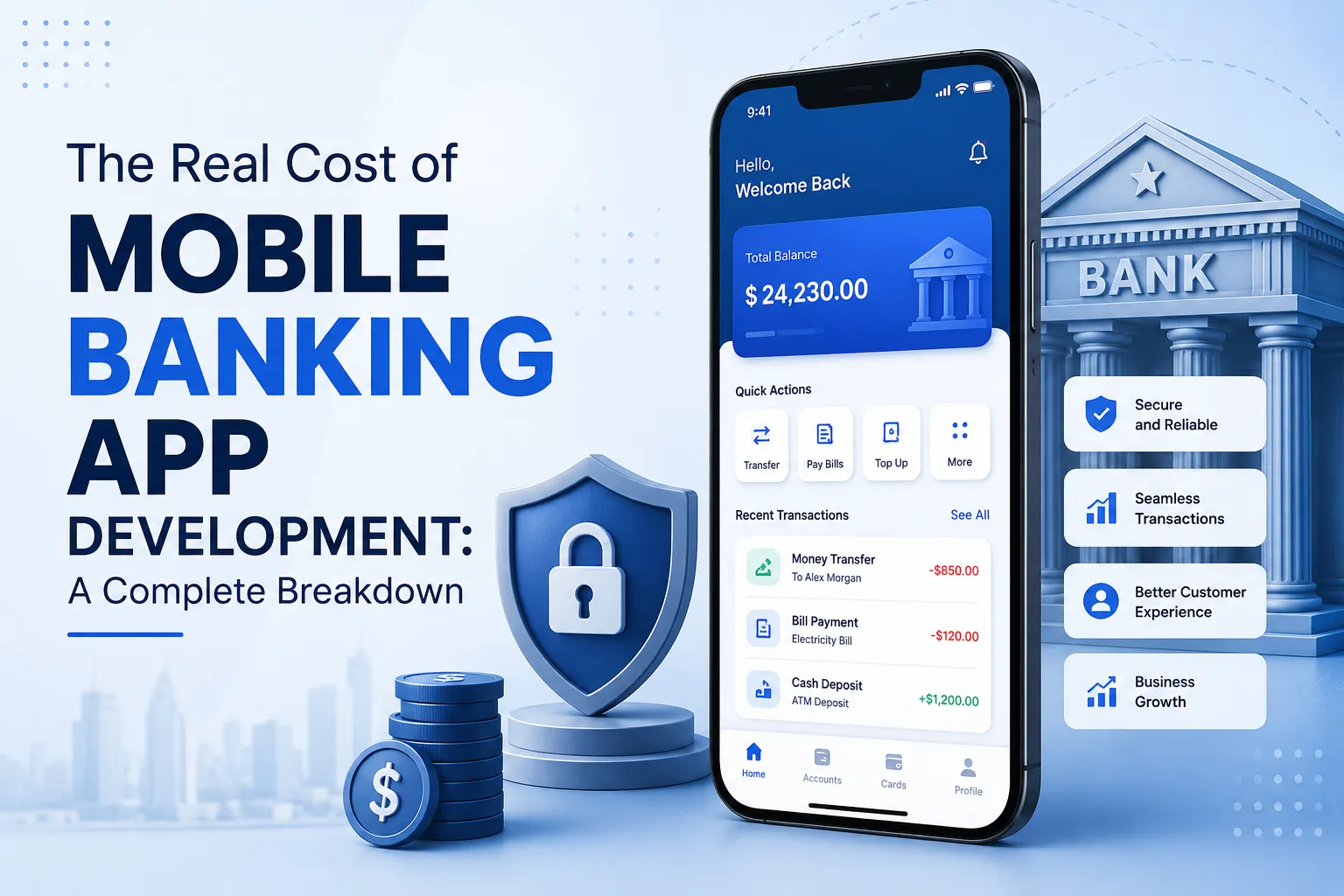

The banking industry has undergone a remarkable digital transformation over the past decade. Today, customers expect secure, fast, and feature-rich mobile banking experiences that allow them to transfer money, pay bills, manage investments, and access financial services anytime, anywhere. As a result, mobile banking app development has become a strategic investment for banks, fintech startups, and financial institutions worldwide.
However, one of the most common questions businesses ask is: How much does it cost to build a mobile banking app? The answer depends on several factors, including app complexity, security requirements, technology stack, and the expertise of your development partner.
In this guide, we'll break down the real cost of mobile banking app development and explain what influences your investment.
Why Mobile Banking Apps Are in High Demand
Modern consumers prefer digital banking over traditional branch visits. A well-designed mobile banking app enables users to:
- Check account balances in real time
- Transfer funds securely
- Pay utility bills
- Apply for loans
- Track spending and savings
- Receive instant transaction alerts
- Manage cards and investments
These conveniences improve customer satisfaction while helping financial institutions reduce operational costs and increase customer retention.
Factors That Influence Mobile Banking App Development Cost
Every banking application is unique, which means development costs can vary significantly. Below are the primary factors that determine the overall investment.
1. App Features and Functionality
The number of features has the biggest impact on development cost.
Basic Features
- User registration and login
- Account dashboard
- Balance inquiry
- Transaction history
- Fund transfers
- Push notifications
Advanced Features
- AI-powered financial insights
- Expense tracking
- Card management
- QR code payments
- Biometric authentication
- Investment management
- Cryptocurrency support
- Voice banking
The more sophisticated the features, the higher the development effort.
2. Security and Compliance
Security is the backbone of every banking application.
A secure mobile banking app development project should include:
- Multi-factor authentication (MFA)
- End-to-end encryption
- Biometric login
- Secure APIs
- Fraud detection systems
- PCI DSS compliance
- GDPR compliance (where applicable)
- Regular security testing
Investing in security increases development costs but protects both customers and financial institutions from cyber threats.
3. Platform Selection
Businesses generally choose one of three approaches:
- Native Android app
- Native iOS app
- Cross-platform application
Cross-platform development can reduce initial costs, while native applications typically deliver better performance and enhanced security.
4. UI/UX Design
Banking customers expect a clean, intuitive, and responsive interface.
Professional UI/UX design includes:
- Customer journey mapping
- Interactive wireframes
- Modern dashboard layouts
- Accessibility optimization
- Smooth navigation
A better user experience often leads to higher customer engagement and retention.
5. Backend Infrastructure
The backend powers every banking transaction.
Development typically includes:
- Secure cloud infrastructure
- Database management
- API integrations
- Payment gateways
- Real-time transaction processing
- Notification services
A scalable backend ensures the application performs efficiently even as the user base grows.
Estimated Cost of Mobile Banking App Development
While every project differs, here is a general estimate.
| App Complexity | Estimated Cost |
|---|---|
| Basic Banking App | £25,000 – £45,000 |
| Medium Complexity | £45,000 – £90,000 |
| Enterprise Banking App | £90,000 – £200,000+ |
The final investment depends on the number of features, security requirements, third-party integrations, and project scope.
Technologies Used in Mobile Banking App Development
Modern banking applications often leverage technologies such as:
- Artificial Intelligence
- Machine Learning
- Blockchain
- Cloud Computing
- Biometric Authentication
- Data Analytics
- API Integrations
- Real-Time Payment Systems
These technologies improve security, automation, and customer experience.
Why Choose a Mobile App Development Company in Qatar?
Businesses in the Middle East are rapidly adopting digital banking solutions, making Qatar one of the fastest-growing technology markets in the region. Partnering with an experienced Mobile app development company in Qatar offers several advantages:
- Expertise in fintech regulations
- Secure application architecture
- Skilled UI/UX designers
- Scalable cloud solutions
- Agile development methodology
- Ongoing maintenance and support
An experienced development company can help reduce risks while ensuring your banking application meets both business goals and customer expectations.
Tips to Optimize Development Costs
You don't always need to launch every feature at once. Consider these strategies:
- Build a Minimum Viable Product (MVP)
- Prioritize essential banking features
- Use scalable cloud infrastructure
- Choose cross-platform development where appropriate
- Integrate trusted third-party APIs
- Plan for future scalability from the beginning
These approaches help control costs while accelerating time to market.
Final Thoughts
The cost of mobile banking app development depends on your business objectives, feature requirements, security standards, and technical complexity. While developing a banking application requires a significant investment, it delivers long-term value through improved customer engagement, operational efficiency, and increased revenue opportunities.
Choosing an experienced Mobile app development company in Qatar can make all the difference. The right technology partner will help you design a secure, scalable, and future-ready banking solution that meets evolving customer expectations while ensuring compliance with industry standards.
As digital banking continues to reshape the financial landscape, investing in a robust mobile banking application is no longer optional—it's a competitive necessity for businesses looking to thrive in 2026 and beyond.

























Sign in to leave a comment.