
Introduction:
Businesses and workers all across the world have been forced to adjust to new realities as a result of the COVID-19 outbreak. Businesses in Pakistan have flocked to shared offices as a flexible and affordable option in response to the rise of remote work. This essay will examine the advantages, disadvantages, and long-term effects of the increasing popularity of coworking spaces in Pakistan as a result of the epidemic.
Coworking Spaces in Pakistan: Increasing in Popularity
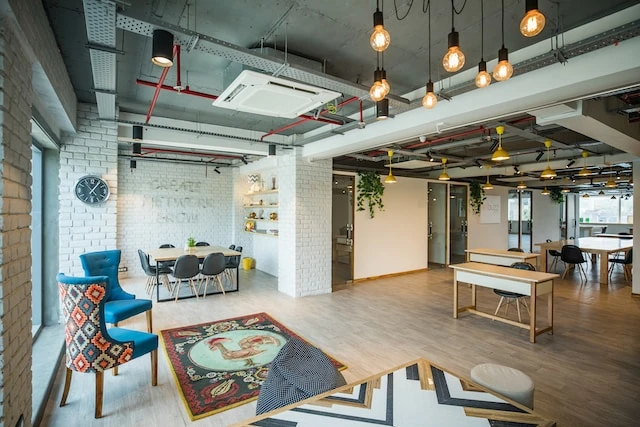
As businesses in Pakistan seek for new and creative ways to address their evolving workplace demands, the popularity of shared offices, also known as coworking spaces, has increased. Coworking spaces allow professionals from different industries to get together and get their work done, while also providing them with the freedom to work on their own schedules if they so want. High-speed internet, cutting-edge equipment, conference rooms, and shared facilities are just some of the perks that make shared workplaces a viable alternative to conventional office spaces.
Advantages of Coworking Spaces for Companies
Coworking spaces have becoming more popular in Pakistan as a result of the many advantages they provide to businesses, particularly during the epidemic. The potential for financial savings is a major perk. Rent, utilities, and upkeep for conventional workplaces may add up quickly. Instead of investing in costly long-term leases or up-front fees, businesses may save money by using shared workspaces, where they only pay for the space and services they really use.
Having workers from many fields and specialisations under one roof increases the likelihood of productive cooperation and networking. Synergies, collaborations, and the exchange of information between businesses may all benefit from this. Workers benefit from a better work-life balance because to the shared workplace's recreational spaces, exercise facilities, and wellness programmes, all of which foster a sense of community and well-being.
The Time Demands Agility and Flexibility
The COVID-19 epidemic has shown how crucial it is to be adaptable and quick-thinking in the workplace. To survive in the face of market volatility and other unknowns, firms need to be flexible in their methods and quick to make adjustments. Without being tied down by long-term leases or set expenditures, shared offices provide businesses the freedom to expand or contract as needed.
Another perk of coworking spaces is the ability to choose where you do your job. Businesses are no longer limited to a single office location thanks to the rise of remote work; instead, they can take use of shared workspaces in key areas that are handy for their staff and clients. By bringing together talented individuals from all around the world, organisations may reach new customers, broaden their scope, and stimulate creative problem solving.
Confronting Difficulties at a Time of Pandemic
Although coworking spaces are on the increase in Pakistan, they are not without their problems, especially in these age of pandemics. Protecting people's well-being in communal settings is a major obstacle. As the globe struggles to contain the current pandemic, shared workplaces must establish rigorous rules and safety measures to protect their employees. Constant hand washing, social isolation, temperature monitoring, and mask use may all be part of the plan.
The ever-evolving dynamics of remote work present yet another difficulty. As a result of the rise of permanent remote work and hybrid work models, the demand for shared workspaces, which have arisen as a solution for distant work, may be negatively affected in the long run. It's possible that the occupancy rates and long-term viability of shared office spaces may be impacted by companies' preferences for instituting their own remote work rules and infrastructure.
Pakistan's New Economic Landscape
Because of the epidemic, more people in Pakistan are working in shared offices, which presents both benefits and difficulties for employers and workers. Shared workspaces are gaining popularity and are quickly becoming a vital element of the changing American work environment because of the increasing normalisation of remote work and the demand for flexible and agile workplace solutions.
Conclusion:
As a result of the COVID-19 epidemic, shared offices have become increasingly popular in Pakistan as firms look for ways to save money while being flexible enough to deal with an ever-evolving work environment. Shared offices have emerged as a feasible solution for enterprises trying to handle the challenges of the pandemic era because to their cost savings, collaboration opportunities, flexibility, and location adaptability. However, issues like health and safety precautions and the changing dynamics of remote work must be addressed if shared workplaces are to continue to expand in the future.
Shared offices are expected to play a pivotal role in reshaping how businesses function and individuals are employed in Pakistan as the country moves towards the future of work. Shared offices are an attractive option for organisations in the post-pandemic era because of the ways in which they may encourage creativity, cooperation, and adaptability. Companies in Pakistan that value flexibility, economy, and teamwork in the workplace may expect shared office spaces to continue to be a viable choice for the foreseeable future. Businesses in Pakistan and elsewhere may benefit from adopting a coworking culture in order to adapt to the rapidly shifting nature of the modern workplace.
As a result of the epidemic, shared offices have exploded in popularity in Pakistan, giving businesses the mobility, financial savings, and possibilities for teamwork that they need to adjust to the new normal of work. Despite certain obstacles, shared offices in Pakistan are becoming increasingly popular as a way for businesses to survive and even prosper in the wake of a pandemic. In Pakistan's rapidly changing labour market, shared offices are here to stay thanks to their many benefits and the opportunities they present for increased camaraderie and teamwork. Companies who jump on this bandwagon will be better prepared to adapt to the dynamic nature of the modern workplace.









Sign in to leave a comment.