
Introduction:
Dry ice fog machines have become a staple in various industries, from entertainment to food preservation. The mesmerizing fog they produce adds ambiance to concerts, theater productions, and haunted houses, while also serving practical purposes in food transportation and medical applications. In this article, we delve into the science behind dry ice fog machines, examining their technology, the principles governing their operation, and the diverse range of applications they serve.
Understanding the Basics:
Dry ice fog machines operate on the principle of sublimation, wherein solid carbon dioxide (dry ice) transitions directly into carbon dioxide gas without passing through the liquid phase. This process occurs at temperatures below -78.5°C (-109.3°F), which is the sublimation point of dry ice at standard atmospheric pressure. When dry ice is exposed to ambient temperatures, it sublimates rapidly, releasing cold, dense carbon dioxide gas.
Technology Behind Dry Ice Fog Machines:
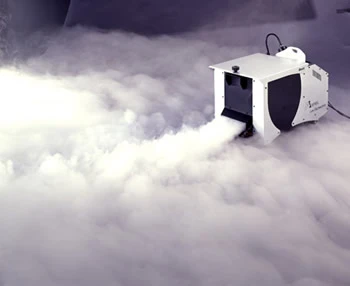
Dry ice fog machines consist of a chamber where dry ice is placed and a heating element or warm water reservoir. When dry ice is added to the chamber, it sublimates, producing a dense fog. The heating element or warm water helps accelerate sublimation by transferring heat to the dry ice, facilitating the process.
Some fog machines use a mechanical agitation mechanism to disperse the fog more evenly, while others rely on fans to distribute the fog over a wider area. Additionally, modern fog machines may incorporate electronic controls for precise fog density and timing.
Applications of Dry Ice Fog Machines:
Entertainment Industry: Dry ice fog machines are extensively used in the entertainment industry to create atmospheric effects in concerts, theater productions, and theme parks. The dense, low-lying fog enhances lighting effects and adds drama to performances.Special Events and Parties: From weddings to Halloween parties, dry ice fog machines are popular for creating a spooky or enchanting ambiance. They can be used indoors or outdoors to evoke a sense of mystery and excitement.Food and Beverage: Dry ice fog is utilized in food and beverage industry for preservation and presentation purposes. It is commonly used to keep perishable items, such as seafood and ice cream, cold during transportation. Additionally, chefs use dry ice fog to create dramatic presentations for cocktails and desserts.Medical and Research Applications: In medical settings, dry ice fog is employed for cryotherapy, where extremely cold temperatures are applied to treat various skin conditions or to preserve biological samples. Research laboratories may also use dry ice fog for experiments requiring controlled atmospheric conditions.Safety Considerations:
While dry ice fog machines offer numerous benefits, it is essential to handle dry ice with caution due to its extremely low temperature. Direct contact with dry ice can cause frostbite, and prolonged exposure to high concentrations of carbon dioxide gas in confined spaces can pose health risks. Proper ventilation and safety protocols should be followed when using dry ice fog machines to mitigate potential hazards.
Conclusion:
Dry ice fog machines harness the fascinating science of sublimation to create captivating visual effects and serve practical purposes across various industries. By understanding the technology behind these machines and their diverse applications, we can appreciate the ingenuity behind this innovative technology and its impact on entertainment, food preservation, and scientific research.
Ready to elevate your understanding of applied physics and explore groundbreaking innovations? Contact Applied Physics USA today to unlock the full potential of scientific discovery and technological advancement.










Sign in to leave a comment.