
Introduction
In recent years, there has been a growing interest in probiotics and their potential health benefits. These tiny microorganisms, often referred to as "good bacteria," are believed to play a crucial role in maintaining a healthy gut and overall well-being. But what exactly are probiotics, how do they work, and why do they matter? In this blog, we will delve into the science behind human probiotics, exploring their mechanisms of action and the reasons they are considered vital for our health.
Understanding Probiotics
Probiotics are live microorganisms, primarily bacteria, that can confer health benefits when consumed in adequate amounts. They are naturally present in certain foods such as yogurt, sauerkraut, and kimchi, or can be taken as dietary supplements. The most common types of bacteria used as probiotics include Lactobacillus and Bifidobacterium strains.
Mechanisms of Action
Probiotics exert their beneficial effects through various mechanisms. One key function is their ability to restore and maintain a healthy balance of bacteria in the gut. They do this by outcompeting harmful bacteria for resources and creating an environment that is less favorable for the growth of pathogens.
Additionally, probiotics can enhance the intestinal barrier function. The cells lining our gut form a physical barrier that prevents harmful substances from entering our bloodstream. Probiotics help strengthen this barrier by promoting the production of tight junction proteins, reducing permeability, and preventing the translocation of harmful bacteria across the intestinal lining.
Probiotics also play a role in modulating the immune system. They stimulate the production of beneficial compounds, such as short-chain fatty acids, which have anti-inflammatory properties. By regulating immune responses, probiotics help maintain a balanced immune system, reducing the risk of chronic inflammation and associated diseases.
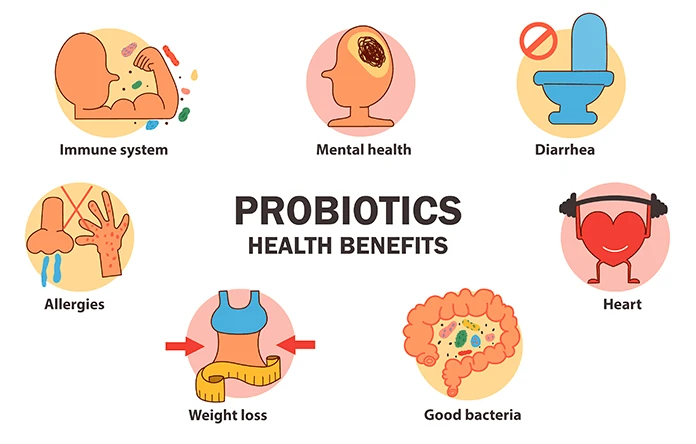
The consumption of probiotics has been associated with several health benefits. Firstly, they can alleviate digestive disorders such as diarrhea, irritable bowel syndrome (IBS), and inflammatory bowel disease (IBD). Probiotics help restore the natural balance of gut bacteria disrupted by illness, antibiotics, or stress, thereby improving digestion and reducing symptoms.
Furthermore, probiotics have shown promising results in enhancing immune function. They can reduce the duration and severity of respiratory tract infections, such as the common cold, and may even reduce the risk of allergies and eczema in infants.
Probiotics may also have a positive impact on mental health. The gut and brain are interconnected through a communication pathway called the gut-brain axis. Emerging research suggests that probiotics can influence this axis, potentially improving mood, reducing anxiety and depression symptoms, and promoting overall mental well-being.
It is worth noting that the effects of probiotics can vary depending on the strain and dosage used. Different strains have unique properties and may offer specific benefits. Therefore, it is essential to choose a probiotic product backed by scientific evidence and tailored to individual needs.
Conclusion
The science behind human probiotics reveals their significant impact on our health and well-being. From maintaining a healthy gut microbiome to enhancing immune function and supporting mental health, probiotics offer a range of benefits. However, it is crucial to remember that probiotics are not a cure-all solution, and their effects may vary between individuals. As with any dietary supplement, it is advisable to consult a healthcare professional before starting probiotic supplementation. By understanding the science behind probiotics, we can make informed choices to optimize our gut health and overall quality of life.











Sign in to leave a comment.